Australian PM apologises for ‘inappropriate’ comments about Kylie Minogue
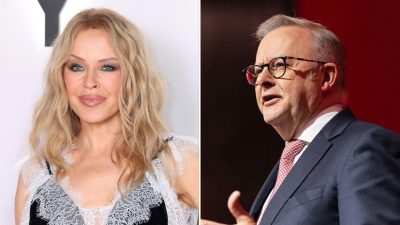
Australian PM Apologizes for ‘Inappropriate’ Comments on Kylie Minogue
Constantvpn.com – Australian Prime Minister Anthony Albanese has issued a public apology following a controversy sparked by remarks he made about pop icon Kylie Minogue during a recent podcast interview. The comments, which were described as “disrespectful” by some critics, prompted immediate backlash from within his own party and the wider public. Albanese’s apology, delivered in a concise one-line statement, was framed as “unequivocally” acknowledging the remarks’ impact.
Podcast Interview Context
During a 20-minute conversation on the Bush Deep podcast with comedian Nikki Osborne, Albanese was asked to evaluate three high-profile female celebrities—Kylie Minogue, Nicole Kidman, and Rhonda Burchmore—using a lighthearted “shag, marry, or date” framework. Initially, the prime minister attempted to deflect the question, stating he had recently married his partner Jodie Haydon and was still “six months in.” However, as the discussion progressed, Osborne pressed him further, leading to his admission: “Oh, Kylie, clearly.”
“You’d marry Kylie, and shag her, and date her?” Osborne inquired.
“All of the above,” Albanese replied. “She’s terrific,” he added, before the interview concluded.
The moment quickly became a focal point for criticism, with some lawmakers arguing that the remarks undermined the role of a national leader and perpetuated gender stereotypes. While the comments were intended as a humorous aside, they were interpreted by many as a subtle form of sexism, raising questions about how such language reflects on the PM’s leadership.
Backlash and Political Reactions
Community Strong MP Zali Steggall was among the voices condemning the remarks, stating they were “entirely inappropriate” and calling for Albanese to “push back, lead by example, and call it out as sexist.” Similarly, Shadow Communications Minister Sarah Henderson criticized the comments on social media, labeling them “disrespectful to women, embarrassing to Australians, and demeaning to the office of Prime Minister.”
Osborne, who gained notoriety for her YouTube videos featuring crude comedy sketches, had launched her podcast series earlier this year. The platform positions her as a “bold and unconventional journalist” known for posing provocative questions that others might avoid. Her approach, while often playful, has occasionally drawn scrutiny for its tendency to blur the lines between humor and insensitivity.
The incident has reignited debates about the balance between casual language and formal decorum in political discourse. While Albanese’s comments were meant to be light-hearted, they highlight the challenges leaders face in maintaining respect while engaging with media that leans toward entertainment.
Commitment to Women’s Equality
Despite the criticism, Albanese’s office emphasized the government’s ongoing dedication to advancing gender equality. Acting Prime Minister Richard Marles, who is temporarily leading the administration while Albanese is on a Pacific tour, reiterated this point during an interview with the Australian Broadcasting Corporation. “The government that the PM leads is the first in history to achieve cabinet-level equality between men and women,” Marles stated. “We are utterly committed to elevating women in society, and this incident is a reminder of the work still to be done.”
Marles also addressed the broader context of the interview, noting that while the podcast was a departure from more serious political discussions, it underscored the need for leaders to remain mindful of their public image. “From time to time, we conduct interviews that are more informal than the ones we’re doing now,” he explained. “But the message is clear: we value women’s contributions and strive to represent them positively.”
Questions About the Worst Gift
Amid the discussion about celebrities, Albanese was also asked about the most memorable gift he received during a recent overseas trip. He described the item as “strange” but ultimately “quite good,” recounting how Japanese Prime Minister Sanae Takaichi had gifted him two melons. Osborne, ever the sharp-witted host, responded with a quip: “She came in looking like Pamela Anderson,” she said, adding a touch of humor to the exchange.
While the melon anecdote provided a brief moment of levity, it also drew attention to the contrast between Albanese’s personal life and the professional expectations placed on him. His recent marriage to Haydon, which occurred in November, had already become a topic of public interest, and Osborne’s question seemed to capitalize on that narrative. The playful tone of the interview, however, did little to soothe the more serious concerns about the PM’s treatment of women.
Public Perception and Long-Term Implications
The incident has sparked a wider conversation about how political figures are judged for their remarks and the role of media in shaping public opinion. Critics argue that even casual comments can carry significant weight, especially when they are made by a leader who is expected to embody the values of the nation. Supporters of Albanese, meanwhile, defended the remarks as a harmless moment of spontaneity rather than a deliberate insult.
Osborne’s choice of the “shag, marry, or date” framework was designed to provoke a reaction, but it inadvertently exposed a potential disconnect between the PM’s personal views and the expectations of his office. The phrase, often used in casual settings, became a lightning rod for debate, with some accusing Albanese of reducing women to stereotypes while others praised his ability to engage with the public in a relatable manner.
As the controversy unfolds, the focus remains on the language used and its implications. Albanese’s apology, though swift, has been seen by some as a necessary step to address the criticism. However, the incident also raises questions about how politicians should navigate the fine line between charm and sexism in their public communications. The PM’s ability to pivot from the initial remarks to defend the government’s record on women’s equality demonstrates his intent to reconcile the situation, but the lasting impact of his comments remains to be seen.
Contextualizing the Response
Albanese’s comments came at a time when Australia is actively working to promote gender equity in various sectors. The government’s cabinet, which includes an equal number of men and women, is a testament to its progress in this area. Yet, the incident with Kylie Minogue suggests that even leaders in positions of power can inadvertently reinforce traditional gender roles.
Osborne’s role in the conversation has also come under scrutiny. While her approach is rooted in entertainment, the question she posed about the celebrities has been interpreted by some as a strategic attempt to elicit a response that could be used against Albanese. This highlights the dual nature of media appearances—where humor can sometimes mask deeper critiques of societal norms.
As the public continues to process the apology, the debate is likely to persist. Whether Albanese’s remarks were a lapse in judgment or a calculated moment of levity, they have become a symbol of the ongoing discussion about how women are perceived in both politics and pop culture. The incident serves as a reminder that even small statements can resonate widely, especially in an era where social media amplifies every word spoken by public figures.
In the days following the apology, Albanese’s team has worked to downplay the controversy, emphasizing the context of the podcast and the overall message of unity. However, the comments about Kylie Minogue have remained a central point of discussion, underscoring the importance of how leaders articulate their views in a rapidly evolving cultural landscape.
