At least 90 dead in Chinese coal mine explosion, state media reports
At Least 90 Dead in Chinese Coal Mine Explosion, State Media Reports
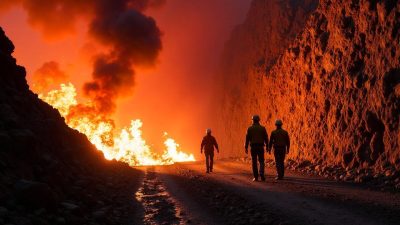
Constantvpn.com – According to official statements, a coal mine disaster in northern China has claimed the lives of at least 90 individuals. The incident occurred at the Liushenyu Coal Mine, managed by the Tongzhou Group, in the Shanxi Province. The explosion, triggered by gas buildup, happened at 19:29 local time on Friday, which corresponds to 11:29 GMT. Rescue teams are currently working tirelessly to recover survivors and stabilize the situation.
Rescue Operations Underway
State television footage captured paramedics transporting injured miners on stretchers, with ambulances visible in the background. Over 100 individuals have been hospitalized, though the exact number remains under evaluation. The operation involves hundreds of rescuers, including 345 personnel from six emergency response teams dispatched by China’s Ministry of Emergency Management. Officials at the scene have confirmed that rescue efforts are ongoing, with no immediate indication of the explosion’s full scale being contained.
“No effort should be spared in treating the injured and searching for survivors,” stated Chinese President Xi Jinping in a televised address following the incident. He also directed the government to investigate the accident’s cause and ensure accountability for those responsible.
Local authorities have taken swift action, detaining officials overseeing the coal mine operations. The exact cause of the gas explosion has not been disclosed, but state media indicated that carbon monoxide levels in the mine were found to have “exceeded limits.” This toxic, odourless gas is known to rapidly displace oxygen, leading to asphyxiation in enclosed spaces. The explosion’s severity has raised concerns about safety protocols in the region’s coal industry.
Shanxi: A Coal-Mining Capital
Shanxi, recognized as China’s coal-mining capital, plays a critical role in the nation’s energy production. Despite recent improvements in safety standards, the province continues to face challenges in preventing accidents. In the early 2000s, coal mining disasters were frequent, often resulting in dozens of fatalities. However, increased regulatory oversight and technological upgrades have reduced the frequency of such incidents, though they remain a significant concern.
The Liushenyu Coal Mine disaster adds to a growing list of coal-related tragedies in China. In 2023, a collapse at an open-pit coal mine in Inner Mongolia killed 53 people, highlighting the persistent risks associated with the industry. Similarly, in 2009, an explosion at a mine in Heilongjiang province claimed over 100 lives, underscoring the historical vulnerability of coal mining operations. These events suggest that while progress has been made, systemic issues still threaten worker safety.
Global Implications of China’s Coal Dependence
China remains the world’s largest coal consumer and emitter of greenhouse gases, despite its rapid expansion in renewable energy infrastructure. The country’s reliance on coal for power generation and industrial processes has long been a cornerstone of its economic development. However, the recent explosion in Shanxi serves as a reminder of the environmental and human costs of this dependence. As coal continues to fuel China’s growth, the balance between energy production and safety measures remains a pressing issue.
Analysts note that the coal industry’s scale in China is unparalleled, with thousands of mines operating across the country. While safety standards have been upgraded in recent years, factors such as aging equipment, human error, and overwork can still contribute to disasters. The Liushenyu incident has prompted renewed calls for stricter regulations and better emergency response systems, particularly in regions with high coal production.
Community and Economic Impact
The explosion has shaken local communities in Shanxi, where coal mining is a primary source of employment. Families of the victims are grappling with grief, while the broader workforce faces uncertainty about future safety measures. For the Tongzhou Group, the disaster could lead to increased scrutiny of its operational practices and financial responsibilities. The mine’s location in a historically industrial area also highlights the interconnectedness of economic growth and risk in the region.
International observers have expressed concern over the incident, given China’s commitment to reducing carbon emissions. While the government is investing heavily in solar, wind, and hydropower projects, coal still accounts for a substantial portion of its energy mix. The dual challenge of maintaining energy output and ensuring worker safety has become a focal point for policymakers. The Liushenyu explosion may further accelerate efforts to modernize coal mining practices and integrate cleaner energy sources.
Looking Ahead
As investigations into the gas explosion progress, questions linger about the adequacy of current safety measures. The detained officials may face disciplinary action, and the mine’s operations could be temporarily halted. Meanwhile, the public awaits further details on the cause of the disaster and the steps being taken to prevent future occurrences. The tragedy also serves as a catalyst for discussions on the long-term sustainability of coal mining in China’s energy strategy.
Despite the setback, the coal industry remains vital to China’s economy, particularly in provinces like Shanxi, where it is both a cultural and economic anchor. The nation’s push for renewable energy is expected to grow, but coal will likely remain a key component of its power grid for the foreseeable future. The Liushenyu disaster underscores the need for continuous innovation and vigilance in an industry that has historically been both a driver of progress and a source of peril.
Global coal production and consumption are closely tied to China’s industrial output, and the country’s leadership in this sector is undeniable. The explosion in Shanxi is not an isolated event but part of a broader pattern that reflects the complex interplay between energy demand, economic priorities, and safety in China’s mining sector. As the investigation unfolds, the incident will likely shape future policies and public perception of the industry’s risks.
With over 247 workers on duty during the explosion, the scale of the disaster is particularly alarming. The initial reports suggest that the mine’s capacity to handle emergencies may have been overwhelmed, raising questions about preparedness. State media has emphasized the rapid response by emergency teams, but the prolonged efforts to locate survivors and assess damage highlight the challenges of such large-scale incidents.
While the immediate focus remains on rescue and recovery, the incident has sparked a broader conversation about the future of coal mining in China. The government’s directive to hold responsible parties accountable signals a commitment to transparency and reform. However, the road to improving safety and reducing fatalities in the industry will require sustained investment, regulatory enforcement, and a cultural shift toward prioritizing worker well-being over production targets.
