Anti-UK protests break out in Cyprus with chants of ‘British bases out’ after drone struck RAF Akrotiri
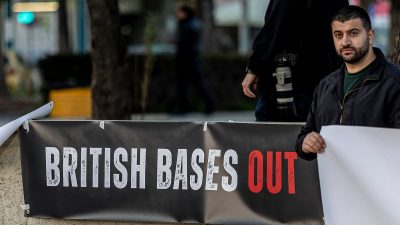
Anti-UK demonstrations erupt in Cyprus amid drone strike on RAF Akrotiri
Residents of Cyprus voiced frustration over the UK’s military footprint following a drone attack on RAF Akrotiri, which sparked renewed calls to expel British bases from the island. The incident, occurring earlier this week, has reignited debates about the strategic implications of the UK’s presence, with protesters demanding the bases be removed.
Protests in Limassol have drawn crowds demanding the UK’s withdrawal, fueled by the belief that the drone strike—a suspected Iranian-made attack—exposes the island to broader regional conflicts. The assault followed US-Israeli strikes on Iran, intensifying concerns about Cyprus’s vulnerability in the escalating geopolitical tensions.
Video clips shared online captured demonstrators waving flags and displaying banners during the gatherings. These visuals underscored the growing discontent, with activists and locals united in their criticism of the British military’s role in the area.
Historical context of UK bases in Cyprus
RAF Akrotiri, one of two British sovereign base areas on the island, has served as a critical military outpost since 1960. Its strategic value extends to operations across the Middle East, including missions in Iraq and Libya. However, the recent drone strike has amplified fears that the bases could become targets in future confrontations.
Residents argue that the UK’s involvement in the conflict has left Cyprus entangled in international disputes, despite its status as a sovereign nation. The attack has heightened this perception, with some claiming the island is now at greater risk due to its proximity to the volatile region.
“The bases act as unsinkable launchpads, enabling the UK to use Cyprus as a mobile military platform,” said Nico, an activist with Autonomy, Feminism, Ecology and Anti-Capitalism (AFOA). “They turn the island into an aircraft carrier for overseas campaigns.”
“The government’s lack of transparency has angered many,” noted Melanie Steliou Nicolaou, a local TV presenter. “When the attack occurred, people were left in the dark, scrambling to understand the risks to their communities.”
During the 1974 conflict, locals sought shelter in the bases, but now the situation has reversed. Some residents are fleeing the areas near the bases, fearing drone or missile strikes. Nicolaou highlighted that the UK’s failure to act during the island’s division has fueled distrust, despite claims of security against Turkish forces.
Disruptions to air travel have already impacted Cyprus’s economy, with tourism—a cornerstone of the country’s GDP—suffering from canceled flights. The UK Ministry of Defence responded by deploying a warship and two Wildcat helicopters to enhance drone defense capabilities, aiming to reassure the public of its commitment to safeguarding the island.
