AI will create more jobs for humans, not replace them, Amazon founder Bezos says
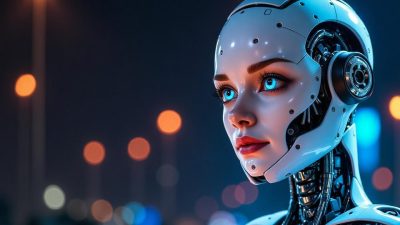
AI’s Role in Job Creation: Jeff Bezos Offers Optimistic Outlook
Constantvpn.com – During a keynote address at VivaTech Paris, Amazon founder Jeff Bezos addressed concerns about artificial intelligence (AI) replacing human workers. He argued that the technology will ultimately increase demand for labor, countering the narrative that automation will render millions unemployed. “The fear that AI will make humans redundant is understandable,” Bezos stated, “but I believe it will create more opportunities than it eliminates.” His remarks came as the event showcased advancements in robotics and AI, underscoring the growing interest in their integration into everyday life.
Contrasting Views on AI’s Impact
Bezos’s stance diverges from some prominent figures who have expressed alarm over AI’s potential to disrupt employment. Former UK prime minister Rishi Sunak, now advising Microsoft and AI startup Anthropic, recently warned that AI could affect young people’s career prospects. However, Bezos emphasized that AI’s progress would be more about unlocking new possibilities than displacing existing roles. “Smart people are worried about redundancy, but I disagree,” he said, “because AI will create a labor shortage, not a surplus.” This perspective highlights the tension between optimism and caution in the tech industry.
“I know there’s a lot of concern that many people have, including many smart people, that AI is going to make humans redundant and so on. I totally disagree with this point of view. And I think, in fact, AI is going to create a labour shortage.”
Bezos tied his argument to his new AI initiative, Prometheus, which focuses on enhancing physical manufacturing. This sector, he noted, is undergoing rapid automation, but AI could drive further innovation. “Prometheus is about making manufacturing more efficient, not less,” he explained. “It’s a sector that’s evolving, and AI will help people adapt rather than be left behind.” The project aims to address challenges in industrial processes, demonstrating how technology can complement human effort rather than replace it.
Space Exploration: A New Frontier for AI
Bezos also shared his vision for space as the next major arena for AI application. He described space as “supply constrained, not demand constrained,” pointing to the Moon as an ideal starting point for humanity’s expansion. “The Moon is close, resource-rich, and offers a gateway to deeper exploration,” he said. To achieve this, he highlighted the potential of electrolysis—a process that could convert lunar water into hydrogen and oxygen for rocket fuel. “We’re not just visiting the Moon; we’re staying,” he asserted, framing the mission as a long-term commitment to space colonization.
His remarks were juxtaposed with updates on Blue Origin, the space travel company he co-founded. Despite a recent setback—a New Glenn rocket explosion during a ground test in May—Bezos remained confident. “It was a gut punch for the team, but we got really lucky,” he remarked. The incident, though damaging, did not result in injuries, and critical components of the launch system survived. “We’ve learned a lot from this,” Bezos added, signaling the company’s resilience in the face of challenges.
Robotic Innovation Takes Center Stage at VivaTech
Meanwhile, the event featured a crowd-pleasing demonstration by Unitree’s humanoid robot. The robot, paired with French neuro-AI firm HABS, showcased cutting-edge technology that allows human-machine interaction through cognitive signals. Attendees eagerly lined up to witness the experiment, where commands were transmitted via an EEG headset. “The robot responded to brain activity, translating thoughts into movement,” a spokesperson noted. This collaboration exemplifies the shift in AI development from virtual environments to tangible, real-world applications.
A Broadening Horizon for AI
Bezos’s talk about AI’s potential to create jobs was echoed by the robotics displays at the expo. The humanoid robot’s ability to interpret cognitive signals marks a significant step toward seamless human-machine integration. Such advancements are expected to reshape industries like healthcare, manufacturing, and hospitality, where robots will work alongside humans rather than in isolation. “This is the future of collaboration,” said an industry analyst, “where machines enhance human capabilities instead of taking over entirely.”
The event also highlighted the growing trend of AI moving beyond chatbots and into physical tasks. Unitree’s robot, combined with HABS’s neuro-AI interface, demonstrated how cognitive signals could revolutionize automation. “This isn’t just about speed or precision,” noted a tech expert, “it’s about understanding human intent and adapting to it.” The demonstration offered a glimpse into a future where technology acts as a partner rather than a competitor.
Global Perspectives on AI’s Labor Impact
While Bezos championed AI as a job creator, the UK’s Trades Union Congress (TUC) voiced concerns about its potential to accelerate deindustrialization. The organization warned that AI could lead to the degradation or displacement of jobs, particularly in sectors like manufacturing. “We’re seeing echoes of past industrial shifts, but this time it’s happening faster,” said a TUC representative. “Shareholders are benefiting, but workers face uncertainty.” Despite these warnings, the TUC acknowledged that AI’s transformative power could also bring long-term benefits if managed responsibly.
Bezos’s vision for AI and space exploration underscores a broader strategy to position technology as a force for progress. He argued that the key to future success lies in addressing barriers that limit human potential. “Technology can remove these obstacles,” he stated, “allowing people to pursue greater ambitions.” This philosophy aligns with Prometheus’s goal of streamlining physical production and Blue Origin’s push for sustainable space travel. “The Moon is a stepping stone, not a final destination,” Bezos said, reinforcing the idea that AI will enable humanity to reach new heights.
Rebuilding Momentum After Setbacks
Following the New Glenn incident, Blue Origin chief executive Dave Limp confirmed that recovery efforts are progressing. “Reconstruction at the launch site is already underway,” he stated, “and we’re on track to resume launches before year-end.” Limp’s comments, delivered alongside Bezos, emphasized the company’s commitment to overcoming technical hurdles. “Every challenge is an opportunity to innovate,” he added, as the firm competes with SpaceX to dominate the commercial spaceflight market.
As the event concluded, the fusion of AI and robotics became a recurring theme. From factory automation to lunar exploration, the technology is reshaping industries and redefining human roles. “This is just the beginning,” said a tech industry observer. “We’re witnessing a shift that will redefine how we work and live.” With Bezos’s predictions and the innovations on display, the message was clear: AI is not just a tool for efficiency—it’s a catalyst for transformation.
Sign up for our Tech Decoded newsletter to follow the world’s top tech stories and trends. Outside the UK? Sign up here.
