Newsletter: Trump could accept leadership change from within regime, General Petraeus says
Newsletter: Trump Could Accept Leadership Change from Within Regime, General Petraeus Says
Greetings from Brussels. As tensions in the Middle East persist into their fourth day, uncertainty grows over the U.S. and Israel’s long-term objectives and the potential involvement of regional actors. On Tuesday, the Israeli military escalated its operations with new strikes targeting Tehran and Beirut, while southern Lebanon faced evacuation alerts. Simultaneously, Saudi Arabia’s Ministry of Defense reported that two drones had damaged the U.S. Embassy in Riyadh.
On Monday, President Donald Trump outlined his strategy for an indefinite conflict with Iran, emphasizing the goal of dismantling Tehran’s nuclear capabilities and its support for regional proxy groups. He estimated the war might last “four to five weeks” or “far longer.” Israeli Prime Minister Benjamin Netanyahu echoed this, stating the campaign would require “some time” but not spiral into an “endless war.” Despite his initial hint at backing a regime shift in Iran, Trump did not clarify his vision for the country’s future.
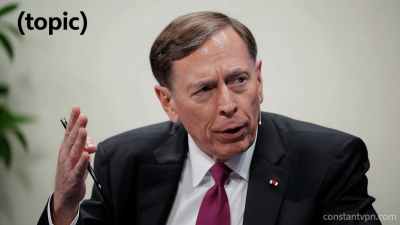
In a recent interview, former CIA director and retired general David Petraeus suggested that Trump might be open to a scenario where a more moderate Iranian leader emerges, akin to Venezuela’s Delcy Rodríguez, who held power while the country’s core structure remained unchanged. “I think yes, and I think that it is possible, it’s conceivable,” Petraeus stated.
Greece responded to recent drone attacks by deploying two frigates and two F-16 jets to Cyprus to reinforce its defenses. The move followed a drone strike on a UK base in Cyprus and two intercepted drones on Monday. “Greece will contribute in every possible way to defend the Republic of Cyprus,” said Defence Minister Nikos Dendias. However, the EU has yet to activate Article 42.7, its mutual defense clause, despite the threat to energy supplies.
NATO Secretary-General Mark Rutte praised the U.S. efforts in the Iran conflict, but Spain took a different stance. The country, which criticized the U.S. and Israel’s “unilateral” strike on Saturday, vowed to prevent its bases in southern Spain from being used in the ongoing war. This contrasts with the UK, France, and Germany, which have supported the campaign.
European markets dipped on Tuesday after Trump signaled a potential prolonged conflict with Iran. Crude oil prices also rose for the third day in a row as Iran threatened to attack vessels in the Strait of Hormuz. The EU’s dependence on regional energy sources has heightened fears of supply disruptions, with gas prices spiking after QatarEnergy halted LNG production due to military strikes on its facilities.
French President Emmanuel Macron announced plans to expand the country’s nuclear arsenal and place weapons in Europe for the first time, speaking from a submarine base in northwest France. “I will never hesitate to take decisions essential to protecting our vital interests,” he declared, hinting at a more assertive stance in the face of escalating tensions.
