Is the EU ready to handle the fallout of a US–Iran war?
Is the EU ready to handle the fallout of a US–Iran war?
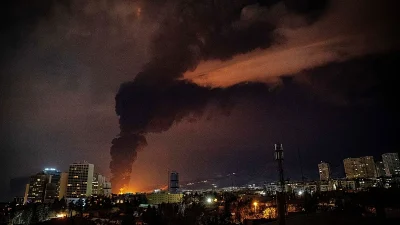
The conflict has rapidly evolved into a multi-front regional crisis, disrupting global energy security and spreading across borders. Fighting initially centered in the Persian Gulf but now threatens NATO-aligned territories, creating a broader impact on international stability.
On 28 February 2026, the U.S.-Israeli initiative Operation Epic Fury launched, targeting key Iranian figures, including Supreme Leader Ali Khamenei. In retaliation, Iran unleashed a barrage of ballistic missiles and drones, escalating tensions. The battle has since expanded, with strikes hitting U.S. military installations and civilian infrastructure in Bahrain, the United Arab Emirates, Qatar, and even the Akrotiri base in Cyprus.
For Brussels, the situation has moved from a distant geopolitical concern to a direct challenge to EU cohesion. The Strait of Hormuz’s closure has shaken energy markets, causing European natural gas prices to spike by nearly 40%. With Qatar’s LNG shipments halted, member states are grappling with supply shortages. The European Union Agency for Asylum (EUAA) is now preparing for a massive influx of refugees, anticipating that up to 90 million Iranians could flee in the coming weeks.
Amid the chaos, the EU has deployed emergency tools to manage the crisis. Civil protection mechanisms are coordinating assistance, while measures are being taken to shield against cyber threats. However, structural gaps remain. The bloc lacks a unified military rapid-response unit, and gas reserves stand at 46 billion cubic metres—well below the 77 billion recorded in 2024. These vulnerabilities are forcing nations to confront long-term weaknesses in their security posture.
The EU’s Preparedness Union Strategy, published in March 2025, frames readiness as a proactive, systemic mindset. It emphasizes anticipating and mitigating cross-border risks such as energy volatility, refugee surges, cyberattacks, transatlantic tensions, and supply chain disruptions. To address these, the union divides responsibilities among several Directorate-Generals (DGs): DG ECHO manages humanitarian aid through the Civil Protection Mechanism, DG HOME focuses on internal security and border readiness, DG CNCT enhances cyber resilience via the Cyber Solidarity Act, and DG DEFIS strengthens defense industries.
EU citizens abroad rely on their national embassies and consulates as primary support networks. Under Council Directive (EU) 2015/637, member states must provide diplomatic protection, including evacuation and repatriation, regardless of nationality. While national governments lead repatriation, the EU’s Emergency Response Coordination Centre (ERCC) serves as a central hub, funding and facilitating evacuations. During the pandemic, the union organized 400 flights to rescue over a million Europeans. In 2023, 98 flights transported 3,000 citizens from Afghanistan. Recently, two ERCC missions returned 356 Europeans from the Middle East, with additional efforts aiding more than 4,100 EU nationals.
“The EU has your back. That is our message to the thousands of European citizens stranded in the Middle East. We are sparing no effort to get our people home safe and sound.”
As the conflict continues, the bloc’s ability to act swiftly will be crucial. The ERCC remains a key tool, ensuring coordination across emergencies and reinforcing the EU’s commitment to protecting its people in times of upheaval.
