Iran war may help Netanyahu at home but hurt Israel abroad
Iran War May Help Netanyahu at Home But Hurt Israel Abroad
On Monday, a headline in Britain’s Telegraph newspaper hailed Netanyahu as “the great war leader of our age.” The article, penned by conservative journalist and Margaret Thatcher biographer Charles Moore, painted the Israeli prime minister as a modern-day Churchill, emphasizing his long-term focus on Iran, partnership with former U.S. President Donald Trump, and military victories against Hamas, Hezbollah, and Tehran. This portrayal likely pleased Netanyahu, whose allies swiftly shared the piece online.
“Netanyahu is the great war leader of our age,” declared a headline in Britain’s Telegraph newspaper on Monday.
Moore’s piece framed Netanyahu as a stalwart figure in the Middle East, aligning him with historical icons of leadership. The comparison resonated with his supporters, who embraced the narrative of a resilient leader confronting Iran. Netanyahu, in turn, often portrays himself as a national defender, much like Churchill stood against Nazi Germany. His current campaign against Iran is seen as a continuation of this legacy.
A recent survey by Israel’s Institute for National Security Studies (INSS) revealed 81% of Israelis back the strikes on Iran, with 63% wanting the operation to persist until the regime collapses. Meanwhile, Channel 12 News, typically critical of Netanyahu, updated its logo with the slogan “Together all the way,” signaling a shift in public sentiment. Opposition leaders like former Prime Ministers Yair Lapid and Naftali Bennett have adapted to this mood, endorsing Netanyahu’s international initiatives.
Netanyahu has consistently positioned Iran as Israel’s principal threat, steering security, diplomacy, and public discourse around this axis. The October 7, 2023, attacks marked a pivotal moment, tarnishing his reputation as “Mr. Security.” Since then, military operations have become central to his efforts to restore credibility. The 12-day clash with Iran in June last year and the ongoing campaign are key components of his strategy for reelection.
Political Strategy and War Momentum
Netanyahu’s team sees the Iran war as a cornerstone of his electoral push. By framing the conflict as a success, he aims to highlight his accomplishments and reframe October 7 as the beginning of a broader transformation. The operation’s branding as “Operation Roaring Lion” underscores this intent, with the Prime Minister’s Office seeking to capitalize on wartime momentum for early elections.
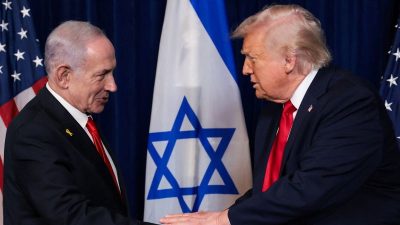
The original election date is late October, but Netanyahu may expedite the vote to maximize gains. His alignment with Trump has also been a focal point, with the prime minister frequently praising the U.S. leader’s support. A planned Israel Prize ceremony on Independence Day next month will honor Trump, though his attendance remains uncertain.
In contrast, the U.S. views the joint military effort as contentious. A CNN poll shortly after the Iran strikes found nearly 60% of Americans disapprove of the action, with stark partisan divides: only 18% of Democrats support it, compared to 77% of Republicans. Critics, including California Governor Gavin Newsom, argue Netanyahu’s decisions could deepen divisions over Israel’s global role, especially after the ongoing Gaza conflict strained international support.
