Denmark’s Frederiksen bruised in election, as voters put Trump’s Greenland ambitions to the side
Denmark’s Frederiksen bruised in election, as voters put Trump’s Greenland ambitions to the side
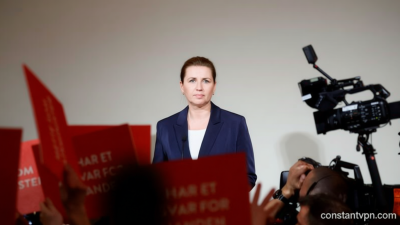
Denmark’s recent election concluded without a clear victor, leaving Prime Minister Mette Frederiksen’s political future uncertain. The campaign centered on everyday concerns rather than her management of the ongoing dispute over U.S. President Donald Trump’s interest in Greenland. Official figures indicated a decline in support for the Social Democrats, Frederiksen’s party, compared to the 2022 election. Her coalition partners also faced reduced voter confidence. Neither the left nor right factions secured a parliamentary majority, positioning Lars Løkke Rasmussen, the seasoned Foreign Minister, as a pivotal figure.
Rasmussen, a former prime minister, leads the Moderate party with 14 seats in the 179-member Folketing. His potential influence could decide whether Frederiksen, who has governed for nearly seven years, will continue in office. Despite the setback, Frederiksen expressed readiness to remain in power. “The world is unsettled. There are strong winds around us,” she remarked. “Denmark needs a stable government, a competent one. We are ready to take the lead.”
“Denmark is a small country of 6 million people in a world of 8 billion, which is in upheaval — and there is war in Iran, and there is war in Ukraine,” said Rasmussen. “We are one tribe. We must come together. We must not be divided.”
Frederiksen’s coalition, the Social Democrats, retained the largest single-party vote with 21.9%, though this fell short of the 27.5% recorded in 2022. Defense Minister Troels Lund Poulsen, the strongest center-right opponent, stated his Liberal party would not rejoin the government with her party. The election outcome highlights shifting voter priorities, as concerns over cost of living, pensions, and a proposed wealth tax dominated discussions.
Frederiksen had anticipated a strong showing, aiming to bolster her image through firm stances on Greenland. She highlighted Denmark’s role in supporting Ukraine and its strict immigration policies as part of her platform. However, these efforts did not prevent a drop in support, as challenges like inflation and economic pressures became central to the campaign. With no party securing a majority, Denmark’s proportional representation system will likely result in coalition negotiations, traditionally favoring either the left or right blocs.
Political analyst Morten Klessen acknowledged the outgoing government’s performance but noted the domestic focus had been diluted by global events. “Our government has had a lot of attention on Ukraine,” he said. “There’s been a lot of trouble in Europe, and I think we have lost a little bit in domestic votes for that.” Frederiksen, meanwhile, framed the results as a natural trend for a party seeking a third term. She compared this election to the 25.9% vote share her party received in 2019, when she first took office.
Although Greenland’s status remained a key issue in earlier months, it faded during the campaign due to widespread consensus on its role within the Danish kingdom. Frederiksen had warned in January that U.S. control of Greenland would undermine NATO. This concern, however, has since eased after Trump relented on tariffs and initiated technical talks with Denmark and Greenland over an Arctic security pact. The election underscores how domestic priorities often overshadow international tensions in small nations.
