Nepal: Rapper-turned-politician poised to become next PM
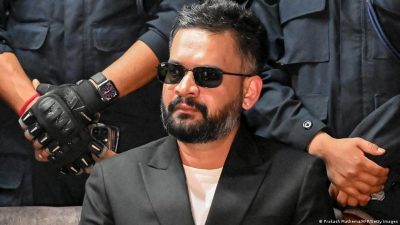
Balendra Shah's RSP party is set for a landslide election win after Gen Z-led protests toppled the previous government. Indian Prime Minister Narendra Modi has already spoken with Shah. Almost six months after Gen Z protests toppled the government in Kathmandu , one of the principal figures of the youth-led movement is tipped to be the new Prime Minister.
Rapper-turned-politician Balendra Shah's Rastriya Swatantra Party (RSP) is on course for a landslide victory in the parliamentary elections, with Shah likely helming the Himalayan nation soon. As of Tuesday morning, the RSP has won 125 of the 165 seats directly elected by voters in the 275-member House of Representatives, according to election commission results. One seat is yet to be declared.
The remaining 110 seats are allocated through a proportional representation system, with parties awarded seats based on their share of the vote. Final results are expected later this week. India's Prime Minister Narendra Modi on Monday congratulated the RSP leaders after early results showed the party heading toward victory.
Modi said he had a "warm telephone conversations" with Shah, as well as RSP chairman Rabi Lamichhane. "I am confident that with our joint endeavours, India and Nepal relations will scale new heights in the years ahead," Modi posted on X. The two neighboring countries have traditionally been allies with open borders along the plains.
The RSP, a party formed only four years ago, swept aside the long-dominant Nepali Congress and the Communist Party of Nepal (Unified Marxist–Leninist). Four-time prime minister KP Sharma Oli, whose government was ousted in the September violence last year, was defeated by Shah in his own constituency in the March 5 election. The so-called Gen Z protests — which resulted in at least 51 deaths — toppled the Oli administration.
They were triggered by a social media ban by Oli's government. The ban was withdrawn but the unrest raged on over broader issues concerning Nepal's prolonged economic woes. The subsequent wider dissent against corruption erupted across Nepal and attracted tens of thousands of demonstrators.
After Oli's ouster, former Supreme Court Chief Justice Sushila Karki took over as interim prime minister, becoming the first woman to head the South Asian country. To view this video please enable JavaScript, and consider upgrading to a web browser that supports HTML5 video
