Why a delayed Xi-Trump summit could give China a stronger hand
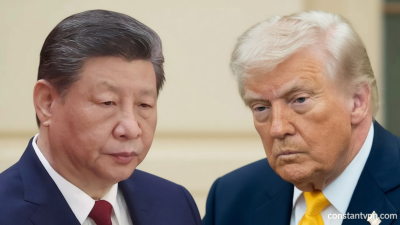
Why a Delayed Xi-Trump Summit Could Give China a Stronger Hand
Chinese officials suggest that President Donald Trump’s decision to postpone a pivotal meeting with Xi Jinping may inadvertently bolster Beijing’s position in future negotiations. The delay, which the White House initially proposed for a summit originally set for March 31 to April 2, is seen as a strategic move that could allow China to navigate the ongoing US conflict in Iran with greater flexibility. Analysts note that this timing could weaken Trump’s leverage if the war continues to disrupt oil supplies and economic stability globally.
Beijing has not officially confirmed the rescheduled summit, leaving its stance on the delay open to interpretation. While Chinese Foreign Ministry spokesperson Lin Jian praised the value of such high-level meetings, describing them as “irreplaceable” in shaping the US-China relationship, behind-the-scenes assessments reveal a more cautious outlook. Two unnamed sources indicate that the summit may not proceed as planned, with either side retaining the option to withdraw from discussions.
“If the war in Iran leads to significant harm to Chinese citizens or damages key assets in the region, Trump might not be able to push forward,” said a Chinese official, highlighting one of Beijing’s potential concerns.
Experts argue that the delay reflects Trump’s administration’s uncertainty about the war’s duration. “The longer the conflict lingers, the more Trump’s frustration grows, and his weaknesses become evident,” remarked Wu Xinbo, a researcher at Fudan University and member of China’s Foreign Ministry advisory committee. “Waiting could let us assess his remaining options before committing to talks.”
The summit was intended to serve as a turning point for US-China relations, particularly in light of the escalating Iran war. During a press briefing a week into the conflict, Chinese Foreign Minister Wang Yi emphasized 2026 as a “critical year” for bilateral ties. However, Beijing’s anticipation of the meeting was overshadowed by the US’s unexpected military action in February, which disrupted the planned timeline.
Some analysts believe the delay exposes Trump’s diminished standing in domestic and international affairs. Following the US Supreme Court’s rejection of his emergency tariffs, his influence has waned, and the prolonged Iran campaign has sparked debates over his ability to maintain support among voters. “He aimed to resolve the issue swiftly, but the war has dragged on, leaving him in a weakened position,” Wu noted.
China’s position as a stable alternative to the US has gained traction amid global uncertainty. “The US’s unpredictability has shifted perceptions, with many nations now favoring China as a more reliable partner,” said Rana Mitter, a US-Asia relations expert at Harvard Kennedy School. “This perception shift could benefit China in the summit’s aftermath and beyond.”
