China warns ‘flames of war’ spreading and calls on US to help manage differences ahead of Xi-Trump meeting
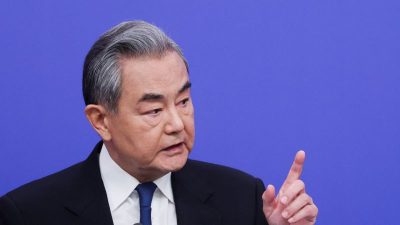
China Warns ‘Flames of War’ Spreading, Urges US to Help Manage Differences Ahead of Xi-Trump Meeting
As tensions in Iran escalate into full-scale conflict, China’s foreign minister Wang Yi emphasized his nation’s role as a bastion of peace during a Sunday press conference held during the National People’s Congress session. The remarks came ahead of a pivotal summit between U.S. President Donald Trump and Chinese leader Xi Jinping, set to take place in Beijing later this month.
Wang Yi described the ongoing war as “a conflict that should never have occurred, and one that has left no one unscathed.” He called for an immediate pause in hostilities to “halt the spread of war’s impact and prevent further global disruption.” The minister also urged all involved parties to “return to dialogue and resolve disputes through mutual understanding,” highlighting China’s diplomatic push for stability.
“All parties should return to the negotiating table as soon as possible and resolve their differences through equal dialogue,” Wang added.
China’s diplomatic posture reflects its strategic priorities as it hosts the U.S. leader for talks expected to tackle trade disputes, Taiwan, and broader geopolitical tensions. The war in the Middle East adds complexity to these discussions, with Iran’s leaders maintaining longstanding ties to Beijing. China has expressed concern over the assassination of Ayatollah Ali Khamenei and the economic strain caused by rising oil prices.
Amid the conflict, the U.S. has remained steadfast in its demands, with Trump stating on Friday that a deal with Iran is only possible through “unconditional surrender.” However, Beijing has shown restraint, positioning itself as a reliable power in contrast to Washington’s recent interventions, including the capture of Venezuelan President Nicolás Maduro and the initiation of a global trade war.
Wang Yi underscored China’s role as “the world’s most vital force for peace, stability, and justice,” framing his nation as a stabilizing presence in a volatile era. Yet he acknowledged the need for continued cooperation with the U.S., noting that the two leaders have already demonstrated resilience in navigating challenges.
“What is needed now is for both sides to make thorough preparations, foster a conducive environment, manage existing differences, and eliminate unnecessary interference,” Wang said, addressing CNN’s Steven Jiang.
Despite Trump’s recent moves, such as his “Board of Peace” initiative, Wang defended multilateralism, vowing to uphold the United Nations as a cornerstone of international order. His comments contrast with last year’s warnings about U.S. “two-faced” tactics, signaling a shift from caution to confidence in China’s diplomatic approach.
In recent months, a series of traditionally allied U.S. leaders have visited Beijing, reflecting the growing diplomatic momentum. Wang noted this trend, stating, “We have observed that more European figures now recognize China as a global partner rather than a competitor.” This development underscores China’s success in expanding its international influence.
