Author: Betty Martin – constantvpn.com

  • Root ‘hacked off’ and ‘disappointed’ at Carse incident

    Root ‘hacked off’ and ‘disappointed’ at Carse incident

    England Captain Joe Root Vows to Rebuild Trust After Latest Off-Field Scandal

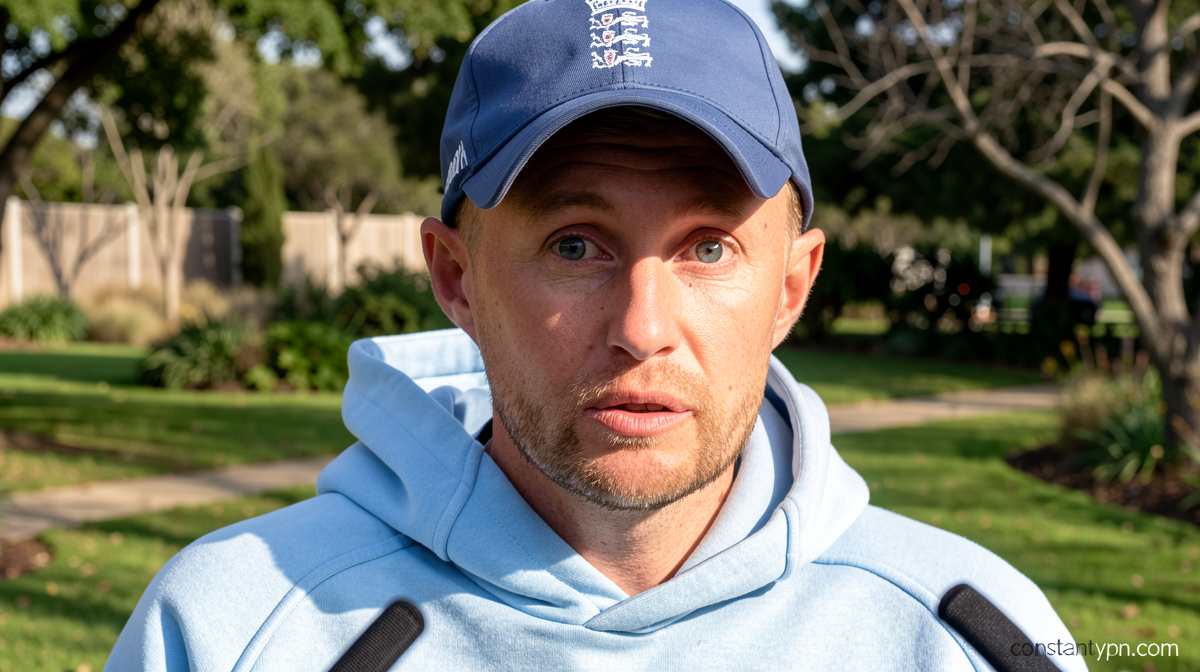
    Constantvpn.com – The cycle of late-night embarrassments surrounding England’s cricket squad reached another painful chapter this week, prompting captain Joe Root to describe himself as “hacked off” and “disappointed” following a nightclub incident involving fast bowler Brydon Carse in Derby. Speaking at a press conference at Lord’s on Tuesday afternoon, Root made clear that the episode has soured what should have been a period of celebration following England’s strong performance in the opening Test.

    Root revealed he had held what he called a “strong” conversation with the full England group earlier that same day, a session aimed at resetting expectations and reinforcing the standards the dressing room must uphold both on and off the pitch.

    The Derby Incident

    Carse, 31, was removed from the squad for the second Test against Pakistan, which kicks off at Lord’s on Thursday. Sonny Baker stepped into the playing XI in his place. The controversy erupted after images surfaced on social media on Sunday showing the right-armer in handcuffs outside a bar in Derby on Saturday night. He was briefly detained by police before being released without charge.

    At the time of the incident, Carse was not on England duty. He had been released to represent Durham in domestic competition, though he remains bound by a central contract with the England and Wales Cricket Board. That contractual status is precisely what elevates the matter beyond a simple club-level issue: the ECB has referred the case to the independent Cricket Regulator, and Root stressed he would play no part in determining any disciplinary outcome.

    Root’s Reaction

    In the opening minutes of his news conference, the 35-year-old captain did not soften his language.

    “If I’m being brutally honest, I’m really hacked off, I’m really disappointed,” Root said. “After last week’s performance, we’re sat here and we’re talking about something that is not related to it at all.”

    He added that his first instinct upon learning of the arrest was concern for Carse as a person, not as a player.

    “I’ve spoken to Brydon, and when I first found out my main concern was him as a person,” Root continued. “I don’t think I’m speaking out of turn by saying he’s very upset, very apologetic and understands his actions. I’m sure that when he gets his chance he will say that himself.”

    Yet Root quickly shifted focus from the individual episode to a wider pattern of behaviour he described as “stupid mistakes” that keep recurring away from the game.

    “But I don’t think it’s the isolated incident itself, it’s the fact we keep making stupid mistakes away from the game and it’s detracting from what we’re doing on the field.”

    A Year of Off-Field Turbulence

    The Carse episode is the latest in a string of incidents that have dogged England’s contracted players over roughly the past twelve months. In October, white-ball captain Harry Brook was punched by a nightclub bouncer outside a venue in Wellington, New Zealand, with teammates Jacob Bethell and Josh Tongue also present. During the Ashes tour of Australia, opener Ben Duckett was captured on video appearing visibly drunk while the squad enjoyed a holiday in Noosa. Then in June, former Test captain Ben Stokes and pace bowler Gus Atkinson broke a team curfew and were in the vicinity when a member of England’s security detail was struck by a Saracens rugby player inside a London nightclub.

    In the current Derby episode, Carse was accompanied by Durham teammates Stokes and Matthew Potts, all of whom hold England central contracts. Stokes’ deal remains active despite his international retirement announced in June. Altogether, eight contracted players have been involved in or present at late-night incidents over the past year — representing more than a quarter of the thirty men currently on England deals.

    The Curfew Question and the Path Forward

    When Root was reappointed as Test captain, one of his first decisions was to scrap the midnight curfew that had been enforced under the Stokes and Brendon McCullum regime following a run of off-field problems during the winter Ashes. On Tuesday he stood by that call, insisting he still did not believe a blanket time restriction was “the right way to go.” At the same time, he conceded that regaining the public’s confidence would require sustained, visible effort over an extended period.

    “In many ways we’re going to have to earn a lot of trust back, and it’s something that we’re going to have to live and breathe consistently,” Root said. “I might only be in this dressing room for a couple more years, but there is a group of players there who might be in there for another 10.”

    He emphasised that the Tuesday morning session with the squad was about making expectations explicit: what it means to wear the England cap, what conduct is acceptable, and how the group will be judged by fans and the wider cricketing public.

    “I’ve made it very clear how we want to conduct ourselves, and now we’ve got to live it and show people what I see day in, day out in the dressing room, which is a group of characters who know what it means to play for England and not having incidents define how we are seen as players. That’s going to take some work and time.”

    Root also confirmed he had reached out to Stokes, who appeared in the social media footage from Derby, though the conversation was limited to checking on Carse’s wellbeing. Asked about the potential sanctions Carse might face, Root deferred entirely to the regulator’s process and reiterated that his own focus is on moving forward and, in his words, “building something to be proud of.”

    “I don’t think the recent past has been a good look,” Root added.

    With the Pakistan series now underway at Lord’s, the dressing room faces the unenviable task of translating Tuesday’s strong words into on-field results while the regulator’s process runs its course. For a squad already navigating the pressure of a home Test series, the message from the captain is unambiguous: the era of off-field distractions must end, and the standard of conduct must match the quality of cricket being produced inside the square.

    Frequently Asked Questions

    What is Root hacked off and disappointed at Carse?

    Root hacked off and disappointed at Carse is the main topic of this guide. The article explains the context, practical details, and next steps readers should understand.

    Why does Root hacked off and disappointed at Carse matter?

    Root hacked off and disappointed at Carse matters because readers are looking for a useful answer, not just a short summary. Good content should match search intent and help them decide what to do next.
  • Man dies in crash after police pursuit

    Man dies in crash after police pursuit

    Nineteen-Year-Old Driver Killed After Police Chase Ends in Multi-Vehicle Collision Near Stratford-upon-Avon

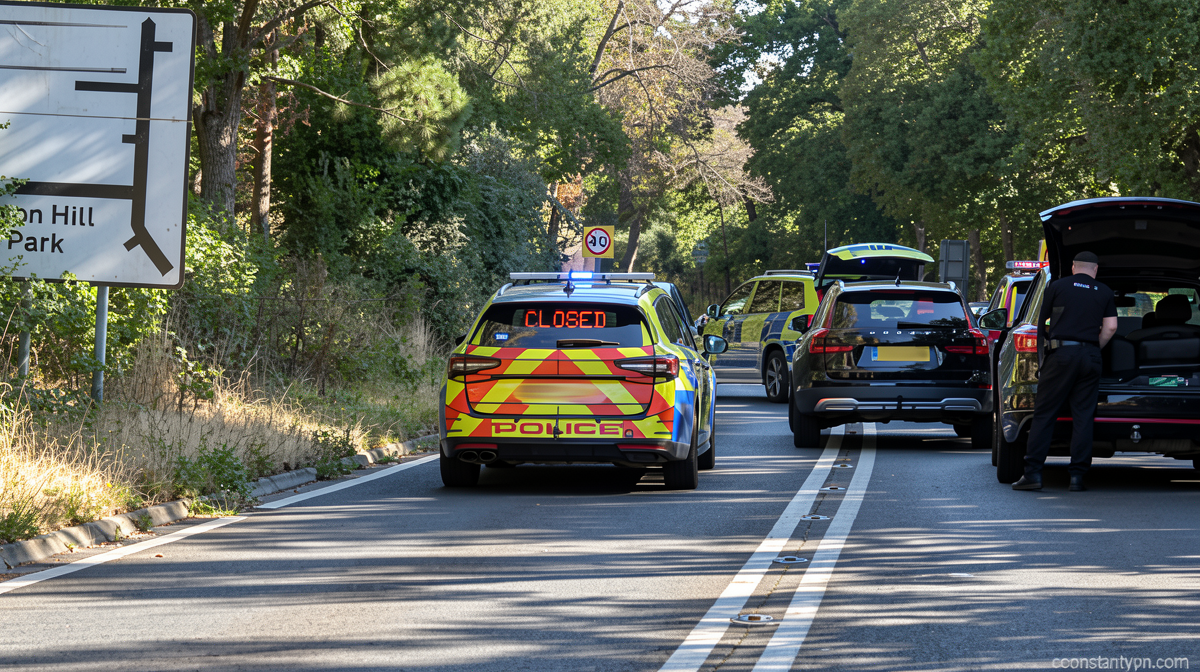
    Constantvpn.com – A young man lost his life and two women sustained serious injuries when a high-speed police pursuit culminated in a crash on the A439 Warwick Road, close to the historic town of Stratford-upon-Avon, on Monday evening. The incident, which unfolded shortly before 17:30 BST, prompted an immediate emergency response and triggered an independent review by the police watchdog.

    The Pursuit and Collision

    Warwickshire Police attempted to halt a black Audi A3 on Birmingham Road when its driver ignored the instruction to pull over. Rather than complying, the vehicle accelerated away toward the A46 before looping back toward Stratford along the A439. Approximately fifteen minutes after the initial stop attempt, the Audi struck a white Ford Puma travelling on Warwick Road. Several other vehicles sustained damage during the chase, according to the force.

    The Independent Office for Police Conduct, which has since opened its own inquiry, described the pursuit as lasting around six minutes before the Audi became involved in a collision with a car driven by a member of the public. The discrepancy in duration between the two accounts reflects the different points at which each organisation marks the start and end of the chase.

    Casualties and Medical Response

    Paramedics from West Midlands Ambulance Service attended four patients at the scene. The 19-year-old male driver of the Audi was pronounced dead by ambulance staff after crews administered advanced life support. A spokesperson for the ambulance service confirmed that, despite sustained resuscitation efforts, the young man could not be saved.

    The woman driving the Ford Puma — identified by the IOPC as being in her 70s — sustained life-threatening injuries and was transported to hospital in critical condition. A female passenger in the same vehicle was also seriously hurt and taken to hospital, though her injuries were not assessed as life-threatening. A fourth patient from the vehicle sustained minor injuries.

    Police Statement and Independent Investigation

    Superintendent Steve Flavell addressed the families of those affected and confirmed that a mandatory referral had been made to the IOPC following the death.

    “Our thoughts are with the families of everyone involved in this collision and we’re providing specialist support to them at this extremely difficult time. We made a mandatory referral to the IOPC because a death had occurred following police contact. They have declared an independent investigation and we will co-operate fully with their investigation.”

    The IOPC stated that its investigation was at an early stage and that its officials had attended the police’s post-incident operation to gather information.

    “We understand the driver of a black Audi A3 failed to stop for police and was then pursued for around six minutes before the vehicle was involved in a collision with a car being driven by a member of the public,”

    the watchdog’s spokesperson said.

    Local Reaction

    Manuela Perteghella, the Liberal Democrat MP for Stratford-on-Avon, described the incident as “incredibly tragic” and offered condolences to those affected.

    “My thoughts are with the families of all those impacted. We must now let the investigation take its course.”

    Road Closure and Local Context

    Warwick Road was closed on Monday from the Marraway roundabout to its junction with Ingon Lane and Sand Barn Lane. The stretch remained shut into Tuesday morning before eventually reopening. Emergency crews blocked the carriageway for several hours after the collision while they treated casualties and secured the scene.

    The location of the crash carries particular significance for local road-safety planners. Two years ago, Warwickshire County Council carried out a package of improvements on Warwick Road specifically designed to reduce collisions in the area. Those measures included the introduction of a one-way system, a reduction in the speed limit, and a protected turning lane at the Ingon Lane junction. Street lighting was also upgraded to enhance visibility for pedestrians crossing near Fisherman’s Car Park.

    The fact that a fatal multi-vehicle incident occurred on a stretch of road recently subjected to such interventions will likely feature in the IOPC’s review and in any subsequent local authority assessment of the area’s safety profile. Residents of Stratford-upon-Avon, a town of roughly 30,000 people situated on the edge of the Cotswolds, will be watching closely as the independent investigation progresses.

    Frequently Asked Questions

    What is Man dies in crash after police?

    Man dies in crash after police is the main topic of this guide. The article explains the context, practical details, and next steps readers should understand.

    Why does Man dies in crash after police matter?

    Man dies in crash after police matters because readers are looking for a useful answer, not just a short summary. Good content should match search intent and help them decide what to do next.
  • Rumours swirled after a Vietnamese teen was run over – then came a stunning admission

    Rumours swirled after a Vietnamese teen was run over – then came a stunning admission

    Rumours Swirled After a Vietnamese Teen’s Death

    Constantvpn.com – Rumours swirled after a Vietnamese teenager was struck and killed in a Hanoi intersection last May, and for fifteen months the silence that followed became its own scandal. What began as a routine traffic collision on Nguyen Huy Tu Street quickly metastasised into a national reckoning over accountability, political privilege, and the reach of social media in a tightly managed information environment.

    The Collision and Fifteen Months of Silence

    On 30 May 2025, former National Assembly deputy Nguyen Sy Cuong was behind the wheel of his BMW when the vehicle swerved across the centre line and collided with an oncoming motorcycle carrying a father and his eighteen-year-old daughter. Do Viet Hung, the father, sustained a broken leg and survived. His daughter, Do Ngoc Phuong Thuy, lost her right leg in the impact and died in hospital ten days later.

    Authorities released only fragmentary details in the weeks that followed. Reports surfaced that the BMW driver bore the initials NSC and had been born in 1961, fueling speculation that a sitting or former member of parliament was involved. Others alleged the case had been quietly buried under the weight of powerful connections. Screenshots circulated online showing posts deleted at the apparent request of Vietnamese government officials, though those claims could not be independently confirmed.

    The Justice Tree and a Generation’s Outrage

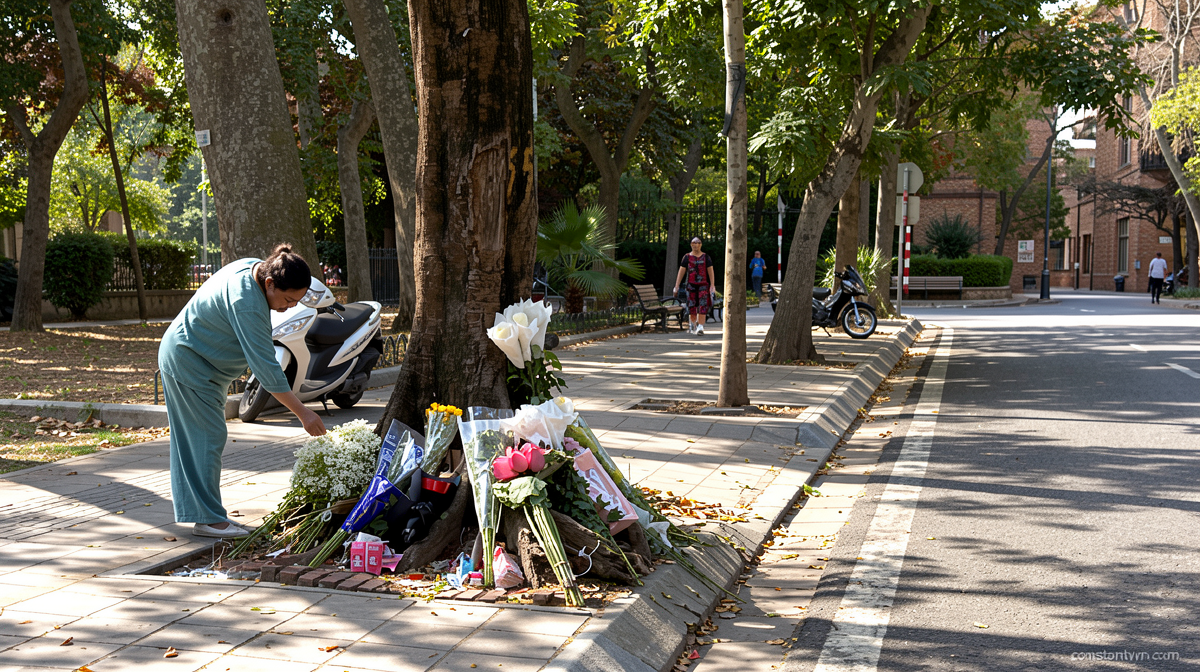
    In early August, anonymous Gen Z users flooded Facebook, Instagram, Threads, and X with millions of posts tagged #NguyenSyCuong and #BMW, demanding a transparent investigation. The campaign gave the crash site a new name: the Justice Tree, a street-side tree beneath which masked mourners began laying vibrant bouquets. Police moved swiftly to clear the flowers, prompting organisers to build a virtual equivalent online where hundreds of thousands of users have since posted tributes.

    “The issue had become too big to ignore.” — Summary of the pressure that finally compelled an official response after more than a year of growing suspicion.

    The sustained online pressure echoed an earlier precedent. In March of this year, sixty-six-year-old Nguyen Van Sau, a retired police colonel and former deputy director of a department under the Ministry of Public Security, drove under the influence of alcohol through Hanoi, colliding with seven cars and three motorcycles in a chain-reaction crash that killed one woman and seriously injured two others. After three months of public outcry, he was charged with “violating regulations on participation in road traffic.”

    An Extraordinary Admission

    Last Monday, state broadcaster Vietnam Television (VTV) aired an official statement confirming that Nguyen Sy Cuong was indeed driving the BMW on the night of the crash. Citing police and prosecution sources, the report stated that because he “sincerely confessed and actively and fully remedied the consequences of his actions,” the family of Do Ngoc Phuong Thuy had submitted a petition to exempt him from prosecution. The broadcast did not specify what form the remedy took, but Nguyen Sy Cuong was cleared of all criminal liability.

    Lawyers questioned whether the proceedings satisfied due-process standards or had been conducted at all, while social media users pressed for a more thorough inquiry into his political connections. Do Viet Hung appeared on the VTV broadcast to thank internet users for their sympathy and said the family was satisfied with the investigation’s outcome. Yet many observers remain unconvinced that the episode marks the end of the story.

    Frequently Asked Questions

    What happened on Nguyen Huy Tu Street? On 30 May 2025, a BMW driven by former National Assembly deputy Nguyen Sy Cuong crossed into oncoming traffic and struck a motorcycle carrying an eighteen-year-old girl and her father. The girl, Do Ngoc Phuong Thuy, died ten days later; her father survived with a broken leg.

    Why is the crash site called the “Justice Tree”? After masked mourners began leaving bouquets at the base of a street tree near the collision point, social media adopted the nickname. When police removed the physical flowers, supporters created a virtual memorial online that has since gathered hundreds of thousands of tributes.

    Was Nguyen Sy Cuong charged? No. Following a family petition and his stated confession, he was cleared of all criminal liability. Legal experts have raised questions about whether the process met due-process requirements.

    How did social media influence the outcome? Millions of posts under #NguyenSyCuong and #BMW, sustained over months, created pressure that authorities could no longer ignore. A similar online campaign in March led to the charging of retired police colonel Nguyen Van Sau after a fatal drunk-driving crash.

  • How a new era of heatwaves could shake up the school calendar

    How a new era of heatwaves could shake up the school calendar

    When the Thermometer Outpaces the Timetable: UK Schools Face a New Thermal Reality

    Constantvpn.com – The summer of 2025 is shaping up to be the hottest ever recorded in Britain, and the consequences are landing squarely on the desks of millions of schoolchildren. Five widespread heatwaves struck the country this year, and four consecutive months pushed temperatures past 35°C — a streak with no precedent in the national record. For educators, parents, and policymakers, the numbers translate into a single, uncomfortable question: can the traditional school calendar survive the summers that climate change is now delivering?

    A Calendar Built for a Cooler Century

    Scotland’s pupils returned to their playgrounds in mid-August after a break that opened in late June or early July. Across much of continental Europe, the academic rhythm follows a broadly similar template. But in England, Wales, and Northern Ireland, the timetable runs differently: schools did not release children until late July, meaning that the worst of the early-summer heat hit classrooms while exam boards were already in full swing. The result was chaotic. More than 1,000 schools across the UK either shut their doors for the day or sent pupils home early, before the afternoon peak made conditions untenable.

    Inside those buildings, the experience was far worse than the thermometer outside suggested. With no air conditioning and ventilation systems designed for a milder climate, classrooms became stifling. GCSE and A-level candidates, already under enormous pressure, found themselves attempting high-stakes examinations in rooms that felt like ovens. The disruption was not a minor inconvenience; it was a direct assault on learning outcomes.

    “We know high temperatures can significantly impair concentration and performance” of children in schools, warned Baroness Brown, chair of the UK’s Climate Change Adaptation committee.

    The Data Tells a Clear Story

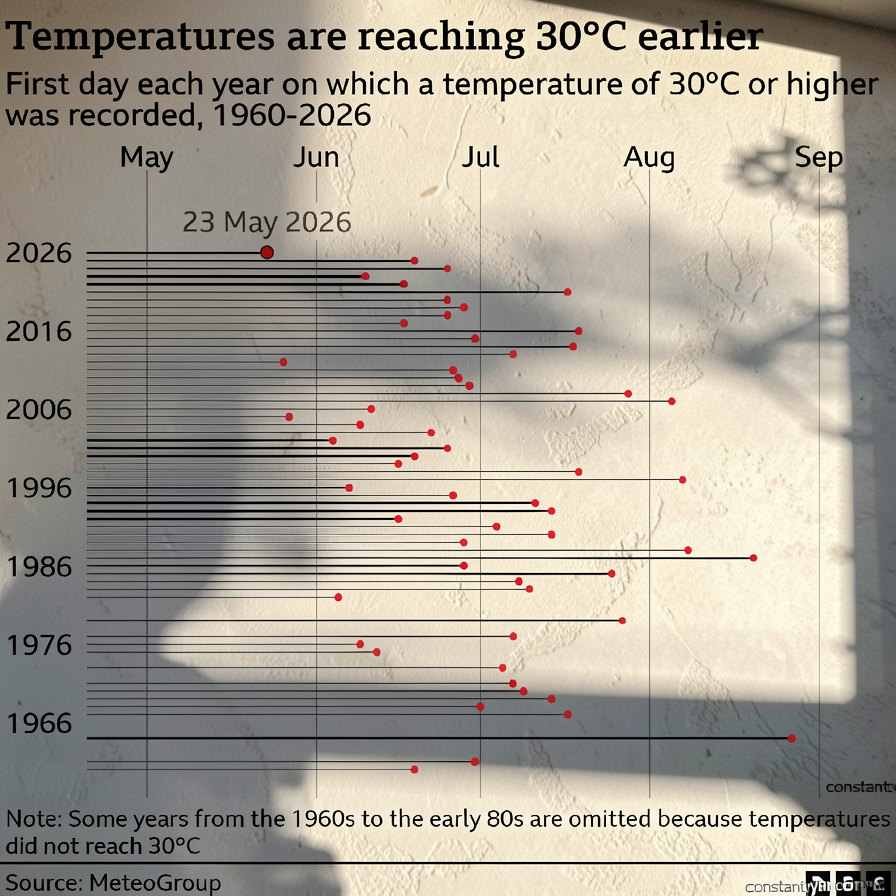
    Temperature records compiled over decades show that the onset of extreme heat has been pulling forward by roughly four weeks. In the 1960s, the first day of the year reaching 30°C arrived, on average, around 13 July. In the 2020s, that threshold is now crossed around 19 June. The practical implication for schools is immediate: the weeks once reserved for revision and examinations now overlap with the peak of the thermal season.

    This year’s June delivered one of the most intense heatwaves the UK has experienced, with up to seven consecutive days well above the official heatwave thresholds of 25–28°C. On 26 June, Lingwood in Norfolk recorded 38°C — the hottest June day ever measured in Britain. The Met Office issued a red extreme-heat warning at the end of the month, and the UK Health Security Agency activated multiple amber-level public-health alerts over the preceding weeks. July brought no relief; heatwave conditions persisted across most of the month, compounding the stress on already-strained school infrastructure.

    Voices from the Ground

    Parents have begun to organise around the issue. Andrea Bigger, a London mother, described her daughter’s previous experience of heat exhaustion at primary school, which ended in hospitalisation after the child overheated in a classroom. She characterised the national situation bluntly: the UK is “not ready or prepared” for the thermal conditions now becoming routine.

    On the institutional side, the call to rethink the calendar has been growing louder. In February 2026, Sir Martyn Oliver, chief inspector at Ofsted, made the case publicly:

    “It’s pretty hot usually in May, June and July, just at the point you’re asking children to sit down and take an exam… so I think there is a need to have a good old look at it [the school year].”

    Steve Chalke, who founded Oasis Academy — a chain operating more than 50 schools across England — described the recent heatwaves as a “real inhibitor” to teaching, underscoring that the problem is not theoretical but operational, hitting lesson delivery week after week.

    What the Science Projects Forward

    Will Lang, chief meteorologist at the Met Office, framed the broader shift: the “de facto ‘hot season’ in the UK is lengthening, with increasing prevalence of hot weather — including heatwaves — in May and September in addition to the standard meteorological summer of June, July and August.” In other words, the window of dangerous heat is expanding at both ends of the traditional summer, compressing the already-vulnerable exam period from two directions.

    A joint study by the Met Office and University College London modelled the educational cost of continued warming. Under a trajectory in which global average temperatures exceed 2°C above pre-industrial levels — a scenario many scientists consider likely on current emissions paths — the average UK pupil could lose an estimated 8.2 days of effective learning per year to extreme-heat disruptions. That figure represents not a single catastrophic event but the accumulated toll of repeated “heat days” on which classrooms become too warm for sustained concentration.

    Research into classroom thermal comfort has identified 26°C as an upper boundary beyond which cognitive performance degrades measurably. Much of the UK’s school estate, particularly older Victorian and interwar buildings, was designed without assuming sustained indoor temperatures above that line. Retrofitting ventilation or cooling at scale would require investment on a scale the sector has not yet secured.

    The Policy Question Ahead

    Whether the answer lies in shifting the summer holiday earlier, staggering exam sittings, investing in building retrofits, or some combination of all three, the window for decision is narrowing. The data from this summer — record-breaking, unprecedented in duration and intensity — will not be an isolated anomaly. It is the first full expression of a pattern that the meteorological record shows is already entrenched. The school calendar, a structure inherited from an era of reliably mild British summers, now sits in direct conflict with the thermal reality of the coming decades. The question is no longer whether the calendar will need to change, but how quickly the system can adapt before the next exam season collides with the next heatwave.

    Frequently Asked Questions

    What is How a new era of heatwaves?

    How a new era of heatwaves is the main topic of this guide. The article explains the context, practical details, and next steps readers should understand.

    Why does How a new era of heatwaves matter?

    How a new era of heatwaves matters because readers are looking for a useful answer, not just a short summary. Good content should match search intent and help them decide what to do next.
  • TikTok to pay $400m to US in one of largest child privacy settlements

    TikTok to pay $400m to US in one of largest child privacy settlements

    TikTok Settles Landmark US Child Privacy Case With $400 Million Payment

    Constantvpn.com – In a move that reshapes the landscape of digital privacy enforcement in America, TikTok has committed to remitting $400 million (approximately £293 million) to the United States government, closing out a federal lawsuit that accused the short-video platform of systematically harvesting personal information from children younger than thirteen. The settlement ranks among the most expensive child-privacy resolutions ever reached in American courts and signals that regulators will continue to pursue social-media giants over how they handle minors’ data.

    The Legal Foundation: COPPA and a Two-Decade-Old Statute

    The case traces back to a complaint filed in 2024 by the Department of Justice during the final months of President Joe Biden’s administration. Prosecutors alleged that TikTok and its parent, ByteDance, amassed “vast amounts of data” from millions of accounts belonging to users under the age of thirteen, in direct contravention of the Children’s Online Privacy Protection Act. COPPA, enacted by Congress in 2000, obligates online services directed at children to obtain verifiable parental consent before collecting personal information and to maintain reasonable safeguards over that data. The statute has become a primary enforcement tool as states and federal agencies tighten their scrutiny of how platforms monetize young users’ attention.

    At the time the suit was initiated, US attorneys stated that more than 170 million teenagers were active on the platform and characterized the application as one “directed to children.” Despite that designation, the government contended the company failed to implement reliable age-verification mechanisms and did not secure parental authorization for underage accounts.

    Financial Terms of the Resolution

    Under the negotiated agreement, TikTok and ByteDance are required to deliver $300 million to the Department of Justice immediately. An additional $100 million becomes payable once the government formally vacates a 2019 consent decree previously entered with the Federal Trade Commission. The decree had governed TikTok’s compliance obligations for several years and its removal effectively resets the regulatory relationship between the company and US privacy authorities.

    The settlement also reaches back to the company’s earlier incarnation. Musical.ly, the predecessor brand that ByteDance acquired before rebranding as TikTok, must pay a $5.7 million penalty for its own COPPA infractions and is obligated to confirm that it obtained parental consent for every user under thirteen. The Justice Department did not announce any operational restrictions or structural mandates beyond the monetary penalties, though it observed that since the lawsuit was filed, the platform has “undergone significant changes” spanning its ownership structure, privacy protocols, and the controls it applies to younger users.

    “Children and parents are better protected today than they were when this case began,” said Assistant Attorney General Brett Shumate.

    Where the Settlement Sits Among Other COPPA Penalties

    The $400 million figure places TikTok’s payment well above prior benchmarks. Google’s YouTube division settled a comparable federal action in 2019 for $170 million. Epic Games, maker of Fortnite, paid $275 million in 2022 after regulators found it had collected data from children without adequate parental consent. More recently, Meta — parent of Instagram and Facebook — faces a multi-state action brought by attorneys general in 29 jurisdictions alleging COPPA violations, with potential liabilities that could reach into the hundreds of billions of dollars. A jury trial in that Meta case commenced this week, with prosecutors accusing the company of deliberately targeting child users and extracting commercial benefit from their engagement.

    The China–US Corporate Split and Its Limits

    A critical nuance of the settlement is its geographic scope. Although the lawsuit predates last year’s restructuring that separated TikTok’s American business from its Chinese headquarters, the resolution applies exclusively to the company’s operations based in China. ByteDance, a privately held enterprise most recently valued by investors at roughly $550 billion, retains a 19 percent stake in the now-81 percent US-investor-owned entity that runs the American version of the app.

    The corporate separation itself was the product of intense political pressure. In 2024, President Biden advocated either an outright ban on the platform or a forced divestiture of its US operations. President Donald Trump subsequently endorsed the divestiture path, and the transaction was completed last year. The arrangement leaves ByteDance with a minority financial interest while a consortium of American investors controls day-to-day governance of the US business.

    Broader Implications for Platform Privacy

    The settlement underscores a regulatory trajectory in which child-data protection has moved from a niche compliance concern to a central axis of corporate liability. COPPA’s 2000 framework, originally drafted for a web of email newsletters and early social networks, now underpins multi-hundred-million-dollar enforcement actions against the world’s most valuable technology companies. The fact that TikTok’s payment dwarfs YouTube’s 2019 figure by more than two-fold illustrates both the growth in platform scale and the increasing willingness of US authorities to extract meaningful financial consequences from privacy failures affecting minors.

    For parents and advocates, the resolution offers partial relief: the monetary penalty, the vacated consent decree, and the confirmed parental-consent obligation for Musical.ly-era accounts collectively tighten the guardrails around under-thirteen users. Yet the absence of any announced structural or operational mandates beyond the fine leaves open questions about how aggressively the platform will implement age-verification technology going forward — particularly given that the US and Chinese operations now sit under different ownership and regulatory umbrellas.

    A TikTok spokesperson did not provide comment for this story.

    Frequently Asked Questions

    What is TikTok to pay 400m to US?

    TikTok to pay 400m to US is the main topic of this guide. The article explains the context, practical details, and next steps readers should understand.

    Why does TikTok to pay 400m to US matter?

    TikTok to pay 400m to US matters because readers are looking for a useful answer, not just a short summary. Good content should match search intent and help them decide what to do next.
  • What happened to Harry and Meghan’s American dream?

    What happened to Harry and Meghan’s American dream?

    The Sussexes’ California Chapter Closes: What Went Wrong With the Royal American Experiment

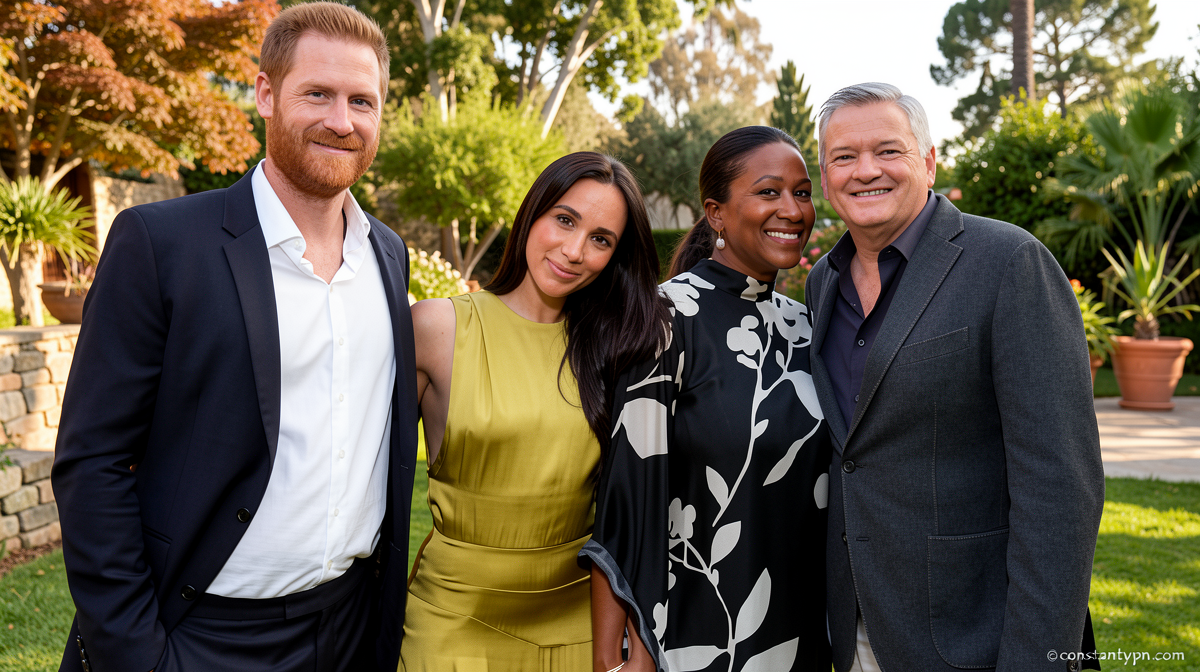
    Constantvpn.com – When Prince Harry and Meghan Markle stepped away from their royal duties in early 2020 and relocated to the sun-drenched hills of Montecito, California, they carried with them a brand so potent that no studio lot in Los Angeles had ever encountered its equivalent. Royalty, packaged and exported, was supposed to be the ultimate content franchise. Five years later, the franchise is winding down, and the couple is packing up to return to Britain. The reception in Southern California has been, by all accounts, a collective shrug.

    A Celebrity Enclave Meets the Royal Brand

    Montecito, a gated community roughly three hours north of Hollywood, was never designed for royalty. Yet it became the Sussexes’ chosen address, placing them within driving distance of Oprah Winfrey, Gwyneth Paltrow, and Rob Lowe. The proximity to entertainment’s power corridor was no accident. Within months of their arrival, multimillion-dollar podcast and streaming contracts materialised, and the couple’s name became a reliable headline generator across American media.

    “They were so sought after, they were names that would hit the press and command attention right away,” Stacy Jones, chief executive of the marketing and PR firm Hollywood Branded, observed about the couple’s initial marketability.

    Jones added a more sobering observation about life inside the industry machine: the constant calendar of galas, premieres, and brand activations ultimately serves one function — promoting something for sale. For a couple whose commercial value was tied to their own narrative, that dynamic created an inescapable feedback loop.

    The Oprah Interview and the Promise of Freedom

    The couple’s most consequential media moment in America came in March 2021, when Meghan sat across from Oprah Winfrey in a two-hour interview that dominated global conversation. In that conversation, Meghan characterised the autonomy of choosing her own path as

    “liberating.”

    Harry reinforced the narrative in subsequent interviews, explaining that the American setting afforded his family a measure of privacy and personal freedom that, in his words, they “undoubtedly wouldn’t be able” to enjoy at home. He framed the move as the life his mother, Princess Diana, would have wished for him — a framing that resonated with British audiences even as it underscored how much of the couple’s American identity was constructed around absence from the UK.

    Deals Signed, Deals Dissolved

    The commercial architecture of the Sussexes’ American years rested on two pillars. The first was a multi-year Spotify partnership, reported to be worth as much as $25 million (£18.3 million), under which Meghan produced the twelve-episode podcast Archetypes, featuring conversations with figures including Serena Williams and Mariah Carey. In 2023, Spotify and the couple’s production label Archewell Audio announced they had “mutually agreed to part ways,” effectively ending that revenue stream.

    The second pillar was a five-year Netflix agreement signed in 2020, with reported valuations ranging from $60 million to $100 million. It generated several programmes, including Heart of Invictus, which followed wounded and injured military veterans as they prepared for the Invictus Games. That arrangement has since been superseded by a less lucrative deal, set against a broader contraction across the entertainment sector that has squeezed budgets and shortened contract terms industry-wide.

    Behind the polished project titles, the couple’s production operation also endured significant internal instability. Staff turnover ran high enough that former employees reportedly referred to themselves informally as the “Sussex Survivors Club” — a small detail that spoke volumes about workplace culture inside the enterprise.

    Harry’s Memoir and the Limits of Self-Marketing

    Harry, separately, achieved a commercial milestone that few authors in any genre have matched. His memoir Spare, backed by a reported $20 million advance, sold more than six million copies worldwide and became the fastest-selling non-fiction book on record. Its promotion included a public conversation with trauma specialist Dr Gabor Maté, in which Harry examined how his upbringing inside the Royal Family shaped his emotional architecture.

    In a subsequent interview with BBC Newsnight, Maté described Harry as

    “very personable, very sensitive”

    and noted that the prince appeared determined to ensure “he doesn’t pass on his traumas to his children.” The memoir’s success demonstrated that Harry remained enormously marketable when the subject was himself, the Royal Family, or the advocacy causes he has championed for years. He also took on the role of chief impact officer at BetterUp, a Silicon Valley coaching platform, and co-created and executive-produced the Apple TV+ mental-health series The Me You Can’t See, developed alongside Oprah Winfrey.

    Why Now, and Why the Shrugs?

    Elizabeth Holmes, a Los Angeles-based royal correspondent and author of HRH: So Many Thoughts on Royal Style, noted that the announcement of the couple’s departure caught her off guard precisely because they appeared to have settled comfortably into their Californian routine.

    “I think part of why this was surprising to me was just because it did feel like they were sort of settling into their life in California.”

    The American press response was not uniformly sympathetic. The New York Post, long critical of the couple, ran the headline “Throne Back!” and declared that America’s “long national nightmare is over.” Such tabloid mockery, while dismissive, also reflected a broader American indifference: the Sussexes had accomplished something rare for newcomers to the industry — persuading major studios and platforms to commit substantial capital to their projects. Sustaining that investment, however, proved a different order of difficulty, particularly as the entertainment economy cooled and audience attention fragmented across streaming services.

    The return to Britain does not erase the American chapter. It simply marks its conclusion: a period in which royal cachet was converted into commercial contracts, those contracts were tested against market realities, and the couple ultimately chose to reposition themselves closer to the institution that remains their most durable source of global attention. Whether the next phase in the UK will generate the same volume of headlines as the California years remains an open question — one that, for now, Hollywood is content to let answer itself.

    Frequently Asked Questions

    What is What happened to Harry and Meghan?

    What happened to Harry and Meghan is the main topic of this guide. The article explains the context, practical details, and next steps readers should understand.

    Why does What happened to Harry and Meghan matter?

    What happened to Harry and Meghan matters because readers are looking for a useful answer, not just a short summary. Good content should match search intent and help them decide what to do next.
  • Belgian car salesman becomes prince after royal parentage confirmed

    Belgian car salesman becomes prince after royal parentage confirmed

    From Showroom to Throne Room: Belgium’s Latest Royal Recognition

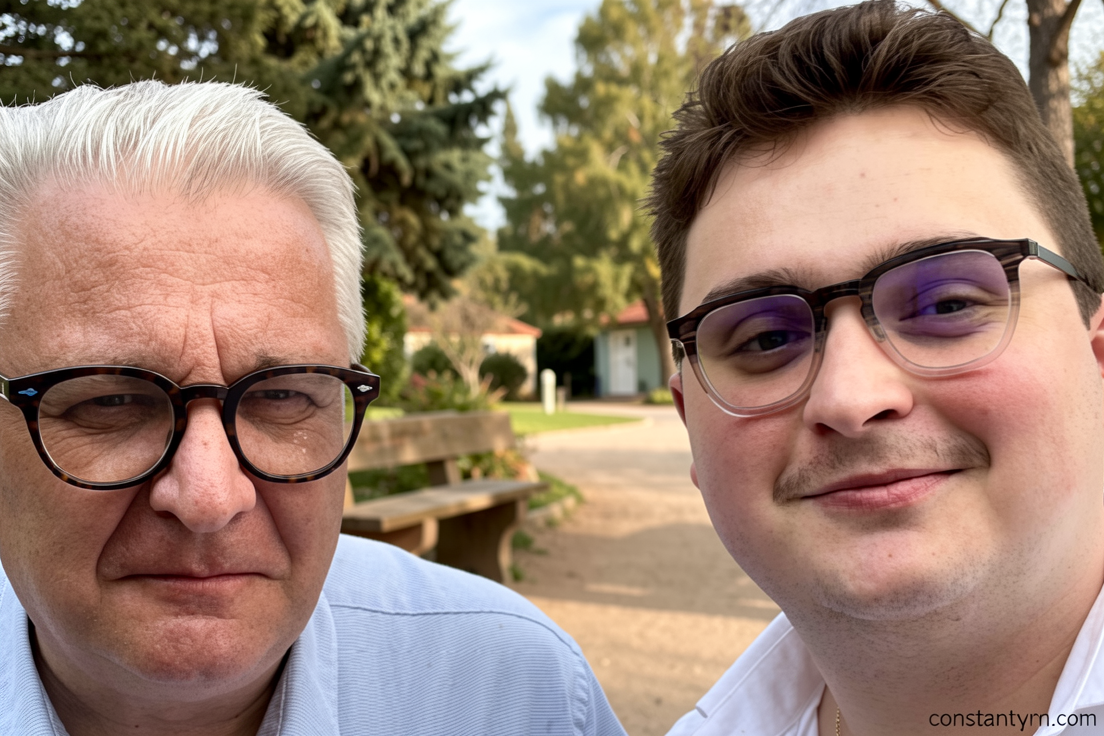
    Constantvpn.com – A young man who spent his early career selling cars in Belgium now carries the title of prince. Clément Vandenkerckhove, aged 26, has been formally acknowledged as the son and heir of Prince Laurent, the younger brother of King Philippe. The quiet town hall ceremony took place roughly six months ago, yet the full details of the recognition have only now surfaced publicly, confirming what many Belgians had already sensed from earlier media coverage.

    The relationship between Prince Laurent and the singer Wendy Van Wanten — whose birth name is Iris Vandenkerckhove — predates the prince’s 2003 marriage to Princess Claire. Clément is the product of that earlier bond, and his entry into the royal household marks another chapter in a Belgian monarchy that has repeatedly grappled with questions of paternity and family structure.

    What the Recognition Does — and Does Not — Confer

    While Vandenkerckhove now holds the rank of prince, the practical implications are deliberately limited. He will not draw from the public royal allowance, a benefit restricted under 2013 Belgian legislation to a narrow circle: King Philippe, his father King Albert II, Prince Laurent himself, and Princess Astrid. Equally, he sits outside the line of succession to the Belgian throne, unlike his half-sister Princess Louise and half-brothers Prince Aymeric and Prince Nicolas, who were born within the marriage to Princess Claire. He will also refrain from participating in official royal engagements.

    The decision to keep him at the periphery of court life appears designed to honour both his existing identity and the family’s established protocols. It sidesteps the kind of public spectacle that accompanied earlier royal paternity disputes in Belgium.

    A Son’s Perspective on an Unexpected Father

    Vandenkerckhove has had years to absorb the reality of his parentage, yet he remains cautious about fully adopting his father’s dynastic name. Speaking to the Flemish newspaper Het Nieuwsblad, he offered a measured reflection:

    “I might want to do that, but I am proud of the name Vandenkerckhove. If I were to sacrifice that family name, it would be a betrayal of everything my mother has done for me.”

    The sentiment underscores how the recognition is being framed not as an absorption into the Saxe-Coburg lineage, but as an addition to it — one that preserves the mother’s family identity intact.

    How the Truth Unfolded

    The path from ignorance to acknowledgment stretched over more than a decade. In 2013, a teenage Clément bumped into a man in a shopping centre without recognising him as a member of the royal family. It was not until he turned sixteen that his mother disclosed who his father actually was. Four years after that revelation, he gathered the nerve to place a telephone call. Several further conversations followed before the two met face to face, and Prince Laurent proposed a DNA test to settle any lingering doubt.

    Vandenkerckhove recalled the hospital visit in a September documentary broadcast on the Flemish channel VTM, describing the small gesture his father made to ease his nerves:

    “We went to the hospital together and I remember him saying ‘I’ll go first so you’re feeling at ease.’”

    The laboratory result that arrived by email confirmed a 99.5 per cent genetic match, closing the question definitively.

    A Pattern in Belgian Royal History

    The DNA-test episode echoes an earlier, far more turbulent chapter in the same dynasty. King Albert II, Prince Laurent’s father, faced a protracted paternity dispute with the artist Delphine Boël. After years of litigation, Albert publicly acknowledged in 2020 that he had fathered a daughter during an extramarital affair and subsequently recognised her. She now styles herself Delphine de Saxe-Coburg. The scandal contributed to the atmosphere surrounding Albert II’s abdication in 2013, when he passed the crown to his son Philippe.

    That 2013 transition also brought legislative reform: the Belgian parliament narrowed the pool of royals eligible for state-funded allowances, a change that directly shapes the financial terms under which Clément now enters the family. His exclusion from the allowance is thus not a personal slight but the application of a rule enacted over a decade ago.

    Public Familiarity and the Documentary Trail

    Belgians were not blindsided by the formal recognition. The VTM documentary aired last September had already walked viewers through Clément’s journey from a nameless teenager to a young man navigating a royal parentage. The programme humanised the story for a domestic audience and set the emotional tone before the town hall paperwork made it official.

    For Prince Laurent, the act of recognition completes a personal obligation while carefully avoiding the institutional complications that bedevilled his own father’s reign. The new prince will carry a title without a treasury line, a surname he chooses to keep, and a place in the family that is acknowledged yet deliberately kept at a respectful distance from the ceremonial core of the Belgian monarchy.

    Frequently Asked Questions

    What is Belgian car salesman becomes prince after?

    Belgian car salesman becomes prince after is the main topic of this guide. The article explains the context, practical details, and next steps readers should understand.

    Why does Belgian car salesman becomes prince after matter?

    Belgian car salesman becomes prince after matters because readers are looking for a useful answer, not just a short summary. Good content should match search intent and help them decide what to do next.

  • Who is Natalie Harp, Trump’s right-hand woman?

    Who is Natalie Harp, Trump’s right-hand woman?

    The Woman at Trump’s Side: Inside Natalie Harp’s Unusual Rise

    Constantvpn.com – A viral speech by Georgia Democrat Jon Ossoff this week did something few political remarks manage: it thrust a White House staffer into the national conversation overnight. Ossoff, a frequent critic of President Donald Trump, singled out Harp by name while mocking the president’s recent travel arrangements, describing his “travel with Natalie on their apparently defenceless flying palace gifted by the Emir of Qatar.” The jab referenced both the newly delivered Air Force One aircraft and reports that Harp accompanied Trump and a small entourage when he quietly switched planes while departing Turkey last month. Within hours, the clip had spread across social platforms, and questions about who exactly this woman is began flooding newsrooms.

    A Title That Belies the Influence

    Harp’s official designation at the White House is executive assistant to the president. In most administrations, that title signals a mid-level logistics role: managing calendars, routing communications, handling scheduling conflicts, and performing the unglamorous but essential secretarial work that keeps a president’s day from collapsing. Her predecessors in the position, including Madeleine Westerhout during Trump’s first term, occupied a comparatively low-visibility lane. Harp has broken that mold entirely. Colleagues and reporters describe her as a “gatekeeper” and a “comfort blanket” — someone who filters access to the president while also serving as a steady, reassuring presence in his immediate circle. One source close to the White House told the BBC simply: “She’s always around. Literally, always.”

    Among press corps members and senior staffers, Harp has acquired the informal nickname “the human printer.” The reason is straightforward: she types out his Truth Social posts, translating his spoken or dictated thoughts into the platform’s text format. That single function, combined with her near-constant physical proximity to the president, has made her one of the most visible figures in his orbit during this second term.

    From Bone Cancer to the RNC Stage

    Harp’s path into the White House was anything but conventional. A California native raised in a conservative Christian household, she first entered the public eye not through politics but through illness. Diagnosed with bone cancer, she exhausted the standard chemotherapy options available at the time. When those treatments failed, she found herself locked out of clinical trials. The breakthrough came through the Right to Try Act, signed into law during Trump’s first term, which expanded patient access to experimental therapies. Harp used that access to pursue treatments that had not yet received full regulatory approval.

    She carried that story to the 2020 Republican National Convention, where she addressed delegates directly:

    “When I failed the chemotherapies that were on the market, no-one wanted me in their clinical trials. They didn’t give me the right to try experimental treatments, Mr President. You did, and without you, I’d have died waiting for them to be approved.”

    The moment landed with force. Trump, watching from the stage, later remarked: “She lit up the television screen like very few people I have ever seen do it.” Within weeks of the convention, Harp joined an advisory board for Trump’s 2020 re-election campaign, embedding herself in the Make America Great Again wing of the Republican Party.

    Post-2020: OAN and the Road Back

    After Trump’s defeat that November, Harp did not retreat from public life. She took a hosting position at One America News Network, the conservative cable outlet, where she became a vocal defender of the president and a promoter of claims that the election had been stolen. She departed OAN in 2022 to rejoin Trump’s presidential campaign full-time, a decision that ultimately placed her back in his inner circle once he won the 2024 election.

    Family Perspective

    Little is publicly documented about Harp’s private life. Most accounts of how Trump views her arrive through anonymous second-hand sourcing in books by reporters such as Maggie Haberman, Jonathan Swan, and Michael Wolff. What is known comes largely from her brother, Preston Harp, who spoke to CNN this week. He framed his sister’s devotion in familial terms:

    “Trump is like everything that my mom taught us to respect. So I think that’s where her infatuation for Trump comes from honestly.”

    Preston added that Harp had been fixated on the White House since childhood, writing letters to previous presidents — including George W. Bush during the Iraq War — as a young girl. He described her arrival in the building as the moment her “dream came true finally,” and offered a candid assessment of why the president keeps her close: “She’s Trump’s biggest fan, so that’s probably why he likes her. And she’s good looking, she’s got a good personality. She thinks that he saved her life, so somebody living with that kind of gratitude must feel pretty good.”

    The White House Pushes Back

    Harp’s elevated visibility has not gone without friction. Earlier this week, CNN correspondent Kristen Holmes asked Trump a question referencing Ossoff’s comments. The White House responded on its official X account with unusual sharpness, calling the question a “cheap shot” at a staff member. A follow-up post aimed directly at Holmes read:

    “Someday, your children will come across your disgusting and inhumane question. They will be sickened and embarrassed to have a parent be so callous and vindictive.”

    The reaction underscored how tightly the administration guards its personnel, particularly those who occupy the president’s immediate physical space. In a second term where Harp’s presence is nearly constant — visible in the Oval Office just feet from the desk, boarding Air Force One for domestic and international trips — any perceived slight against her is treated as a slight against the president himself.

    Whether Harp’s role represents a genuine evolution of the executive assistant position or simply an unusual concentration of trust in one individual remains a question the White House has shown little interest in answering publicly. What is clear is that no figure in Trump’s current circle appears as frequently, as consistently, or as intimately as she does.

    Frequently Asked Questions

    What is Who is Natalie Harp Trump s right?

    Who is Natalie Harp Trump s right is the main topic of this guide. The article explains the context, practical details, and next steps readers should understand.

    Why does Who is Natalie Harp Trump s right matter?

    Who is Natalie Harp Trump s right matters because readers are looking for a useful answer, not just a short summary. Good content should match search intent and help them decide what to do next.
  • Root calls on England to be ‘good human beings’

    Root calls on England to be ‘good human beings’

    England’s Fractured Summer Ends as Root Steps Back Into the Captain’s Chair

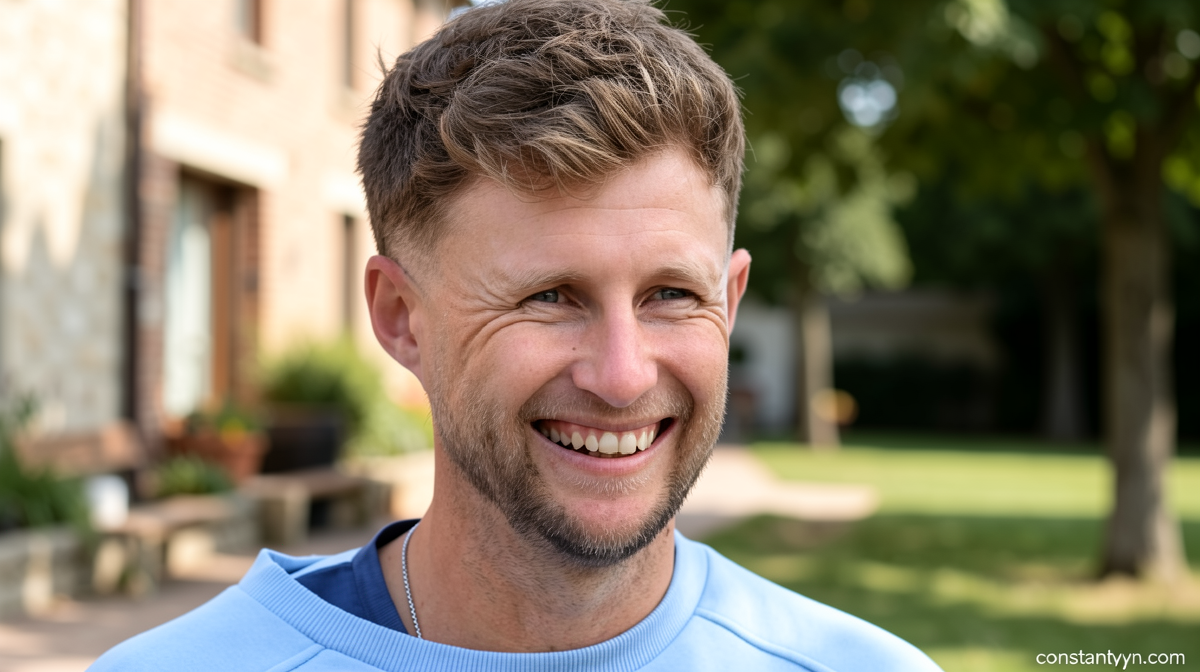
    Constantvpn.com – Headingley’s first Test against Pakistan marks the opening chapter of a rebuilt England Test programme, one that arrives after a summer so destabilising it reshaped the leadership, coaching staff, and squad culture almost overnight. At the centre of the reset stands Joe Root, a 35-year-old batter whose career record of 166 Tests makes him the most experienced player in the dressing room and, by most measures, the finest pure run-scorer England has ever produced. He returns to a role he previously held between 2017 and 2022, a spell that yielded 65 Tests at the helm. His tally as captain is a mirror image of triumph and failure: a record 27 victories and, equally, a record 27 defeats.

    A Message Aimed at the Dressing Room and Beyond

    Speaking ahead of the Pakistan series, Root framed his second captaincy not around tactics or selection but around conduct. The summer had produced a catalogue of off-field incidents — a nightclub altercation involving Harry Brook in Wellington, a mid-Ashes drinking episode in Noosa that preceded a 4-1 series loss to Australia, and Ben Stokes’ breach of the team curfew that triggered a chaotic six-week period culminating in a 2-1 series defeat by New Zealand, Stokes’ abrupt international retirement, and the dismissal of head coach Brendon McCullum after just two wins from ten Tests.

    “You always want to represent your country in the best possible light. We might have fallen short of that on a few occasions in the recent past. The only thing we can do to rectify that is be really good role models, good human beings and put in really strong performances on the field. The first opportunity to do that is this week.”

    The language is deliberately plain. Root is not issuing a tactical memo; he is drawing a line under months of scrutiny and telling the squad that the standard of behaviour outside the stadium now carries the same weight as the standard of performance inside it.

    The Coaching Vacuum and Interim Arrangements

    McCullum’s departure left England without a permanent Test coach heading into the Pakistan series. Fellow New Zealander Stephen Fleming has been named as his long-term successor, but the immediate task of guiding the three-match series falls to batting coach Marcus Trescothick, who will serve in an interim capacity. The arrangement underscores how quickly the summer’s turbulence compressed what should have been a gradual transition into an emergency reshuffle.

    Root’s Self-Definition: Calm, Versatile, Un-Stokes

    Asked how his leadership would differ from the aggressive, high-octane identity Stokes and McCullum cultivated, Root pointed to what he called his “natural persona” — a steadier, less combustible presence suited to a team that had spent the previous winter and summer absorbing shocks. He was explicit that he does not intend to imitate his predecessor.

    “He is a very unique player with unbelievable qualities that I don’t think are easy to replicate. I don’t think there is any point trying to. It is going to have a slightly different look to it but that is OK.”

    Where Stokes-era England leaned into a singular, attacking philosophy, Root described his ambition as “versatile” — retaining the positive structural elements of the past four years while “fine tuning and evolving” them rather than tearing them up. The implication is a squad capable of adapting its approach match by match, rather than defaulting to one mode of aggression.

    Selection and the Pakistan Matchup

    Root declined to confirm an opening-day XI on the Tuesday before the match, but the expected shape of the side is clear. Surrey all-rounder Dan Lawrence is poised to occupy the number-six slot vacated by Stokes, providing a spin-bowling option that England have lacked since Stokes’ departure. The remaining four pace-bowling places will be contested among Ollie Robinson, Jofra Archer, Josh Tongue, Gus Atkinson, Sam Cook, Brydon Carse, and Matt Fisher — a depth list that reflects both the squad’s rebuilding phase and the absence of a settled fast-bowling hierarchy.

    On the Pakistan side, captain Babar Azam was ruled out of the first Test after sustaining a hand injury during a warm-up fixture the previous week. Salman Ali Agha steps in as skipper for the series opener, adding a further layer of uncertainty to an already unsettled contest.

    Why the Stakes Extend Beyond Three Matches

    The Pakistan series is, on paper, a manageable fixture. In practice, it functions as the first public referendum on whether England’s post-summer reconstruction has produced a coherent unit. A win streak would validate the interim coaching structure, confirm Lawrence’s readiness at six, and give Root’s “calm” philosophy its first tangible proof. A repeat of the summer’s pattern — off-field distraction, tactical drift, and a series lost by a narrow margin — would suggest the damage runs deeper than a coaching sacking or a captaincy swap can repair.

    Root’s record as captain already contains both poles of that spectrum: 27 wins and 27 losses, a symmetry that speaks less to inconsistency than to the sheer volume of Tests he has endured. What distinguishes this second stint is the context. The squad entering Headingley carries the residue of a curfew breach, a nightclub incident, a mid-series drinking episode, and a retirement announcement that split the dressing room in real time. The task is not merely to win matches. It is to demonstrate, over the course of a series and beyond, that the institution can absorb a season of institutional failure and reassemble itself without losing the competitive edge that made it dangerous in the first place.

    For now, the question is simpler: can England beat Pakistan at Headingley, and can they do so while behaving, on and off the field, as Root insists they must? The answer will shape the next chapter of a programme still searching for its footing.

    Frequently Asked Questions

    What is Root calls on England to be good?

    Root calls on England to be good is the main topic of this guide. The article explains the context, practical details, and next steps readers should understand.

    Why does Root calls on England to be good matter?

    Root calls on England to be good matters because readers are looking for a useful answer, not just a short summary. Good content should match search intent and help them decide what to do next.
  • UK ‘supports Ukraine 100%’, Burnham says, after Russia’s drone warning

    UK ‘supports Ukraine 100%’, Burnham says, after Russia’s drone warning

    London Stands Firm as Moscow Threatens Over British Drone Role in Ukraine War

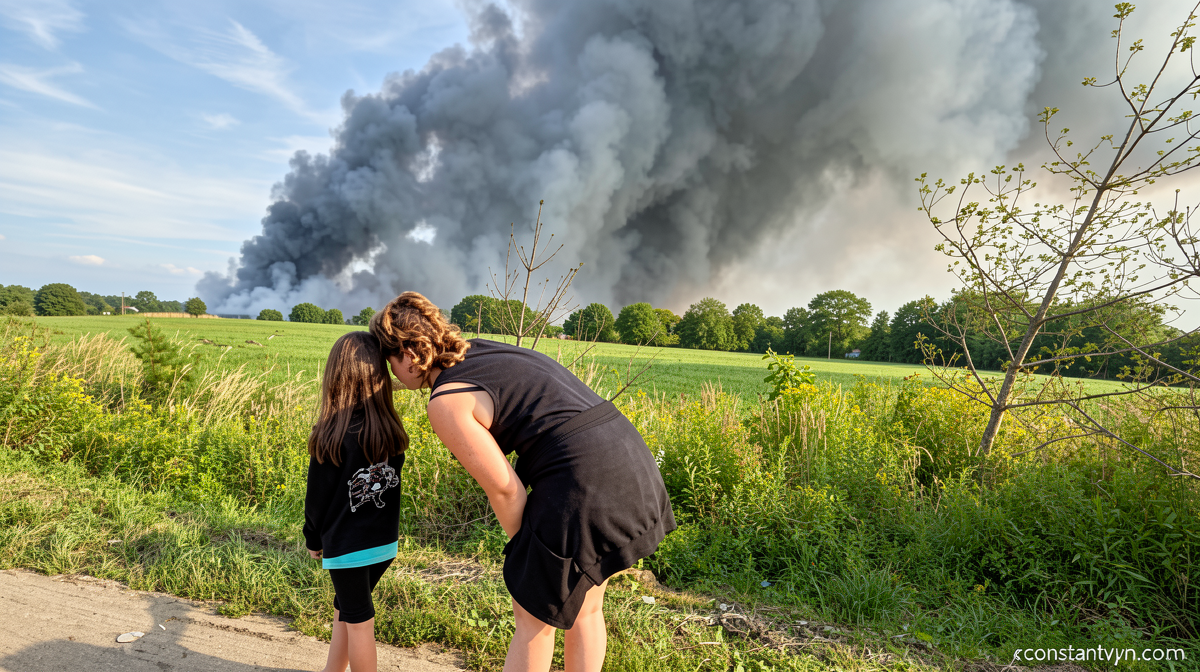
    Constantvpn.com – Smoke still hung over the Koledino Industrial Park near Podolsk on Sunday when Ukrainian drones struck a Wildberries logistics facility, but the political fallout from that strike — and dozens like it — reached Westminster within hours. Prime Minister Andy Burnham made clear that Britain’s backing of Kyiv will not waver, even as the Kremlin issued its sharpest public warning yet about the cost of continued Western involvement.

    “We are not fair-weather friends, we will be there in Ukraine’s hour of need and that won’t change.”

    Burnham’s remarks came after Moscow confirmed that British-manufactured drones had been deployed in recent Ukrainian operations deep inside Russian territory. The Russian embassy in London went further, accusing Britain of “deliberately opting for an escalation of the Ukraine crisis” and warning that “the deeper its involvement in the conflict… the higher the price it will pay.” The embassy added that “London’s actions will inevitably carry consequences for which it will have to answer,” though it stopped short of specifying what form those consequences might take.

    A War That Has Reached Into Russian Daily Life

    The Kremlin’s warning lands against a backdrop of escalating Ukrainian strikes on infrastructure well beyond the front line. Oil refineries, fuel depots, and major logistics hubs have become recurring targets, disrupting domestic fuel supplies and denting an economy already strained by years of sanctions and military spending. Hundreds of drones were launched toward the Moscow region over a two-day span, according to regional authorities. Governor Andrey Vorobyov confirmed on Tuesday that a ten-year-old girl was injured and that a Wildberries warehouse sustained damage in one of the attacks.

    In the south, five residents were killed in a residential area of Rostov region over the weekend. The cumulative economic toll of these strikes, as estimated by Ukrainian officials, exceeds £35 billion in damage to Russian infrastructure and commercial assets.

    Britain’s Long-Standing Commitment

    Asked directly about Moscow’s threat, Burnham framed the issue as continuity rather than novelty. He stressed that the UK has been supplying Ukraine with the means to defend itself since the full-scale invasion began in February 2022, a position maintained by successive prime ministers.

    “We will be there in Ukraine’s hour of need.”

    The Ministry of Defence reiterated that Britain remains “committed to providing the equipment Ukraine needs to defend itself against [Russian President Vladimir] Putin’s illegal invasion.” In April, the defence ministry unveiled what it described as its largest single military-aid package to date: tens of thousands of drones, including long-range strike variants, earmarked for Kyiv. Two British firms are known to have manufactured drones now in Ukrainian service, and a military source confirmed to the BBC that UK-built drones featured in the most recent wave of attacks on Russian territory.

    Beyond drones, Britain has supplied Storm Shadow cruise missiles and, more recently, offered to share its emerging “Stone Cloak” electronic-jamming technology, which would allow Ukrainian forces to suppress Russian air-defence radars. Burnham told President Volodymyr Zelensky during a visit to a British naval base late last month that he “can count on the UK for as long as it takes.”

    Human Cost on Both Sides of the Line

    While the diplomatic exchange sharpens, the human toll continues to climb. United Nations officials recorded 437 civilian deaths in Ukraine last month — the highest monthly figure since May 2022. In the latest Russian missile barrage, seventeen Ukrainians were killed, including ten villagers in Pechenihy, a small settlement in north-eastern Ukraine where two missiles struck private homes, a café, and a post office early Tuesday. Three more died in Sumy, two in Zaporizhzhia, and two in Kherson.

    On the Russian side, a foreign ministry spokesman told the Tass news agency on Tuesday that sixty-nine people, including three children, had been killed across the country in the preceding week — a reminder that the conflict’s reach now extends far beyond the contested front lines.

    Strategic Stalemate and Escalation Risk

    Russia still occupies roughly one-fifth of Ukrainian territory, yet its forces have made very little measurable progress on the front line for several months. The battlefield has effectively frozen into a grinding attrition contest, which is precisely why both sides are turning to deep-strike campaigns to erode the other’s economic and logistical capacity.

    Moscow’s latest warning marks a rhetorical step up from earlier complaints. As far back as 2024, foreign ministry spokeswoman Maria Zakharova publicly noted that drones incorporating UK components and configurations had been used to hit Russian territory, including a fuel depot in the Kamensky district of Rostov region. The current embassy language, however, carries an explicit threat of unspecified consequences — a formulation that analysts read as a signal that the Kremlin may be weighing options beyond diplomatic protest, whether through intensified strikes on UK-linked assets, expanded cyber operations, or further escalation of the drone war itself.

    For now, London’s answer is unambiguous: the support continues, the technology flows, and the political line drawn by Burnham leaves no visible room for retreat.

    Frequently Asked Questions

    What is UK supports Ukraine 100 Burnham says?

    UK supports Ukraine 100 Burnham says is the main topic of this guide. The article explains the context, practical details, and next steps readers should understand.

    Why does UK supports Ukraine 100 Burnham says matter?

    UK supports Ukraine 100 Burnham says matters because readers are looking for a useful answer, not just a short summary. Good content should match search intent and help them decide what to do next.