DR Congo bans mass gatherings in the capital to prevent spread of Ebola
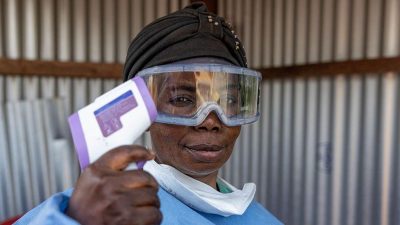
DR Congo Implements Ban on Public Assemblies Amid Ebola Outbreak
DR Congo bans mass gatherings – Following the confirmation of Ebola cases in three eastern provinces—Ituri, North Kivu, and South Kivu—the Democratic Republic of Congo (DRC) has imposed restrictions on large gatherings in its capital, Kinshasa, as well as in the bordering regions of Tshopo, Haut-Uele, and Bas-Uele. The move, announced by Interior Minister Jacquemain Shabani, aims to curb the virus’s spread, which has already infected 1,274 people and claimed 360 lives since the outbreak began. The affected areas are over 1,800 kilometers from Kinshasa, yet officials express concern that the city’s population of 18 million could become a new epicenter. The ban comes amid rising fears of the disease’s rapid transmission, particularly as the number of confirmed cases surged by 47% in the past week alone.
Political Criticism and Protests
Opposition leaders have accused the government of using the health crisis as a pretext to silence dissent. A planned protest march by the C64 coalition, scheduled for 8 July, has been targeted by the new restrictions. Prince Epenge, a spokesperson for the Lamuka opposition alliance, denounced the decision as “political,” noting that no cases had yet been confirmed in Kinshasa. “We cannot accept this decision,” he said, adding that the ban threatens the right to peaceful assembly. Similarly, Rodrigue Ramazani, secretary-general of the Envol party, called the order a “political maneuver,” urging protesters to defy the ban and gather despite the risks. The government has remained silent on these allegations, leaving the situation to simmer.
“It is not legitimate. We cannot accept this decision.” — Prince Epenge, Lamuka coalition
“This directive reeks of a political manoeuvre rather than a public health measure.” — Rodrigue Ramazani, Envol party
The Role of the Capital in the Outbreak
While Kinshasa has not yet recorded local cases, the city remains under scrutiny. A French doctor, who had tested positive for Ebola and was returning home after working at a treatment center in the outbreak’s epicenter, recently passed through the capital. This incident has raised questions about the virus’s potential to reach the urban hub. Health officials emphasize that the disease spreads via contact with infected bodily fluids, making crowded spaces like markets, transportation hubs, and public events high-risk zones. The Bundibugyo strain, responsible for this outbreak, lacks a specific vaccine, complicating containment efforts.
Despite the ban, public life in Kinshasa continues. Markets remain open, and daily commutes persist, though with heightened caution. The government’s 21-day quarantine for travelers from affected regions has been in place for weeks, yet the virus has already spread to neighboring provinces. The situation has created tension between public health measures and political agendas, with critics arguing that the bans may not be fully justified.
Global Context and Health Challenges
Uganda, a neighboring country, has also reported Ebola cases, with 20 infections and two fatalities confirmed by the World Health Organization (WHO). However, the DRC’s outbreak is deemed more severe due to its geographic scale and the strain’s virulence. The WHO has warned that ongoing conflict in the eastern regions—where the M23 rebel group controls significant territory—impedes response efforts. In North and South Kivu, areas hardest hit by the outbreak, security challenges have delayed the distribution of medical supplies and the isolation of infected individuals.
Health officials stress that the outbreak’s persistence is partly due to the virus’s long incubation period and the difficulty in tracing its spread. While the Bundibugyo species is not as deadly as the Zaire strain, it has caused significant disruption. The Africa Centres for Disease Control and Prevention (Africa CDC) has highlighted the potential for this outbreak to become one of the largest on record, noting that it spread undetected for weeks before being officially recognized. The delayed response has allowed the virus to gain momentum, making containment more complex.
“Trials for new antiviral drugs could begin as soon as this week.” — Africa CDC head, BBC Newsday
Human Impact and Community Response
The outbreak has left families and communities in turmoil. In one poignant account, a resident shared the story of burying their parents within days of each other, struggling to manage the grief while adhering to safety protocols. Health workers have been working tirelessly to educate people on safe burial practices and hygiene measures, though the emotional toll of the disease remains profound. Survivors, too, have become advocates, sharing their experiences to inspire resilience and awareness.
Experts have emphasized the need for rapid action to prevent the virus from reaching Kinshasa. The DRC’s health ministry has confirmed that the outbreak is currently confined to the three provinces, but the proximity of the banned areas to the capital raises alarms. With the virus spreading through both rural and urban settings, the government faces the dual challenge of managing the health crisis and addressing political concerns. As the 21-day quarantine continues, the focus remains on slowing the disease’s progression and protecting vulnerable populations.
Looking Ahead: A Race Against Time
The situation in DR Congo underscores the urgency of the global health response. While the Africa CDC and U.S. public health agencies monitor the outbreak, local efforts are critical to containing it. The recent increase in cases—47% in a single week—highlights the virus’s adaptability and the need for swift intervention. Scientists are optimistic about new antiviral trials, which could offer hope for treatment, but the path to recovery remains uncertain.
As the battle against Ebola intensifies, the DRC’s government must balance public health imperatives with political considerations. The ban on mass gatherings, though controversial, reflects the gravity of the situation. Meanwhile, communities are adapting to the new normal, with individuals like Prince Epenge and Rodrigue Ramazani leading the charge for transparency and accountability. The coming weeks will be pivotal in determining whether the measures taken can prevent the capital from becoming a new epicenter of the crisis.
For further updates on the African continent, visit BBCAfrica.com. Follow BBC Africa on social media platforms for real-time news: Twitter @BBCAfrica, Facebook at BBC Africa, and Instagram at bbcafrica.
Focus on Africa. This Is Africa.
