Why Netherlands v Morocco is more than just a match
Why Netherlands v Morocco is more than just a match
Why Netherlands v Morocco is more – The World Cup transcends the sport itself, serving as a grand stage where the narratives of history, migration, and identity intertwine with the tactical and technical aspects of the game. While the competition is defined by the skills of players on the field, it also reflects broader societal shifts, showcasing how national teams embody the cultural and historical legacies of their countries. This year’s 2026 World Cup has brought one particular fixture into sharp focus: the clash between the Netherlands and Morocco. More than a mere contest of football prowess, this match encapsulates the evolving relationship between diasporic communities and their ancestral homelands, revealing how identity choices in sports can mirror larger migrations across continents.
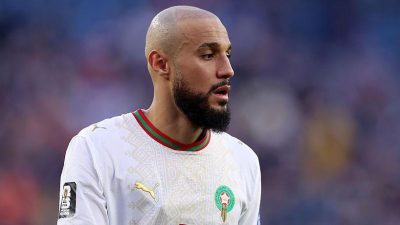
At the heart of this rivalry is the story of Noussair Mazraoui, a Manchester United defender who represents Morocco despite being born in the Netherlands. His inclusion in the Moroccan squad highlights a significant trend: nearly one in four players in the 2026 tournament hail from outside the country they represent. This statistic underscores a broader transformation in international football, where migration patterns are increasingly reflected in the composition of teams. Morocco, in particular, stands out as a case study of how a nation can strategically reshape its approach to player recruitment, challenging long-standing traditions of allegiance and identity.
A New Era of Migration and Football
The Netherlands has historically been a magnet for Moroccan-born footballers, especially those raised in Dutch households. For decades, the assumption was that players of Moroccan heritage would prefer to play for the Netherlands, drawn by the country’s footballing reputation and opportunities. However, this dynamic has shifted dramatically in recent years, with Morocco actively seeking talent beyond its borders. The 2026 World Cup match between these two nations symbolizes this change, as both teams have reached the last 32 without a loss, demonstrating their strength and adaptability on the global stage.
Morocco’s progress in the tournament is not accidental. The team has built a squad that is increasingly multicultural, with 19 of its 26 players born outside the country. This reflects a deliberate strategy by the Royal Moroccan Football Federation to identify and recruit dual-national talent across Europe. The federation’s efforts have been meticulous, with scouts operating in France, Belgium, Spain, and the Netherlands—regions where Moroccan families have long established roots. These scouts don’t just look for potential; they build relationships with families, creating a network of support that influences a player’s decision to represent Morocco.
“Recruitment extended far beyond the player. Family often played as important a role as football in shaping a player’s decision,” explained Pim Verbeek, former technical director of the Moroccan federation.
This approach has yielded tangible results. By the 2018 World Cup, five of Morocco’s squad were born in the Netherlands, and by 2022, the team had 14 foreign-born players in its 26-man roster—a record for an African nation. This growth is emblematic of how international football has become a mirror of global migration, with teams increasingly composed of players who carry dual heritage. The Netherlands, once the default choice for Moroccan talent, now faces competition from a nation that has embraced its diaspora as a key asset.
From Selection to Strategy
The turning point in Morocco’s strategy can be traced back to the 1998 World Cup, where Dries Boussatta became the first Dutch-born player of Moroccan heritage to represent the Netherlands. Born in Amsterdam’s De Baarsjes district, Boussatta was a product of the Netherlands’ traditional model of identifying talent from immigrant communities. His debut under Frank Rijkaard against Germany marked a milestone, but his decision to eventually switch to Morocco highlighted the changing tides in international football.
Boussatta’s transition was possible due to FIFA’s eligibility rules, which allowed players to represent a country if they had a strong cultural or familial connection. At the time, Morocco didn’t approach him for selection, but after gaining three caps for the Netherlands, he chose to play for his ancestral homeland. This move set a precedent, showing that identity in football is not always fixed and that players may choose their national team based on a combination of personal and cultural factors.
The Netherlands, meanwhile, has seen a decline in the number of Moroccan-born players opting for their team. While some, like Khalid Boulahrouz and Ibrahim Afellay, still chose to represent the Netherlands, the trend has been clear: Morocco is now a viable alternative. This shift has not only transformed the composition of the Moroccan squad but also reshaped the competitive landscape of international football. The 2026 World Cup match against the Netherlands is a testament to this evolution, as both teams bring diverse backgrounds to the pitch.
The Legacy of a Defining Moment
The implications of this change extend beyond the stadium. For many players, the decision to represent a nation is deeply personal, influenced by family ties, cultural heritage, and the opportunities available. Morocco’s success in the World Cup has sparked conversations about the role of identity in sports and the ways in which migration shapes national narratives. As the 2026 tournament progresses, the Netherlands versus Morocco clash will serve as a powerful reminder of how football can bridge continents and redefine the meaning of belonging.
Morocco’s approach has also had a ripple effect across Europe, encouraging other nations to adopt similar strategies. The example set by the Moroccan federation demonstrates that national teams can actively cultivate relationships with diasporic communities, turning them into a source of strength. This has led to a more interconnected global football scene, where players are not just representing their country of birth but also their heritage and the communities they come from. The Netherlands, once a dominant force in this regard, now finds itself competing for the loyalty of Moroccan talent, a shift that has redefined the dynamics of international competition.
As the World Cup unfolds, the Netherlands and Morocco will not only compete for victory but also for the story of their shared history. The match is more than a test of skill; it is a reflection of the broader migration patterns that have shaped modern football. For Morocco, it is an opportunity to assert its global presence, while for the Netherlands, it is a chance to adapt and remain relevant in an ever-changing international landscape. Together, they embody the evolving nature of identity in sport and the ways in which history and migration continue to influence the game’s most prestigious stage.
