Hundreds of cats stolen for food in Vietnam rescued by police, welfare group says
Hundreds of Cats Stolen for Food in Vietnam Rescued by Police, Welfare Group Says
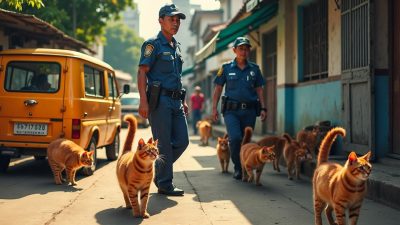
Hundreds of cats stolen for food – Authorities in Vietnam recently dismantled a suspected network of cat thieves, rescuing over 400 felines that were intended for slaughter. The operation, conducted by local police in Tay Ninh Province and Ho Chi Minh City, uncovered a criminal group allegedly responsible for trafficking animals for meat. Humane World for Animals, an animal welfare organization, confirmed the rescue efforts and highlighted the broader issue of pet theft in the country.
Operation Unveils Feline Theft Ring
According to the official newspaper of Ho Chi Minh City police, nine individuals were arrested as part of the investigation into a “criminal group specialising in stealing and collecting cats.” The raids revealed more than 400 live cats and approximately 80 preserved dead animals stored on ice. A separate facility yielded an additional 21 cats. The suspects were said to have operated across southern Vietnam for the past three years, systematically capturing and transporting animals to holding centers before selling them to traders.
“Decisive action that has saved the lives of so many animals,” said Humane World for Animals in a statement. However, the group noted that some of the rescued cats had already perished due to their ordeal, emphasizing the urgent need for intervention. The organization is currently providing food and supplies for the remaining animals held by police as part of the ongoing case.
Pet theft has long been a concern in Vietnam, with the consumption of dog and cat meat remaining legal. Vendors must obtain permits proving the origin of the animals, yet the clandestine nature of the trade suggests widespread violations. Police tracked down the group on 11 June after investigating a series of unexplained pet disappearances in the city. The suspects confessed to trapping cats and coordinating their sale to traders every two to three days.
The Scale of the Feline Meat Trade
Humane World for Animals estimates that nearly five million dogs and one million cats are captured, stolen, and slaughtered for meat annually in Vietnam. The organization reports that pets are frequently taken from homes, with dogs often targeted using poisoned bait, tazers, or iron pincers. Cats, meanwhile, are captured with spring-loaded snares. These methods, while efficient, contribute to the suffering of countless animals.
Although cat and dog meat consumption is more prevalent in Vietnam than in other Asian countries, attitudes are shifting. A 2023 survey commissioned by the welfare group found increasing public resistance, particularly among younger generations and pet owners. Majorities supported banning both trades, signaling a potential cultural transformation. Despite this, the trade persists, fueled by demand and the organized networks that facilitate it.
Ongoing Efforts to Combat the Trade
The police investigation is still in progress, with officials urging residents to report any missing pets. They emphasized that the case highlights the importance of community involvement in identifying stolen animals. Humane World for Animals praised the authorities for their efforts but called for continued vigilance to prevent future incidents. The organization also stressed the need for stricter enforcement of permits and better protection for stray and domestic animals.
While the rescued cats are a significant victory, the operation underscores the challenges of eradicating the feline meat trade. The suspects’ admission of their three-year operation suggests a well-established system. Police described the group as methodical, with cats transported to holding facilities before being sold to traders. This process likely involved multiple stages, from theft to preservation to distribution, making it difficult to trace without coordinated efforts.
For the cats that survived the raids, the path to recovery is not immediate. Of the 400 rescued animals, around 40 have been reunited with their owners, according to the welfare group. However, the remaining cats face uncertain futures, relying on temporary shelter and care while the legal proceedings continue. The situation raises questions about the long-term impact of such operations and the need for sustained action to address the root causes of pet theft.
Public Awareness and Cultural Shifts
Humane World for Animals’ survey revealed a growing awareness of the ethical implications of cat and dog meat consumption. Younger people, in particular, showed higher levels of opposition, suggesting that cultural norms may be evolving. This shift could lead to increased pressure on lawmakers to regulate the trade more strictly. The group also highlighted the role of social media in amplifying the issue, as videos of rescued animals and testimonials from victims gain traction.
Local authorities have taken steps to address the problem, but challenges remain. The police’s ability to dismantle the theft ring is a testament to their commitment, yet the scale of the operation suggests larger systemic issues. The welfare group called for stronger penalties for offenders and improved monitoring of pet markets. They also urged the government to consider expanding bans on the trade, especially in light of public sentiment.
As the investigation unfolds, the focus remains on rescuing animals and holding perpetrators accountable. The 400 live cats recovered represent a critical win, but the 80 preserved animals and the 21 at the second facility highlight the extent of the cruelty involved. With continued support from the community and advocacy groups, there is hope that the trade will shrink. However, without comprehensive reforms, the cycle of theft and slaughter may persist, threatening Vietnam’s feline population.
The incident serves as a reminder of the delicate balance between tradition and modern animal welfare practices. While the consumption of cat meat has historical roots in Vietnamese cuisine, the rise of pet ownership and changing values are reshaping perceptions. The success of this operation offers a glimpse of progress, but it also underscores the need for a broader movement to protect animals from exploitation.
