Royal Marines board Russian shadow fleet oil tanker in English Channel
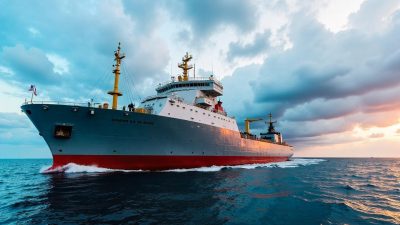
Royal Marines Intercept Russian Oil Tanker in English Channel
Royal Marines board Russian shadow fleet – In a significant military maneuver, UK forces executed a daring operation on Sunday, seizing a Russian shadow fleet oil tanker in the English Channel. The vessel, known as Smyrtos, was boarded by Royal Marine Commandos alongside National Crime Agency (NCA) officers, with aerial support from the Royal Air Force (RAF). This six-hour mission marks the first time UK armed forces have directly intercepted a sanctioned Russian tanker, according to the Ministry of Defence (MoD).
Operation Details and Strategic Significance
The interception occurred during the early hours of Sunday, with armed personnel descending onto the ship via fast-roping from a helicopter. Video footage released by the MoD shows the swift action, including search teams examining the vessel’s cabins and NCA officials reviewing its documentation. The operation is seen as a critical step in disrupting Russia’s efforts to circumvent international sanctions targeting its oil exports.
The MoD stated that the Smyrtos will be detained and monitored off the southern coast of England until further investigations are completed. Sir Keir Starmer, the leader of the Labour Party, emphasized the operation’s importance, declaring:
“This successful operation delivers yet another blow to Russia and reminds those fuelling Putin’s war in Ukraine that we will not let them hide.”
The move underscores the UK’s commitment to enforcing sanctions against Russian oil, which has been a focal point of global efforts to weaken the war effort in Ukraine.
Russia’s Shadow Fleet and Sanctions Evasion
Russia has been leveraging a vast network of “shadow fleet” tankers to bypass sanctions on its oil exports. This fleet, comprising over 700 vessels, is responsible for transporting 75% of Russia’s sanctioned crude oil, serving as a vital supply line for the Kremlin. By operating under different flags and rebranding their ships, these tankers avoid detection by international authorities.
The Smyrtos, which was previously named Myrtos, has undergone multiple rebranding efforts. It was sanctioned in July 2025, prompting it to change its flag twice and adopt a new name. Tracking data from MarineTraffic reveals the vessel sailed under a Cameroon flag before anchoring near Weymouth in the English Channel. Its journey began on June 5 from Russia’s Ust-Luga port, an oil terminal near St. Petersburg, and it entered the Channel on Saturday, as confirmed by BBC Verify.
UK officials have highlighted the government’s proactive stance on sanctions enforcement. In March, Prime Minister Rishi Sunak announced that British armed forces were now capable of boarding sanctioned vessels within UK territorial waters. The MoD confirmed that more than 500 ships have been sanctioned, with restrictions preventing them from docking in UK ports and blocking financial services for their operators.
Political Context and Defence Investment Concerns
The operation took place amid ongoing tensions within the government over defence spending. A week prior, Defence Secretary John Healey resigned, criticizing the proposed Defence Investment Plan (DIP) for falling short of the required military funding. He warned that the current allocation would not adequately address the UK’s security needs, stating:
“The level of military spending proposed by Sir Keir ‘falls well short’ of what is needed to protect the UK.”
Al Carns, the former armed forces minister, also stepped down, expressing concerns about the DIP’s insufficient funding and lack of transformative impact. He told the BBC:
“The DIP was ‘neither transformative enough nor sufficiently funded.’”
These resignations highlight growing dissent within the Conservative Party over the government’s financial priorities.
Culture Secretary Lisa Nandy, representing the government, reiterated its commitment to increasing defence spending. She explained to BBC’s Laura Kuenssberg:
“The government had to ‘transform the way we do defence spending, so that what we’re spending is fit for the threats we face now and in the future.’”
The Defence Investment Plan is set to be finalized ahead of the upcoming NATO summit, following months of delays that sparked controversy among key ministers.
Coordinated Effort and Future Implications
The operation was conducted with close collaboration between the MoD and the RAF’s Maritime Air Group, which deployed a P-8 aircraft to assist in the mission. HMS Sutherland and HMS Ledbury were also involved, ensuring the vessel was secured and escorted into UK waters. Al Carns described the process as involving “armed forces personnel flying low level over the sea, rearing up before the ship, fast roping onto the ship, securing it and then taking it into our territorial waters.”
This success is expected to encourage more such actions. Carns told the BBC:
“Now the UK has performed its first boarding of a Russian shadow fleet vehicle, ‘we’re probably going to see more, should the opportunities present themselves.’”
The government aims to use these intercepts to target Russia’s oil revenues, effectively cutting off funding for its military campaigns in Ukraine.
Legal experts have noted that the operation aligns with international law, with Attorney General Richard Hermer stating:
“This government made clear that we would pursue Russia’s shadow fleet under the full force of international law.”
The move is part of a broader strategy to pressure Russia economically, with the UK targeting its oil exports as a means to weaken its war machine.
Ukrainian President Volodymyr Zelensky praised the UK’s actions, tweeting:
“Europe urgently needs to take legislative steps to enable not only the detention of tankers and restrictions on oil shipments, but also the confiscation of the oil they carry.”
The operation has been welcomed by international allies, reinforcing the UK’s role in supporting Ukraine’s defence efforts.
Political Support and Ongoing Challenges
Opposition leader Kemi Badenoch praised the military personnel involved, acknowledging their bravery and supporting the government’s stance in backing Ukraine. She stated:
“I support the Government in standing with Ukraine.”
However, the DIP remains a contentious issue, with debates over funding cuts and the prioritization of military expenditures.
As the UK continues its efforts against Russia’s shadow fleet, the focus shifts to ensuring sustained international cooperation. The success of the Sunday operation demonstrates the country’s capability to enforce sanctions directly, setting a precedent for future intercepts. With the global community watching closely, the UK’s actions may influence other nations to adopt similar strategies in the fight against Russian economic influence.
Meanwhile, the MoD faces the challenge of maintaining momentum in its sanctions enforcement program while addressing internal political pressures. The interception of Smyrtos not only highlights the effectiveness of UK military operations but also underscores the strategic importance of the English Channel as a key route for Russian oil exports. This development is likely to shape discussions on the Defence Investment Plan, with officials emphasizing the need for greater resources to sustain such operations in the future.
