Three Indian sailors killed in US strike on oil tanker
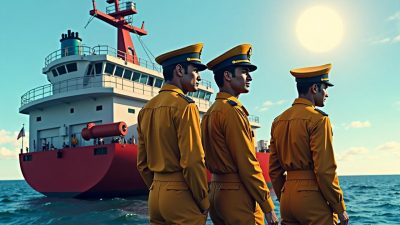
US Attack on Oil Tanker Claims Lives of Three Indian Crew Members
Three Indian sailors killed in US strike – On Wednesday, the US military struck a Palau-flagged oil tanker in the Gulf of Oman, resulting in the deaths of three Indian sailors who had previously been reported missing. This incident, confirmed by India’s federal minister, has intensified concerns over the safety of commercial vessels in the region. The tanker, named MT Settebello, was reportedly targeted after American forces accused it of disregarding orders. The attack left 21 of the 24 crew members on board rescued, with the remaining three presumed dead. India’s Shipping Minister, Sarbananda Sonowal, expressed sorrow over the tragedy in a post on X, stating the incident was “deeply unfortunate” and that the bodies of the deceased would be returned to their families shortly.
Escalating Tensions and Strategic Context
The US Central Command confirmed the strike, revealing that an aircraft deployed “precision munitions” into the engine room of the Settebello after the crew repeatedly ignored instructions. This action follows a broader US strategy to counter Iran’s influence in the region. Since April 13, the US has blocked access to Iran’s ports, a move prompted by Tehran’s closure of the Strait of Hormuz, a critical chokepoint for global oil and gas supplies. The closure disrupted roughly 20% of the world’s energy trade, escalating tensions during the ongoing conflict. According to Centcom, the US military has disabled eight vessels and rerouted 134 others since the blockade began, highlighting the scale of the operation.
India, a key ally of the US in the region, has criticized the targeting of commercial ships. The Indian government summoned the deputy head of the US mission in Delhi to address the incident, signaling its diplomatic concern. Sonowal emphasized the need for “targeting of commercial shipping and civilian infrastructure in the region must end,” underscoring the impact on maritime safety. Meanwhile, the Settebello incident marks the second attack on an Indian-crewed vessel in the Gulf of Oman this week. On Monday, US forces had already struck the Palau-flagged Marivex, another oil tanker with an Indian crew, after it failed to comply with US directives. The Omani military rescued all 24 crew members of the Marivex, according to Indian authorities, though no casualties were reported in that strike.
India’s Response and Crew Concerns
Manoj Yadav, general secretary of the Forward Seamen’s Union of India (FSUI), shared updates with the BBC, confirming that families of the deceased sailors were being informed. Yadav criticized the US for not acting with due caution, stating, “I refused to believe that the US lacked information regarding the nationalities of the people on board those ships.” He argued that detaining the vessels could have been a preferable alternative to direct attacks, which he described as “a reckless choice.” The FSUI has been actively reaching out to affected families, emphasizing the human toll of the conflict.
The incident has reignited debates over the US military’s operations in the Gulf. Critics argue that the strikes, while aimed at disrupting Iran’s supply lines, risk collateral damage to civilian infrastructure. The Settebello and Marivex attacks are seen as part of a larger pattern of US efforts to undermine Iran’s economic leverage. However, the US maintains that these actions are necessary to enforce its blockade and protect its interests in the region. The Central Command reiterated that the strikes were justified due to the crews’ non-compliance with American instructions.
Broader Regional Conflicts and Ceasefire Challenges
Tensions between Iran and the US continue to mount, with both sides exchanging attacks for a second consecutive day. The conflict, which began on February 28, was triggered by US and Israeli strikes on Iran that killed its supreme leader. In retaliation, Iran launched attacks on Israel and US-aligned countries in the Gulf, sparking a rapid escalation. Lebanon has since joined the fray, further complicating the situation. On Wednesday, President Donald Trump renewed his threats against Iran, vowing to “hit Iran hard” for delaying peace talks. He accused Iran of playing Americans “for suckers,” a statement that has fueled regional instability.
Despite efforts to broker a ceasefire, the situation remains volatile. The recent strikes on the Settebello and Marivex have strained the fragile agreement reached in April. India, while maintaining its stance against the attacks, has called for a balanced approach to ensure the safety of its sailors. The country’s diplomatic engagement with the US has been focused on addressing the immediate consequences of the strikes while advocating for long-term solutions to the conflict. However, the repeated incidents have raised questions about the effectiveness of the ceasefire and the risks to commercial shipping.
Global Implications and Calls for Accountability
The strikes have drawn international attention, particularly in the shipping industry. Analysts warn that such actions could lead to a prolonged standoff between the US and Iran, affecting global trade. The Gulf of Oman, a strategic waterway, is vital for the movement of oil, and the attacks on tankers have raised fears of supply chain disruptions. India, as a major importer of Iranian crude, has been vocal about the need for accountability. Sonowal’s comments reflect the nation’s broader concern over the unintended consequences of military action.
As the conflict persists, the fate of the three Indian sailors remains a focal point. Their deaths have prompted calls for transparency and a review of the US military’s tactics. The Indian government is now working to secure the bodies of the victims, a process that may take days. Meanwhile, the ongoing attacks highlight the precarious state of regional security and the potential for further escalation. With both Iran and the US demonstrating a willingness to use force, the path to de-escalation appears uncertain. The world watches closely as the situation unfolds, with the safety of sailors and the stability of global energy markets hanging in the balance.
Follow BBC News India on Instagram, YouTube, X, and Facebook for more updates on this developing story.
Background on the US-Iran Conflict
The conflict between the United States and Iran has roots in decades of geopolitical rivalry. Following the 2018 withdrawal from the Iran nuclear deal, the US imposed sanctions on Iran, prompting retaliatory measures. The incident in the Gulf of Oman is part of this cycle, with the US targeting Iranian-linked vessels to weaken its economic capabilities. The closure of the Strait of Hormuz by Iran, which has been a strategic move to disrupt oil exports, has been a key trigger for the US blockade. This has led to a significant increase in the number of ships being intercepted or redirected, with the Settebello and Marivex incidents serving as recent examples.
While the US frames its actions as necessary for security, the strikes have been met with criticism from India and other nations. The Indian government has repeatedly emphasized the importance of protecting civilian assets, arguing that the attacks on commercial ships undermine international cooperation. The involvement of the Forward Seamen’s Union of India in coordinating with families has highlighted the human element of the conflict. Yadav’s statements suggest that the US was aware of the crew’s nationalities, raising questions about the precision and intent of the strikes.
As the conflict continues, the Gulf of Oman has become a hotspot for military activity. The area, rich in oil and gas reserves, is a critical link in the global energy network. The recent attacks on two Indian-crewed vessels underscore the risks faced by commercial operators in the region. Analysts believe that the US is leveraging its military presence to pressure Iran into concessions, but the human cost of these operations is a growing concern. The Indian government’s diplomatic efforts to mitigate the situation will be closely watched, as will the broader impact on international trade and relations.
In the wake of the strikes, there is a renewed call for dialogue between the US and Iran. The incident has sparked discussions about the need for clearer communication and the potential for unintended casualties. As the US continues its campaign in the Gulf, the international community remains divided on the effectiveness of military action versus diplomatic resolution. For now, the fate of the three Indian sailors serves as a stark reminder of the stakes involved in the ongoing conflict.
