I survived a missile strike in the Strait of Hormuz, but my friend has not been found
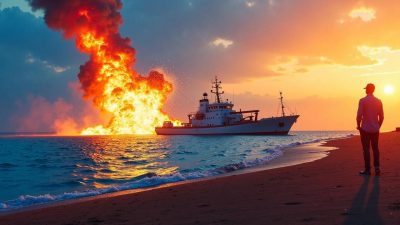
I Survived a Missile Strike in the Strait of Hormuz, but My Friend Has Not Been Found
Constantvpn.com – On the early morning of 1 March, the oil tanker Skylight became the first commercial vessel to be hit by a missile since the US-Israel conflict with Iran intensified in the region. Sunil Puniya, a 26-year-old seafarer from India, was aboard for his initial assignment when the attack unfolded. The ship, which had departed from Dubai, was traversing one of the world’s most vital shipping lanes—the Strait of Hormuz—when the chaos began.
“The entire ship trembled as the missile struck,” Sunil recounted. “I thought there was a problem with the engine, but when I stepped out of my room, another explosion shattered the silence.” The missile targeted the engine room, igniting a fire that quickly engulfed the vessel. “There was a complete blackout, and smoke filled every corner,” he said. “Everyone was struggling to breathe.”
“There were some sailors from South India who were crying and making frantic calls home. I told them to stop and helped them reach the deck.”
Despite his efforts, the situation deteriorated rapidly. “The flames were closing in, and oil was everywhere,” Sunil added. “We had no choice but to jump into the sea.” Within an hour, the Oman Navy launched a rescue operation, pulling survivors from the water. Yet not everyone was found. “As soon as I realised Dalip wasn’t there, panic set in,” Sunil said. “I kept thinking: how will I explain this to his family?”
Dalip Rathore, a 25-year-old crew member from Rajasthan, had joined the Skylight just a day before the attack. The two men, from neighboring villages, had grown close during their time at sea. “In those moments, Dalip was there for me. He became like a brother,” Sunil recalled. Hours before the strike, Dalip had taken over Sunil’s shift in the engine room—the area where the missile hit. Both Dalip and the ship’s captain, Ashish Kumar, were among the casualties. While some remnants of the captain were recovered, Dalip’s body remains missing.
A Broader Crisis in the Strait of Hormuz
The incident is part of a growing pattern of attacks in the Strait of Hormuz, a critical chokepoint for global oil and gas trade. Since the conflict began, maritime intelligence firm Kpler reported that 38 commercial vessels have been damaged in the area. Of these, 24 were targeted by Iran, four by the US, and the rest are still under investigation. The strait, which accounts for roughly 20% of the world’s oil supply, has seen a spike in threats, disrupting supply chains and causing widespread anxiety among seafarers.
Over 20,000 Indian and international sailors are currently stranded in the Gulf, according to the International Maritime Organization. This has created a crisis that extends beyond individual tragedies. “The industry as a whole has not succeeded in eradicating this cancer of abandoning seafarers,” said Mohamed Arrachedi, the ITF’s network coordinator for the Arab world and Iran. “We’re seeing more than 2,000 calls for assistance from crews stuck in the strait, with many facing unpaid wages, unresolved contracts, and shortages of basic supplies.”
“Some crews are effectively trapped at sea, with no way to reach home or receive necessary provisions,” Arrachedi explained. “They’ve been waiting for months without hearing from their shipowners.”
Maritime law mandates that shipowners ensure the safety and repatriation of their crews. If they fail, responsibility shifts to the vessel’s flag state and port authorities. However, the current situation has tested these obligations. Many shipowners have arranged for small boats to deliver food and essentials to vessels anchored in the strait, but others have been unable to provide adequate support. The ITF highlights that 6,223 seafarers were abandoned across 409 ships last year, leaving them without pay or basic necessities like food, water, or medical care.
The attack on the Skylight underscores the risks faced by seafarers in this volatile region. India, a major supplier of labor to the global shipping industry, has been heavily impacted. The crisis has forced seafarers to endure not only physical dangers but also emotional strain, with families abroad left in the dark. Sunil’s account of Dalip’s disappearance captures the personal toll of these incidents, as the loss of a crew member reverberates through their lives.
As the conflict continues, the strait remains a hotspot for maritime incidents. The attack on the Skylight was a stark reminder of the vulnerability of commercial vessels. Sunil’s experience, while harrowing, also highlights the resilience of seafarers and the human stories behind the statistics. His efforts to calm panicked crew members and the shared bond with Dalip reflect the camaraderie that often defines life at sea.
Maritime experts warn that the crisis could worsen as tensions escalate. The Strait of Hormuz, already a strategic artery for global trade, faces the threat of further disruptions. With over 20,000 seafarers unable to leave, the need for coordinated support has never been greater. The ITF’s voice notes from stranded crews reveal their desperation, with some describing a dire situation of uncertainty and hardship.
“We’re running out of food and water, and we haven’t heard from our shipowners for months,” one seafarer said in a voice recording shared with the BBC. “We don’t know if we’ll ever get back home.” Such testimonies highlight the systemic challenges facing the industry, from logistical hurdles to financial mismanagement. While some shipowners have stepped up to provide aid, many remain unable to meet their obligations, leaving crews in limbo.
The tragedy of the Skylight serves as a case study in the broader crisis. Sunil’s survival, though a relief, brings a sense of loss as he grapples with the absence of his friend. The incident also raises questions about the security of commercial shipping routes and the potential for more attacks. As the region continues to face uncertainty, the stories of seafarers like Sunil and Dalip remind us of the human cost behind each strike and the importance of safeguarding those who keep the world’s supply chains moving.
