Morrisons planning to close 100 stores in next few months
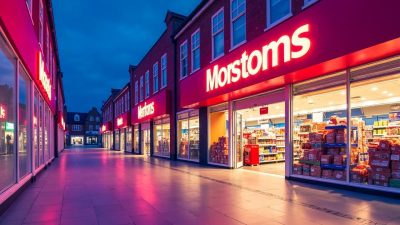
Morrisons Planning to Close 100 Stores in Next Few Months
Constantvpn.com – Morrisons, one of the UK’s largest supermarket chains, has revealed its intention to shutter 100 stores over the coming months. The decision is attributed to challenges arising from government policy decisions, which have driven up operational expenses. The affected locations are part of the Morrisons Daily convenience store network, acquired through the 2022 takeover of McColls. According to the company, these stores have been operating at a loss for several years, and recent financial pressures have intensified their difficulties.
The announcement follows a series of cost-cutting measures already implemented by the chain. Last year, Morrisons closed 52 cafes and 17 convenience stores, putting hundreds of jobs in jeopardy. This month, it disclosed that approximately 200 positions were under threat at its Bradford headquarters. The latest move to reduce the number of stores comes as the business continues to reassess its operational footprint. A spokesperson emphasized that the closures are a “tough but necessary” step to improve overall efficiency.
Staff Impact and Redundancies
While the exact number of employees at risk remains undisclosed, internal estimates suggest the closures could affect hundreds of workers. The company has initiated discussions to determine how staff reductions will proceed, with a formal consultation expected to commence soon. The spokesperson stated that efforts would be made to explore alternative roles for those impacted, though no specific details were provided about the job reassignment process.
The Morrisons Daily network, which comprises around 1,700 stores nationwide, has been a focal point of the restructuring. The chain also opened over 120 franchise locations last year, signaling a strategic shift toward expanding through partnerships. However, the current plan to close a portion of these stores highlights the ongoing balancing act between growth and profitability. The affected stores, spread across the UK, are described as those “whose performance has been challenged for a number of years and which are loss making, despite remedial action.”
Government Policies and Cost Increases
Morrisons pointed to “significant cost increases resulting from government policy choices” as a key driver of the decision. These policies include the rise in the national living wage and higher National Insurance contributions, which have placed additional strain on the business. The company argued that these measures have made it increasingly difficult to turn unprofitable stores around, even after implementing corrective steps.
The impact of these policy changes has been compounded by broader economic factors. Inflation has remained above the Bank of England’s 2% target for months, with food price growth recently surpassing that rate. Published data shows that food inflation reached 3% in April, compared to an overall inflation rate of 2.8%. Industry analysts warn that the UK’s food inflation could climb to 10% by year-end, driven in part by the ongoing US-Israel conflict with Iran. This has created a challenging environment for retailers, who are already grappling with rising operational costs.
Additional Retailer Pressures
Beyond the impact of government policies, Morrisons is not alone in facing increased expenses. Retailers have reported a surge in additional costs since April 2023, including higher employer National Insurance contributions and elevated minimum wages. These factors have forced many businesses to reevaluate their pricing strategies and operational budgets. In a separate development, food and drink producers are now liable for the cost of recycling product packaging, a requirement introduced by the government’s Extended Producer Responsibility (ERP) program.
The ERP initiative adds another layer of financial burden, as companies must cover the expenses incurred by local councils for waste management. This has raised concerns about the sustainability of small-format stores, which often operate with slim profit margins. For Morrisons, the combination of these pressures has made the decision to close stores more urgent, despite its long-term plan to expand franchise operations in 2026.
Industry Reactions and Policy Criticism
Morrisons’ latest move has sparked broader debate about the role of government in shaping retail economics. The company’s spokesperson reiterated that the closures are a response to rising costs, which have been exacerbated by policy decisions. However, industry leaders have criticized these measures as contributing to inflation rather than alleviating it. Former Sainsbury’s CEO Justin King expressed frustration, calling it “hypocritical” for the Treasury to urge supermarkets to freeze prices while its own policies are driving up costs.
Other retailers have echoed similar concerns, with some suggesting that the government’s focus on price controls may not address the root causes of inflation. The recent calls for voluntary price freezes on essential groceries, in exchange for relaxed regulatory burdens, have been met with mixed reactions. While some businesses see this as a pragmatic approach, others argue that it undermines their ability to manage expenses effectively. Morrisons’ decision to close stores is seen as part of a wider trend, where the retail sector is forced to adapt to a rapidly changing economic landscape.
Despite the challenges, Morrisons has maintained its commitment to a “robust expansion plan” for 2026. The chain aims to open hundreds of new franchise stores in the coming years, positioning itself to grow in a market that is increasingly competitive. The closures of 100 stores, however, underscore the need for careful cost management. The company is expected to provide further details on the specific locations and timelines for the closures in the near future.
Broader Implications for the Retail Sector
The retail sector as a whole has been under pressure for months, with many businesses adjusting to the impact of inflation and regulatory changes. Morrisons’ actions reflect a growing trend where cost efficiency is prioritized over expansion, even in stores that were once considered profitable. The chain’s spokesperson highlighted the importance of maintaining a sustainable business model, which requires difficult but necessary decisions.
As the UK’s inflation rate continues to rise, retailers are likely to face further scrutiny. The government’s approach to managing inflation, including its push for price freezes, has drawn criticism from industry figures who argue that it shifts responsibility onto businesses without addressing underlying economic issues. Morrisons’ decision to close 100 stores may serve as a cautionary tale for other retailers, emphasizing the need for proactive strategies in a market that is increasingly volatile.
In conclusion, the closure of 100 stores by Morrisons highlights the complex interplay between government policy, inflation, and retail operations. While the company remains optimistic about its expansion plans, the current environment necessitates difficult choices. The affected stores, spanning the UK, are a testament to the challenges faced by convenience retail in an era of rising costs and economic uncertainty.
