Large-scale Ukrainian drone attack kills three in Moscow region, says Russia
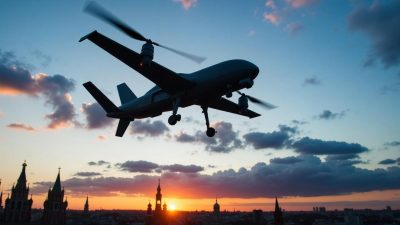
Ukrainian Drone Strikes Target Moscow Region, Resulting in Multiple Casualties
Constantvpn.com – Overnight, a significant Ukrainian drone assault in the Moscow region led to the deaths of at least three individuals and the injury of several others, according to Russian authorities. The attack, which was described as the most substantial strike on Moscow in over a year, primarily focused on areas near the capital. Regional governor Andrei Vorobiev confirmed the incident, noting that the casualties occurred in various locations, including the town of Khimki and the village of Pogorelki. Additionally, a drone strike in the Belgorod region, which borders Ukraine, resulted in one fatality, further indicating the widespread nature of the assault.
Impact on Civilian Populations
The drone attacks caused multiple injuries and damage to residential areas. Vorobiev reported that a woman was killed in Khimki, while another individual was trapped beneath collapsed structures. In Pogorelki, a man and a woman perished, though details about the exact circumstances remain under investigation. A separate report from India’s Moscow embassy highlighted the death of an Indian national and three others injured, but it is unclear whether these figures were incorporated into the regional governor’s tally. The strikes also damaged several private homes, with one dwelling in the village of Subbotino, located southwest of Moscow, reportedly set ablaze.
“Since three o’clock in the morning, air defence forces have been repelling a large-scale UAV attack on the capital region,” Vorobiev stated in a Sunday Telegram post. He emphasized that four individuals, including three men and a woman, were injured, and that the assault targeted critical infrastructure within the region.
Moscow Mayor Sergei Sobyanin reported that drones struck an oil refinery entrance, resulting in twelve injuries. Three nearby residential buildings sustained damage, underscoring the vulnerability of Moscow’s industrial zones to aerial attacks. Meanwhile, Russia’s military claimed to have intercepted 556 drones nationwide, with approximately 130 of them falling within the Moscow region during the incident.
Strategic Context and Zelensky’s Justification
Ukrainian President Volodymyr Zelensky framed the attacks as a necessary retaliation for Russia’s continued aggression against Ukrainian cities. “We are clearly telling the Russians: their state must end its war,” he asserted in a Telegram post, highlighting the escalation in the conflict. Zelensky also mentioned that Ukraine had already destroyed high-value Russian military equipment, including aircraft, helicopters, and a cargo ship, this week.
“The strikes were an ‘entirely justified’ response to deadly Russian attacks on Ukrainian cities,” Zelensky wrote, underscoring the shift in the war’s trajectory. His comments align with the broader strategy of Ukraine to target Russia’s strategic assets, such as energy infrastructure, to weaken its war effort.
Russian state media, through Tass, described the assault as the largest against Moscow since the war began, emphasizing its scale and impact. This comes after a massive Russian attack on Kyiv earlier this week, which killed 24 people. The Ukrainian military has increasingly focused on disrupting Russia’s energy supply, citing the importance of these facilities in sustaining its military operations. The SBU, Ukraine’s intelligence agency, confirmed that it collaborated with the military to strike several oil facilities and a semiconductor manufacturing plant in the Moscow region, significantly impacting Russia’s industrial capacity.
Russian Countermeasures and Regional Attacks
Following the Ukrainian strikes, Russia intensified its own attacks in the Dnipropetrovsk region, targeting four districts with over 30 drone and missile assaults. Local official Oleksandr Hanzha noted that eight individuals were injured, with some buildings damaged or destroyed. Three casualties were reported in the city of Dnipro, the regional capital, and multiple fires were observed in the urban area. The attack in Zaporizhzhia, Ukraine’s southern region, added to the pattern of sustained military activity, as a woman was injured in a drone strike there on Saturday evening.
“Russia has launched 287 drones since late Saturday,” Ukraine’s air force stated in its latest update. The force reported that 279 of these were shot down or intercepted, with eight direct hits occurring across seven locations. These strikes demonstrate the escalating intensity of aerial combat between the two nations.
Despite the damage, Russia’s Sheremetyevo Airport, one of the busiest in the country, remained operational. Officials noted that drone wreckage was found on the airport’s premises, but no casualties were reported. “The situation in the passenger terminals is calm. Sheremetyevo Airport is providing stable passenger and aircraft services,” the authorities said, indicating the resilience of key infrastructure. This contrast between the Moscow region’s casualties and Sheremetyevo’s unscathed status highlights the varying impact of the attacks.
War Effort and Territorial Control
Since the full-scale Russian invasion of Ukraine in 2022, Moscow has controlled roughly 20% of the country’s territory, with the conflict intensifying across both fronts. The recent drone attacks on the Moscow region, as well as the coordinated strikes on energy facilities in Crimea, signal Ukraine’s efforts to strike back at Russia’s logistical and military hubs. The Belbek military airfield in Crimea, which has been annexed by Russia since 2014, was reportedly hit by Ukrainian forces, damaging several air defence systems.
The continuous exchange of attacks reflects the broader strategy of both sides to disrupt each other’s capabilities. Ukraine’s targeting of energy facilities, such as those in the Moscow region, is justified as a means to cripple Russia’s ability to sustain its war in Ukraine. Conversely, Russia’s focus on bombing Ukrainian cities, including Kyiv, has resulted in significant civilian losses, prompting Ukraine to retaliate with precision strikes.
As the war enters its second year, the scale and frequency of drone attacks have increased, marking a new phase in the conflict. The attacks on the Moscow region, combined with the ongoing strikes in Dnipropetrovsk and Zaporizhzhia, illustrate the shifting dynamics of the war, where both sides are employing advanced technology to gain strategic advantages. The international community continues to monitor these developments, with the potential for further escalation looming as the conflict persists.
Summary of the Week’s Events
This week has seen a series of coordinated attacks by both Ukraine and Russia, with the Moscow region being a primary target. The Ukrainian strikes have caused significant casualties and infrastructure damage, while Russia’s response in the Dnipropetrovsk region and other areas has also led to numerous injuries. The ongoing conflict has become a test of resilience, with both nations adapting their tactics to outmaneuver each other in a high-stakes battle for control.
