Switzerland to open secret files on Auschwitz ‘Angel of Death’ Mengele
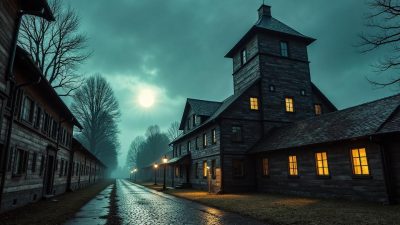
Switzerland to Open Long-Sealed Files on Auschwitz ‘Angel of Death’ Mengele
Switzerland to open secret files on Auschwitz – The Swiss Federal Intelligence Service has confirmed its intention to release classified records regarding Josef Mengele, the infamous Nazi doctor known as the “Angel of Death.” While the exact timeline remains unspecified, this decision marks a shift from years of secrecy surrounding the war criminal’s alleged ties to the Alpine nation. Mengele, who escaped Europe after World War II, has long been the subject of speculation about his presence in Switzerland, despite an international arrest warrant that was active during his time in the country.
A Fugitive’s Shadow Over Europe
Josef Mengele served as a medical officer in Germany’s Waffen SS during the Holocaust. His role at Auschwitz, the Nazi death camp in occupied Poland, involved determining which prisoners would be sent to the gas chambers, resulting in the deaths of approximately 1.1 million individuals, including around a million Jews. Mengele’s reputation as a sadistic experimenter was cemented by his selection of children and twins for brutal experiments, many of which were designed to test human endurance under extreme conditions. After the war, he adopted a new identity and fled to South America, where he lived until his death in 1979.
His escape was facilitated by documents obtained from the Red Cross, which had issued travel papers to thousands of displaced Europeans. These papers were meant to assist those without citizenship, but Mengele and other Nazis also exploited them. The Red Cross later acknowledged this oversight, expressing regret over the documents’ misuse. Despite this, Mengele’s presence in Switzerland has remained a topic of intrigue, particularly due to a documented skiing trip he took with his son in 1956.
Switzerland’s Secret Role in Mengele’s Escape
Swiss historian Regula Bochsler has long questioned whether Mengele returned to the country after his 1959 arrest warrant. Her research revealed that in 1961, the Austrian intelligence service alerted the Swiss authorities to Mengele’s possible visit under a false name. At the same time, his wife had rented an apartment in Zurich, a city known for its role as a haven for fugitive Nazis. Bochsler noted the apartment’s modest location and its proximity to the international airport, suggesting it might have been a strategic choice for potential returns.
“There seems to be evidence Mengele was planning a trip to Europe in 1959,” Bochsler explained to the BBC. “Why did Mrs Mengele rent an apartment in Zurich?”
Further investigation uncovered Zurich police files indicating the apartment was under surveillance that year. Officers recorded Mrs Mengele driving her Volkswagen, accompanied by an unidentified individual. The presence of an unregistered passenger raised questions about whether it was Mengele himself or someone else. These findings, however, were not enough to convince the Swiss authorities to unseal the records, a decision that remained pending for decades.
Decades of Secrecy and Dispute
The files were sealed until 2071, citing national security concerns and the need to protect Mengele’s extended family. Historians like Bochsler, who sought access in 2019, were denied. She was not alone—fellow scholar Gérard Wettstein faced the same rejection in 2025. Wettstein described the situation as absurd, arguing that keeping the files closed for nearly half a century fueled public suspicion.
“As long as they are closed until 2071, it fuels conspiracy, everyone says ‘they must have something to hide,’” Wettstein remarked to the BBC.
Undeterred, Wettstein took the Swiss authorities to court, a costly endeavor he funded through a crowdfunding campaign. Within days, he raised 18,000 Swiss francs (£17,000; $23,000) to support his legal challenge. The case ultimately prompted the Swiss Federal Intelligence Service to reconsider its stance, though the files remain subject to conditions yet to be outlined in a recent statement.
What the Files Might Reveal
While the Swiss government has finally agreed to share the documents, some historians remain skeptical about their contents. Sacha Zala, president of the Swiss Society for History, believes the files may not provide substantial new insights into Mengele’s actions. Instead, he suggests they could include references to foreign intelligence agencies or informants, which would justify the prolonged secrecy.
Zala’s theory is supported by the fact that Israel’s Mossad was actively tracking Nazi war criminals in the late 1950s. He suspects the Swiss may have collaborated with Mossad to monitor Mengele’s movements, ensuring that sensitive information about his return was kept confidential. This connection could explain why the files were sealed for so long, as details involving foreign intelligence operations are often redacted to protect strategic relationships.
The Road to Transparency
The Swiss Federal Intelligence Service’s recent statement signals a willingness to grant access to the files, though the process is not yet complete. The service emphasized that the records would be available “subject to conditions and requirements yet to be defined,” hinting at a possible delay in full disclosure. This cautious approach reflects the complex legacy of Switzerland’s role in the Holocaust, balancing its historical contributions to rescue efforts with its association with Nazi fugitives.
For years, the secrecy around Mengele’s Swiss ties has sparked debate. While some view it as a cover-up, others argue it was a necessary measure to safeguard the privacy of his family and the interests of international intelligence cooperation. Regardless of the reasoning, the upcoming release of the files promises to shed light on the nation’s wartime involvement, potentially revealing new details about its relationship with Nazi hunters like the Mossad. As the dust settles on decades of speculation, the public awaits the full story behind the “Angel of Death” and his hidden years in Switzerland.
