Trump arrives in China for high-stakes meeting with Xi Jinping
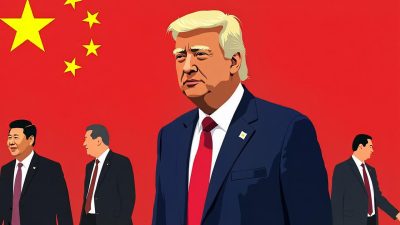
Trump arrives in China for high-stakes meeting with Xi Jinping
Trump arrives in China for high – On Wednesday evening, US President Donald Trump stepped off Air Force One in Beijing, greeted by a ceremonial display that underscored the significance of his visit. The summit with Chinese President Xi Jinping is poised to address critical issues, including trade disputes, technological rivalry, and regional security concerns. This meeting marks a pivotal moment in the evolving relationship between the world’s two largest economies, as both leaders aim to navigate complex challenges while balancing strategic interests.
The Context of a More Assertive China
Trump’s return to China coincides with a nation that has grown more confident in its global standing. Since his 2017 visit, Beijing has demonstrated a stronger stance in international affairs, particularly in economic and technological domains. This shift is evident in the discussions ahead, which will likely focus on the escalating tariff war and the strategic competition over emerging technologies. The US president is also expected to engage with Chinese officials on issues such as the war in Iran and the country’s geopolitical influence in the region.
The trip was initially planned for March but was delayed due to the ongoing conflict between the US and Israel in Iran. This war has disrupted global energy markets and strained economic stability, making it a key topic for the summit. Despite the postponement, the meeting remains a high-priority event, as both leaders seek to address the economic and strategic ramifications of the conflict.
Trump’s Entourage and Symbolic Gestures
Trump’s arrival was met with a traditional welcome, including a red carpet ceremony where Chinese Vice-President Han Zheng extended the first greeting. This gesture is seen as a signal of respect from Beijing, following a lower-level delegation that greeted Trump on his previous visit. The scene was further marked by a display of military honor, with flag wavers and brass bands chanting “welcome welcome, a warm welcome” as the president delivered his trademark fist pump to the assembled crowd.
Accompanying Trump on the journey were his son Eric Trump and several prominent figures from the US tech sector, including Tesla’s Elon Musk and Nvidia’s Jensen Huang. Additional high-profile attendees are expected to include Apple’s Tim Cook, BlackRock’s Larry Fink, and Boeing’s Kelly Ortberg. Their presence highlights the importance of corporate collaboration in shaping the US-China economic dialogue, with the hope of fostering mutual benefits through increased trade and investment.
Days before landing, Trump shared his expectations on social media, emphasizing his desire to engage Xi Jinping in a dialogue that would “open up” China. “I will be asking President Xi, a Leader of extraordinary distinction, to ‘open up’ China so that these brilliant people can work their magic, and help bring the People’s Republic to an even higher level,” he wrote. This “first request” reflects the administration’s focus on expanding economic opportunities while addressing trade imbalances.
The Trade Deficit and Economic Leverage
Trade relations between the US and China have faced significant headwinds in recent years, driven by escalating tariffs and regulatory barriers. In 2022, the bilateral trade value reached $690.4bn, but this figure dropped to $414.7bn in the past year, signaling a marked decline. Trump has long prioritized reducing the US trade deficit, which stood at over $200bn in favor of China last year. The administration aims to address this imbalance by promoting the purchase of American agricultural products, a strategy that aligns with broader economic goals.
China, meanwhile, is positioning itself as a dominant force in the global AI race, increasing its demand for US-made computing chips to fuel innovation in artificial intelligence. This move has raised concerns in Washington about technology theft, prompting tighter export controls. Beijing could leverage its control over rare earth metals, a critical resource for high-tech industries, as a strategic tool in this economic standoff. Such resources have historically been used to pressure trading partners, and their importance underscores the depth of the US-China economic interdependence.
During the meeting, the two leaders are expected to negotiate trade terms, with Trump advocating for reduced tariffs on Chinese goods and China seeking to ensure continued access to US markets. The balance of power between the nations will be tested as they attempt to reconcile their competing priorities, from economic growth to technological leadership.
Taiwan and Geopolitical Tensions
The meeting will also take place against a backdrop of heightened tensions over Taiwan. The Trump administration has adopted a nuanced approach, approving a major arms deal with the island while downplaying its readiness to defend it militarily. This stance has drawn criticism from some US lawmakers, who argue that the support for Taiwan should be unequivocal.
On Friday, a bipartisan group of senators sent a direct message to Trump, urging him to reaffirm US commitment to Taiwan. The letter emphasized the need to convey that “American support for Taiwan is not up for negotiation,” referencing the $14bn arms sale approved by Congress. As China continues to assert its claims over Taiwan, the US is under pressure to demonstrate its strategic resolve, particularly in light of rising oil prices that strain Beijing’s economy.
China’s reliance on Iranian oil has further complicated its position, as the war in Iran has disrupted supply routes through the Strait of Hormuz. This crisis has forced Beijing to explore alternative energy sources while maintaining its diplomatic ties with Tehran. The upcoming talks will likely examine how the US and China can coordinate their efforts in this volatile region.
The Agenda and Ceremony
Trump’s itinerary in China includes a formal welcome ceremony at the Great Hall of the People, followed by a state banquet and bilateral meetings. The president will also participate in a “friendship photo” session at Beijing’s Zhongnanhai Garden, a traditional diplomatic gesture that symbolizes the partnership between the two nations. The event will conclude with a working lunch, after which Trump is expected to depart China on Friday.
As the meeting unfolds, both leaders will face the challenge of bridging ideological and strategic divides. Trump’s approach to trade and technology, coupled with his stance on Taiwan and Iran, will shape the outcomes of this high-stakes encounter. The results could influence global trade dynamics, technological innovation, and the future of international relations for years to come.
With the world watching closely, the summit represents a critical juncture in the ongoing negotiations between the US and China. The discussions will not only determine the immediate future of their economic partnership but also set the stage for broader geopolitical strategies in the years ahead.
