
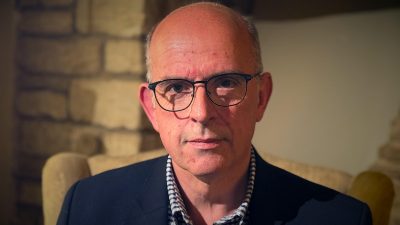
Former undercover officer disputes allegations over relationship with animal rights activist
Constantvpn.com – Andrew Coles, a former Metropolitan Police undercover officer who later became active in Conservative politics, is facing renewed scrutiny over claims that he deceived an animal rights activist into a sexual relationship during a covert operation in the early 1990s.
Coles, 66, rejects the allegation and says the campaign against him is retaliation for his past work. The dispute centres on his time in the Metropolitan Police Service’s Special Demonstration Squad, a unit that infiltrated political and protest movements.
He now lives in a thatched Cambridgeshire cottage with his wife and their greyhound, sings in a church choir and has held local Conservative roles. He is also the brother of broadcaster Reverend Richard Coles. His present-day life contrasts sharply with the secret identity he used between 1990 and 1995.
A covert identity inside the animal rights movement
The Special Demonstration Squad had been operating for more than two decades when Coles, then a Metropolitan Police constable, was recruited. Using the name Andy Davey, taken from a deceased child, he entered circles connected to the Animal Liberation Front.
The Animal Liberation Front was a direct-action group involved in animal rights campaigning. Coles says his assignment was linked to a criminal investigation after some members were convicted of offences including arson and bomb attacks.
“The work was certainly not everyone’s cup of tea, but I protected a part of society from some very dangerous people, and I think I did a good job,” he says.
He describes undercover work as requiring resilience, courage and ruthlessness. Asked whether deception was also central to the role, Coles accepts that it was, while maintaining that his undercover conduct did not differ greatly from his own character.
Coles says maintaining credibility within activist circles sometimes involved criminal behaviour. He recalls using cannabis because, he says, he needed others to vouch for him. He also says he sprayed a butcher’s shop window with a substance said to be acid and took part in a raid on a chicken farm where birds were removed and property damaged.
Jessica’s account
In 1991, a 19-year-old activist referred to as Jessica met the man she knew as Andy Davey. She says she was living in a shared house in east London and was seeking excitement when he became part of her circle.
Jessica, now 54, remembers him as an awkward older man who drove a van, a detail that made him useful and familiar to fellow activists. She says he frequently came to the house late at night and was difficult to persuade to leave.
“Then one night, without warning, he went to kiss me. I didn’t have the confidence to get out of the situation and he became my first proper boyfriend,” she says.
She believed he was 24. In fact, Coles was 32, married and had children. She did not know that he was an undercover officer gathering intelligence.
Jessica says the relationship developed while he was sleeping in her single bed several nights a week. She considers the deception central to the question of consent.
“It’s difficult to describe it as rape, but he knew that having sex with me would have been against my consent,” she says.
Coles accepts that he shared Jessica’s bed on one occasion, but denies any sexual contact. He says her account is untrue. When challenged on the evidence supporting her claim, he acknowledged that it would be difficult to overcome.
Inquiry findings and continuing dispute
The claims form part of the wider examination of undercover policing by the Undercover Policing Inquiry, which has investigated the conduct of officers who entered campaign and protest groups over several decades.
Metropolitan Police Commissioner Sir Mark Rowley has stated that the force accepted Coles had a sexual relationship with Jessica and was disappointed that he had not told the inquiry the truth. Coles also faces an allegation that he appeared to encourage colleagues to form comparable relationships while undercover. He strongly denies the accusations.
“It’s payback, pure and simple,” Coles says.
The case illustrates why the inquiry has examined not only intelligence gathering and operational tactics, but also the personal consequences of covert policing. For activists who later discovered that trusted friends or partners had been officers using false identities, the revelation could alter their understanding of years of private relationships.
For police, the central questions include whether such conduct was authorised, how officers were supervised and what safeguards existed for people drawn into covert operations. The issue is particularly acute where an undercover identity crossed into intimate relationships, because the apparent consent was given without knowledge of the officer’s true role.
Coles maintains that he performed a difficult job against people he regarded as dangerous. Jessica maintains that the relationship was founded on deception. Their conflicting accounts remain at the heart of a long-running controversy over the limits of undercover policing and the human cost of maintaining a false identity.
Related Reading
Frequently Asked Questions
What is Sex lies and police spies?
Sex lies and police spies is the main topic of this guide. The article explains the context, practical details, and next steps readers should understand.
Why does Sex lies and police spies matter?
Sex lies and police spies matters because readers are looking for a useful answer, not just a short summary. Good content should match search intent and help them decide what to do next.