
Covid inquiry finds care homes were not protected in the early pandemic
Constantvpn.com – People living in care homes and those receiving support in their own homes were left exposed by delayed action and longstanding weaknesses in the social care system, the sixth report from the Covid inquiry has concluded.
At the beginning of the pandemic, about 500,000 people lived in care homes across the UK, while a further one million received care at home. The inquiry’s 287-page report examines how efforts to protect this group fell short, with grave consequences. More than 43,000 deaths involving Covid were recorded in care homes between March 2020 and July 2022.
The findings challenge the claim made by Matt Hancock, then England’s health secretary, that a “protective ring” had been placed around care homes. Instead, the report describes a sequence of missed opportunities, inadequate planning and policy decisions that did not sufficiently account for the risks faced by residents and staff.
“A protective ring”
Care sector treated as an afterthought
The inquiry found that social care did not receive the attention it needed in the early stages of the crisis. It described the sector as appearing to be “something of an afterthought”, despite the vulnerability of many people who relied on it.
Shortages of personal protective equipment created immediate problems. Care workers were forced to improvise when suitable supplies were unavailable, using items such as bin bags, festival rain ponchos and painters’ overalls. These makeshift measures illustrated how poorly prepared parts of the sector were for a fast-moving infectious disease emergency.
The report also highlights the fragmented structure of adult social care. Thousands of providers and services, overseen by local councils, make up the system. That arrangement meant the sector was less closely connected to central government than the NHS, complicating communication, coordination and the delivery of support during the emergency.
The pandemic did not create every weakness identified by the inquiry. Rather, it brought existing pressures into sharper focus and made them harder to manage.
Hospital discharges and the lack of isolation measures
One major concern involved patients leaving hospital for care homes while they might have been infected with Covid. The decision to free hospital beds was understandable at a time when the health service was preparing for large numbers of seriously ill patients. However, the inquiry said the transfer process needed stronger protections when reliable testing was not widely available.
People discharged from hospital should have been kept separate from other residents and isolated where infection was possible. Guidance issued in March 2020 for England, Wales and Northern Ireland did not ask for this. The report characterises that omission as a significant failure.
This mattered because care homes bring together people who may be frail, elderly or living with serious health conditions. Once infection entered a home, the close-contact nature of care could make control exceptionally difficult. The inquiry’s conclusions underline how decisions about hospitals and social care could not safely be treated as separate issues.
A workforce already under pressure
Staffing difficulties also weakened the response. Before Covid, social care was already affected by high vacancy levels and frequent staff turnover. The inquiry found that this left the workforce fragile and without sufficient resilience for the pressures that followed.
Many homes depend on agency workers, some of whom work across several locations. Reducing movement between homes was intended to limit the spread of infection, but it also intensified staff shortages. Providers then had to cope with reduced flexibility at the same time as the need for care became more demanding.
Financial strain added to the difficulty. Use of some services fell during the pandemic, affecting providers’ income. In a sector where zero-hours contracts are widely used, there was not enough financial support to enable staff to stay away from work when there were concerns that they could be infected.
The emotional toll on staff was substantial. The inquiry said the experience had a major effect on workers’ wellbeing and mental health. Some employees moved into the homes where they worked in an effort to reduce the chance of bringing infection to residents.
Visiting restrictions caused lasting harm
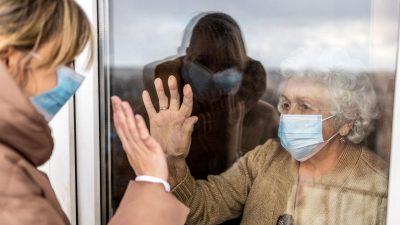
Restrictions on visitors were initially a rational precaution, the inquiry said, given the uncertainty and danger at the start of the pandemic. Yet the report found that the approach became too restrictive as time passed and more evidence emerged.
Visits are not simply social occasions for many residents. Family members and friends can help with personal care, reassurance, communication and emotional wellbeing. Prolonged separation therefore carried its own serious risks.
By September 2020, available evidence indicated that visitors presented only a “marginal risk”, while staff were viewed as the principal route through which infections entered homes. Guidance across the four UK nations gradually became less restrictive. Even so, many homes did not put the changes into practice and visiting remained heavily limited.
The inquiry said this contributed to a significant deterioration in residents’ health and wellbeing. Its findings stress that infection control measures must be assessed not only for their ability to reduce transmission, but also for the human cost of isolation.
Concerns over resuscitation decisions
The report also raises serious concerns about do not attempt cardiopulmonary resuscitation decisions, commonly known as DNACPR orders. CPR, including chest compressions, can save a person’s life when their heart stops. Decisions not to attempt resuscitation can be appropriate in individual circumstances, such as when someone is extremely frail or has a life-limiting illness.
Such decisions must be made individually. Blanket DNACPR orders are unlawful. The inquiry heard evidence that some GPs imposed blanket orders on care home residents during the pandemic.
Records also showed a marked increase in the number of DNACPR orders during the first nine months of Covid, rising from 16,800 to 26,500. The concern reflects findings from an earlier Care Quality Commission investigation, which identified unacceptable and inappropriate DNACPR decisions.
A warning for future emergencies
The inquiry’s assessment is a reminder that social care must be fully included in emergency planning from the outset. Care homes, domiciliary care services, residents, families and workers cannot be protected by policies designed principally around hospitals.
Its findings point to the importance of adequate protective equipment, dependable testing and isolation arrangements, secure staffing, fair financial support for workers, and clear guidance that reaches every provider. They also underline the need to preserve residents’ rights, dignity and contact with loved ones while managing infection risks.
Related Reading
Frequently Asked Questions
What is Covid failings in care homes?
Covid failings in care homes is the main topic of this guide. The article explains the context, practical details, and next steps readers should understand.
Why does Covid failings in care homes matter?
Covid failings in care homes matters because readers are looking for a useful answer, not just a short summary. Good content should match search intent and help them decide what to do next.