
Lebanese Farmers Detained in Occupied Southern Zone as Civilian Releases Signal Fragile Diplomatic Shift
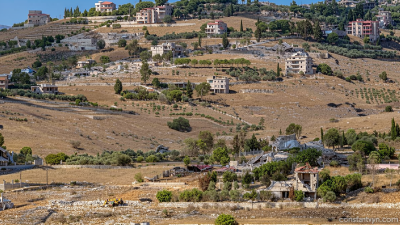
Constantvpn.com – Three Lebanese farmers were seized by Israeli forces in the occupied strip of southern Lebanon after being summoned by phone to a designated meeting point, their village leader confirmed. The incident, which unfolded in the village of Halta within Hasbaya province, underscores the continuing vulnerability of civilians living under Israeli military control in a territory spanning roughly 600 square kilometres along the border.
Issa Abedelaal, who leads the local community, described how Israeli personnel contacted the three men on their mobile phones and directed them to present themselves at a specific location. Once there, the farmers were detained and removed. The episode was formally reported to the International Monitoring and Implementation Mechanism, the US-backed body tasked with overseeing security coordination between the two states.
A Rare Civilian Release Amid Stalled Negotiations
Within hours of the farmers’ detention, a separate development offered a narrow window of relief: Israel released Malek Ghazi, a Lebanese civilian held in the country since October of last year. His family had said he vanished after stepping out of his home to exercise. Ghazi was transferred at the Naqoura crossing point by the International Committee of the Red Cross and subsequently transported to an army intelligence facility in Tyre, where he underwent a medical examination.
The release is widely regarded as the first confirmed civilian handover since Washington brokered a round of talks between Israel and Lebanon in April. Israel’s prime minister’s office announced that four additional Lebanese civilians, who had been questioned and cleared of any connection to armed groups, would be freed on Friday.
“The government would continue working for the release of all Lebanese detainees, information about those still missing, and a complete Israeli withdrawal from Lebanese territory,” Prime Minister Nawaf Salam stated, thanking the United States for its role in securing Ghazi’s return.
More than thirty Lebanese nationals remain believed to be in Israeli custody. The detainees’ fate is entangled with a broader diplomatic architecture that has produced little tangible progress since its inception.
The Framework and Its Fractures
In mid-June, the two governments agreed on a phased arrangement: Hezbollah would disarm, the Lebanese army would deploy along the southern front, and Israeli forces would withdraw incrementally, beginning in designated “pilot zones.” The concept was meant to create verifiable, step-by-step de-escalation rather than a single dramatic pullback.
That architecture has stalled almost immediately. Israel has raised doubts about the capacity and political independence of the Lebanese army to enforce a disarmament mandate. Disagreements persist over how compliance would be monitored and verified. Hezbollah, for its part, has rejected both the negotiation track and the pilot-zone mechanism outright, viewing them as instruments of pressure rather than genuine security guarantees.
The two sides have yet to schedule a date for the eighth round of talks. Meanwhile, Israel’s Defence Forces have continued operations in the south, and Lebanese officials say the Israeli military has been expanding its positions within the occupied area rather than contracting them.
Context: A Region Under Persistent Military Pressure
The occupied strip in southern Lebanon has functioned as a buffer zone since Israel’s forces moved in following the escalation of hostilities in late 2024. For residents of villages like Halta, daily life now operates under the shadow of checkpoints, phone summons, and the ever-present possibility of detention. The farmers’ experience — being called on a mobile phone and told to walk to a location where they would be taken into custody — illustrates how the occupation reshapes ordinary routines into acts of compliance or risk.
The August air strike that killed eleven people in the region added another layer of tension. Israel’s military stated at the time that the strike had eliminated a Hezbollah commander following an attack on Israeli soldiers. Lebanese authorities confirmed the death toll of eleven. The episode reinforced local perceptions that the military presence, far from stabilising the area, continues to generate lethal risk for civilians.
Parallel to the detainees’ issue, US-mediated efforts also encompass the recovery of remains belonging to leaders of the Lebanese Jewish community who were abducted and killed during the country’s civil war in the 1970s and 1980s. Those remains have remained unaccounted for decades, and their return has become a symbolic marker of good faith in the broader reconciliation process.
What Comes Next
The Friday releases of four additional civilians, if they proceed as announced, would represent a modest but meaningful step toward restoring trust between the two governments. Yet the structural obstacles remain formidable: a non-state actor that rejects the framework, an army whose political autonomy is contested, and a military occupation that continues to expand rather than recede. Until those contradictions are resolved, individual releases will remain isolated gestures within a negotiation that has yet to find a workable trajectory.
For the families of the more than thirty Lebanese still held, and for the residents of villages like Halta who answer their phones to Israeli summons, the gap between diplomatic language and lived reality remains wide.
Related Reading
Frequently Asked Questions
What is Three farmers detained by Israel in Lebanon?
Three farmers detained by Israel in Lebanon is the main topic of this guide. The article explains the context, practical details, and next steps readers should understand.
Why does Three farmers detained by Israel in Lebanon matter?
Three farmers detained by Israel in Lebanon matters because readers are looking for a useful answer, not just a short summary. Good content should match search intent and help them decide what to do next.