
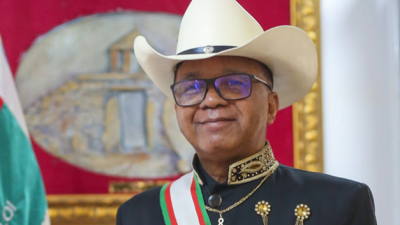
Madagascar’s ousted Senate president handed decade of hard labour for role in protest killings
Constantvpn.com – A retired general who once sat at the apex of Madagascar’s legislative branch has been ordered to spend ten years performing forced labour, after a court in the capital found him complicit in the deaths of demonstrators during last year’s youth-led uprising. The verdict against Richard Ravalomanana, delivered on Tuesday in Antananarivo, marks one of the most consequential judicial outcomes of the political upheaval that toppled former President Andry Rajoelina’s administration and installed a new military-led government.
The court concluded that Ravalomanana, a longtime confidant of Rajoelina, had directed security forces to employ lethal force against protesters during the so-called Gen Z demonstrations of September and October 2025. Prosecutors argued he issued explicit instructions to gendarmes and other officers deployed on the streets, turning what began as complaints about infrastructure failures into a campaign of state violence.
The verdict and its immediate aftermath
Ravalomanana was convicted of complicity in murder. He rejected the finding in court and announced his intention to lodge an appeal with a higher tribunal. His defence team confirmed it would challenge the verdict on procedural and evidentiary grounds.
The court simultaneously dismissed a separate count alleging that Ravalomanana had made a death threat, ruling the matter had aged beyond the statutory limitation period for prosecution.
In a separate matter unrelated to the trial, Ravalomanana remains under investigation for corruption, a parallel proceeding that could extend his time behind bars well beyond the ten-year sentence now imposed.
From blackouts to barricades: how the protests unfolded
The demonstrations that shook Madagascar’s capital and other cities did not emerge from a vacuum. They were ignited by months of rolling electricity outages and chronic water shortages that left ordinary households without basic services. What started as neighbourhood-level frustration over utility failures rapidly broadened into a sustained movement demanding the departure of Rajoelina’s government.
The unrest proved deadly. United Nations figures, cited by local outlets, placed the toll at at least 22 fatalities and more than 100 injured. The scale of the violence ultimately triggered a constitutional crisis that ended Rajoelina’s tenure and brought Colonel Michael Randrianirina to the helm of a new administration.
Ravalomanana’s position of influence
The crackdown was executed primarily by the gendarmerie, the paramilitary force where Ravalomanana retained substantial informal sway even after his formal posts. A state prosecutor, speaking in December 2025, characterised his role bluntly:
“He directed violent actions to suppress the demonstrations.”
Ravalomanana had served as Senate president until October, when he was stripped of the role in the immediate aftermath of the protests. His removal from that office did not shield him from further scrutiny. In December, gendarmes went to his residence to arrest him after he failed to answer a formal summons. He was subsequently locked in pre-trial detention at Imerintsiatosika, a high-security facility on the outskirts of Antananarivo, where he has spent roughly seven months awaiting trial.
Among the public, his image had become shorthand for the old order. Known for appearing in public wearing a cowboy hat and displaying rows of military medals, Ravalomanana was treated by demonstrators as a living emblem of authoritarian rule. His presence at rallies or official functions often drew jeers and chants from crowds who saw him as a proxy for Rajoelina’s security apparatus.
The defence case
Ravalomanana’s lawyers mounted a challenge centred on the absence of direct documentary or testimonial proof linking him to specific orders. They pressed the court to identify any written directive, recorded instruction, or sworn account from an officer on the ground confirming that commands flowed from their client.
“Is there confirmed written or verbal evidence… to accuse him?”
That question, posed by his counsel, framed the defence argument: prosecutors, they contended, had built a case of association rather than command.
Testimony from a former national police chief, called to the stand, appeared to support the defence narrative. The witness stated that Ravalomanana had not occupied a position within the operational chain of command during the unrest and had issued no directives to police, gendarmes, or soldiers deployed in the streets.
A reckoning for the old guard
The Ravalomanana trial is one of several legal proceedings now targeting senior figures from the Rajoelina era. Since the change of power, multiple officials associated with the former government have faced charges ranging from corruption to abuse of authority. The new administration, led by Colonel Randrianirina, has signalled that accountability for the protest deaths will be pursued through the courts rather than through political purges.
Whether the ten-year hard-labour sentence will survive appellate review remains open. But the verdict itself sends a clear message to Madagascar’s political class: the era in which senior security figures could direct street-level violence without personal legal consequence appears to have ended. For the families of the 22 killed and the hundreds wounded, the question now is whether a court sentence, however severe, can begin to close a wound that opened on the streets of Antananarivo a year ago.
Related Reading
Frequently Asked Questions
What is Madagascar ex Senate chief sentenced to hard?
Madagascar ex Senate chief sentenced to hard is the main topic of this guide. The article explains the context, practical details, and next steps readers should understand.
Why does Madagascar ex Senate chief sentenced to hard matter?
Madagascar ex Senate chief sentenced to hard matters because readers are looking for a useful answer, not just a short summary. Good content should match search intent and help them decide what to do next.