
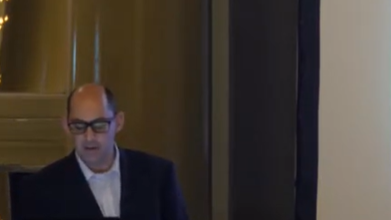
Court Anonymity Order Lifted for Late Doctor Who Testified in Lucy Letby Trial
Constantvpn.com – The identity of the physician who sat behind a screen during one of the most closely watched murder trials in British legal history is no longer shielded from public view. Dr Mark Deakin, who died in July at the age of 53, had been protected by a court anonymity order since he gave evidence against nurse Lucy Letby. That order has now been formally lifted, allowing his name and role to be discussed openly in the aftermath of his passing.
Deakin had worked alongside Letby at the Countess of Chester Hospital in Northwich, Cheshire, during the period spanning 2015 and 2016 when she killed seven infants and attempted to kill six more. After departing that post, he continued his career in paediatric medicine, eventually taking up a consultant position at Alder Hey Children’s Hospital in Liverpool. His professional trajectory placed him at the centre of events that would later consume the public imagination.
Circumstances of Death and Pending Inquest
Accounts emerging after his death suggest that Deakin learned he had been dismissed from his role after an investigation found he had breached patient confidentiality through text message exchanges with Letby. He reportedly died shortly after receiving that news. It is understood that he had been unwell in the period before his death. An inquest into the circumstances surrounding his passing is now expected to be opened, adding another layer of scrutiny to an already heavily examined case.
The timing of his death — weeks after the trial concluded and amid ongoing institutional reviews — has drawn attention to the personal toll exacted on those who worked in close proximity to Letby during the period of the killings. Colleagues and observers have noted the extraordinary pressure placed on staff at the Countess of Chester, where routine clinical work was later revealed to have been overshadowed by a pattern of deliberate harm.
The Thirlwall Inquiry and the Nature of Their Relationship
Details of Deakin’s personal interactions with Letby came to light during the Thirlwall inquiry, which examined how the nurse’s murders were able to occur within a hospital setting. The inquiry heard that the two had exchanged more than 1,000 Facebook messages over an extended period. Deakin also assisted Letby in securing a placement at Alder Hey Children’s Hospital after she had become suspected of harming babies — a step that effectively moved her closer to another paediatric unit while questions about her conduct mounted.
Speaking to the inquiry, Deakin described feeling “misled” and “maybe manipulated” by Letby. He said he had been tricked into providing information about babies she had attacked, and characterised his decision to help her as having been “a massive mistake.” He added that he carried “a lot of regrets” about his involvement.
“It had been a massive mistake,” Deakin told the inquiry, adding that he had “a lot of regrets.”
The Thirlwall inquiry is scheduled to publish its full findings on 15 September. Its conclusions will shape understanding of how institutional failures allowed the killings to continue undetected for months, and how relationships between staff members may have obscured the truth from colleagues and management.
Trial Testimony and the Emotional Weight of the Witness Box
At Letby’s criminal trial — the longest murder trial in UK history — Deakin was granted special measures alongside his anonymity order. These permitted him to give evidence from behind a screen, ensuring that Letby, members of the public gallery, and journalists could not see his face. His testimony covered several of the babies involved in the prosecution’s case, providing detail of emergency calls and resuscitation efforts in which he and Letby had been jointly involved.
Their extensive text messaging was laid bare before the jury, with many of the messages read aloud or displayed in court. When Deakin was first sworn in, Letby burst into tears — the first visible display of emotion from her during the lengthy proceedings.
During cross-examination, Letby was pressed to deny that Deakin was her boyfriend, though she conceded the pair had taken a trip to London together. Prosecuting barrister Nick Johnson KC observed that Letby “tried to get out the back of the dock” when the doctor first approached the witness box.
“Yes, because I felt unwell,” Letby replied.
“No, it’s because you didn’t like hearing your boyfriend giving evidence, did you?” Johnson pressed.
“That’s unfair,” Letby said.
Prosecutors also examined a WhatsApp exchange between Letby and a friend who had teased her for being “flirty” with Deakin. Johnson asked whether the friend “knew you were sweet on Mark.” Letby pushed back, asking what was meant by “sweet,” and insisted: “There was nothing between me and that Mark.” Johnson then noted that Letby had told her friend she received a “strange message” from the doctor. The friend’s reply, read into the record, was: “Did you? Saying what? Go Commando,” followed by a laughing face emoji.
Broader Context and Ongoing Reviews
Letby, now 36, has maintained her innocence throughout and is serving 15 whole life prison terms for the murders and attempted murders. The Criminal Cases Review Commission (CCRC) is conducting a review of her convictions, a process that will examine whether any new evidence or procedural concerns warrant further action. Separately, a group of new expert supporters has publicly claimed that no babies were deliberately harmed, prompting debate over which medical interpretations should carry weight.
While some media accounts have characterised Deakin as “a key witness,” his testimony formed part of a broader evidential picture built from the accounts of numerous former colleagues. None of the convictions rested solely on his evidence. His role, though significant, was one thread in a much larger tapestry of clinical records, witness statements, and expert analysis that sustained the prosecution’s case.
The lifting of the anonymity order means that Deakin’s name will now appear in public records, inquest proceedings, and any future publications arising from the Thirlwall inquiry. For a man who spent his final months under the weight of institutional scrutiny, personal regret, and ill health, the decision restores a measure of public recognition to his contribution — and to his suffering — in one of the most extraordinary criminal cases in recent British history.
Related Reading
Frequently Asked Questions
What is Letby boyfriend doctor named as court?
Letby boyfriend doctor named as court is the main topic of this guide. The article explains the context, practical details, and next steps readers should understand.
Why does Letby boyfriend doctor named as court matter?
Letby boyfriend doctor named as court matters because readers are looking for a useful answer, not just a short summary. Good content should match search intent and help them decide what to do next.