
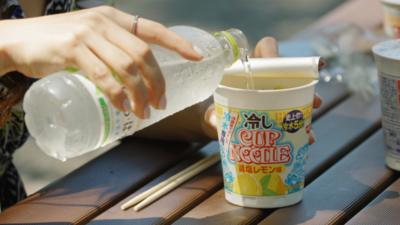
Cold-Water Cup Noodles: Japan’s Summer Snack That Broke the Internet
Constantvpn.com – Walk into any convenience store in Tokyo during peak summer and you will notice an empty shelf where a particular product used to sit. The item in question is a cup of instant noodles engineered to be rehydrated with chilled water rather than boiling. Within weeks of its launch, the product vanished from retail shelves across the country after a wave of social-media enthusiasm turned a niche convenience-store item into a national obsession. The phenomenon has drawn the attention of food writers, trend-watchers, and curious travelers alike, prompting at least one on-the-ground taste test by Tokyo-based journalist Kurumi Mori, who set out to determine whether the hype matches the experience on the tongue.
What Makes Cold-Water Noodles Different
Standard instant noodles rely on a simple thermal principle: boiling water breaks down the dried starch matrix, softens the noodle strands, and activates the seasoning packet in roughly three minutes. Cold-water versions invert that logic. The noodles are pre-cooked and dried in a way that allows them to absorb water at room temperature or below, meaning no kettle, no microwave, no stove. You pour in chilled water, wait, and eat. The result is a snack closer to a chilled noodle salad than to the steaming bowl most people associate with instant ramen.
The design intent is explicitly seasonal. Japanese summers routinely push past 35 °C, and the last thing a heat-exhausted commuter wants is to stand over a boiling pot. A product that delivers a satisfying noodle bite without adding thermal load to the body fits squarely into the country’s long tradition of cold-summer foods — think chilled soba, hiyashi chūka, or cold udon served over ice. The cold-water cup noodle slots into that lineage while retaining the grab-and-go convenience that made instant noodles a global staple in the first place.
The Viral Sell-Out
The product’s trajectory from shelf to sold-out status followed a familiar social-media arc. Short video clips showing the pour-and-wait ritual, paired with the novelty of eating a “noodle” without any heat, generated millions of views. Retailers reported stock depletion within days of the trend gaining traction. For a market where instant noodles are a multi-billion-yen annual category, a single SKU disappearing from shelves signals genuine consumer demand rather than a passing curiosity.
Japan’s instant-noodle heritage gives the trend extra weight. Cup noodles were invented in Japan in 1971, and the country remains the world’s largest per-capita consumer of the category. Each summer, manufacturers release limited-edition flavors and formats aimed at younger buyers. A cold-water variant is the latest iteration in a decades-long cycle of format innovation — from microwave-ready cups to shokupan-style bread noodles to the chilled option now dominating headlines.
The Taste Test
Kurumi Mori, reporting from Tokyo, put the product through a practical evaluation. The question was straightforward: does a noodle rehydrated in cold water deliver enough flavor, texture, and satisfaction to justify the viral buzz? The answer, as with most novelty food items, landed somewhere between “surprisingly decent” and “you will not build a meal around it.” The seasoning, diluted across a larger volume of cold liquid, reads lighter than its hot-water counterpart. The noodle texture is softer, closer to a pasta salad strand than to the springy bite of a properly boiled cup. None of this makes it unpleasant; it simply reframes the product as a snack rather than a meal.
The experience is closer to a chilled convenience-store snack than to the steaming bowl most people picture when they hear “instant noodles.” It works as a summer palate-cooler, not as dinner.
Mori’s assessment underscores a broader point about viral food trends: the spectacle of preparation often outpaces the actual eating experience. The pour-and-wait ritual is visually arresting on a fifteen-second clip. The resulting bite, consumed at a desk or on a train, is pleasant but unremarkable. That gap between expectation and reality is the engine of most food-viral cycles, and it is worth understanding before the next trend lands on your feed.
Why the Trend Matters Beyond the Snack
The cold-water noodle episode is a small window into how Japanese food culture adapts to climate pressure. Rising summer temperatures have accelerated demand for cold-prepared foods across the convenience-store and vending-machine sectors. Manufacturers respond with format innovation — chilled soups, cold-brewed coffee, frozen desserts — and social media amplifies each new release into a national event within hours. The sell-out cycle, while frustrating for late-arriving shoppers, also signals that demand for low-thermal-load convenience food is structural, not faddish.
For travelers and food-curious readers, the practical takeaway is simple: if you encounter the product on a shelf before the next sell-out wave, try it as what it is — a chilled, mildly seasoned noodle snack designed for a hot afternoon. Do not expect the depth of flavor or the textural punch of a hot cup. Expect something closer to a cold noodle salad in a disposable container, with the added novelty of having watched it come to life in a glass of ice water. In that narrow frame, it fulfills its purpose. The viral frenzy, meanwhile, will burn out by autumn, and the shelves will restock quietly, waiting for the next summer’s next trick.
Related Reading
Frequently Asked Questions
What is Cup noodles made with cold water?
Cup noodles made with cold water is the main topic of this guide. The article explains the context, practical details, and next steps readers should understand.
Why does Cup noodles made with cold water matter?
Cup noodles made with cold water matters because readers are looking for a useful answer, not just a short summary. Good content should match search intent and help them decide what to do next.