
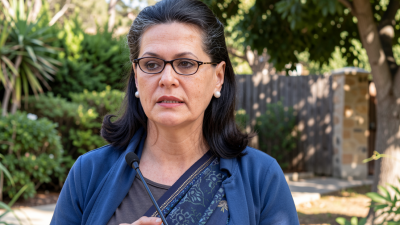
A Memoir at the Heart of India’s Longest-Ruling Dynasty
Constantvpn.com – In November, a book titled Belonging: A Journey of Love will hit shelves in the United States through Alfred A Knopf and in Britain through William Collins. Its author is Sonia Gandhi, the 79-year-old president of the Indian National Congress — the oldest political organisation in the country and, for decades, the dominant force in post-independence governance. The memoir, described by its publishers as a “revelatory” look back on a life defined by love, exile, political authority, and catastrophic grief, is expected to draw intense scrutiny from readers who have watched the Gandhi family shape Indian politics across three generations.
For those unfamiliar with the dynasty’s reach: Jawaharlal Nehru led India from independence in 1947 until his death in 1964. His daughter Indira Gandhi served as prime minister twice before being assassinated in 1984. Her son Rajiv Gandhi followed her to the premiership and was killed by a suicide bomber in 1991. Sonia, born Sonia Maino in small-town Italy, married Rajiv in 1968 after meeting him as a 19-year-old student in Cambridge. She has since become, in effect, the matriarch of a political lineage that spans nearly eight decades of Indian statecraft.
From Enigma to Power
When Sonia assumed the Congress presidency in 1998, she was widely regarded as an outsider — Italian-born, widowed, and long accustomed to staying out of the public eye. India Today magazine, observing her early months in the role, called her “quite an enigma to her partymen” and noted her tendency toward “laconic one-liners in an alien accent,” wrapped in a security cordon that kept the outside world at bay. Yet the same publication detected a shrewd operator beneath the reticence: a woman who absorbed competing arguments, gathered intelligence, and then imposed her own judgment.
“Nobody is left out of the decision-making process and no voice is gagged. But it is her word that prevails.”
Nearly three decades later, that quiet authority has made her the most influential figure within Congress. The party’s trajectory under her stewardship — including its return to national power in 2004 after an eight-year opposition period — has cemented her position as the dynasty’s current axis of gravity.
Personal Loss as Political Backdrop
The memoir’s emotional architecture is inseparable from two acts of political violence that reshaped her life. In 1984, Sonia rushed her mother-in-law, Indira Gandhi, to hospital after the prime minister’s own bodyguards opened fire on her in Delhi. Seven years later, she brought Rajiv’s body home after a suicide bomber detonated a device at a campaign rally in Tamil Nadu. These twin traumas — the assassination of both parents-in-law within a single decade — frame what the publishers describe as a narrative moving from “warmth and candour” through periods of “dark despair.”
In a statement routed through Alfred A Knopf, Gandhi framed the book’s purpose in personal rather than partisan terms:
“I want this memoir to be a testament of my heart’s journey through the tender joys and dark despair that have marked my life.”
A Publishing Dispute Adds Political Heat
The book’s path to publication has not been free of controversy. Reports surfaced that Penguin Random House India had requested alterations to sections of the manuscript. Congress leaders subsequently alleged that the publisher had faced political pressure to soften passages critical of the incumbent government. Penguin pushed back, stating it “remained keen and willing to publish the book” while “relevant discussions” were ongoing. The episode underscored how tightly Indian publishing and party politics remain entangled, and it guaranteed that the memoir would be read through a lens of institutional accountability before a single chapter was opened.
The Unanswered Question: Why Not Prime Minister?
Readers will inevitably probe beyond biography. The single most consequential decision in Sonia’s political career — and the one most likely to dominate commentary — is her refusal of the prime ministership in 2004. After Congress swept back into government, she had the full backing of her party, its allies, and the institutional machinery of the presidency. Journalist and author Neerja Chowdhury has called this choice “really the biggest unanswered question,” noting that the president’s office reportedly had a letter already drafted inviting her to form the government.
Instead, she elevated Manmohan Singh, the economist credited with architecting India’s post-1991 liberalisation agenda, to the premiership. Speculation has ranged from concern that her foreign origins would permanently weaken her mandate, to family dynamics within the Gandhi household. In his own memoirs, former foreign minister and Congress leader Natwar Singh wrote that Sonia’s son, Rahul Gandhi, was “vehemently” opposed to his mother taking the top job, fearing she would share the fate of his grandmother and father. Singh described the internal debate reaching a “climax” when Rahul declared he was prepared to take “any possible step” to prevent her assumption of office.
Whether Belonging will clarify that extraordinary moment — or present a markedly different internal account — will determine whether the book is remembered primarily as a family memoir or as a key document in the history of Indian democratic succession. For a party that has governed the world’s largest democracy for more cumulative years than any other, the answer to that question carries weight well beyond one family’s private grief.
Related Reading
Frequently Asked Questions
What is What will Sonia Gandhi s memoir?
What will Sonia Gandhi s memoir is the main topic of this guide. The article explains the context, practical details, and next steps readers should understand.
Why does What will Sonia Gandhi s memoir matter?
What will Sonia Gandhi s memoir matters because readers are looking for a useful answer, not just a short summary. Good content should match search intent and help them decide what to do next.