
Why a Persistent Myth About Black Bodies and Water Keeps Costing Lives
Constantvpn.com – Every summer, as temperatures climb and Britons flock to lakes, rivers, and coastlines, the country’s drowning toll ticks upward. Black children and adults have consistently appeared at disproportionate rates in those statistics, a pattern that predates the current decade and shows no sign of fading. The absence of official 2026 figures does not erase what prior years have documented: a demographic disparity in water-related deaths that mirrors a deeper, more entrenched problem. Millions of black Britons simply cannot swim, and the reasons trace back centuries of exclusion, misinformation, and institutional neglect.
A Personal Reckoning at Age 27
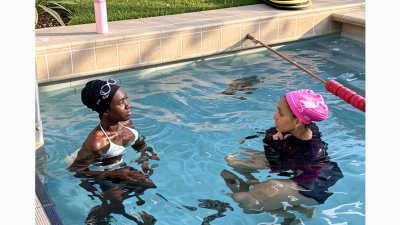
Florence Freeman, a writer who recently returned to a pool after more than ten years away, describes the moment she pushed through the entrance doors: the chlorine stung her nose, nausea rose, and every instinct told her to turn back. She was about to begin her first formal swimming lesson in over a decade. Inside the water, she found herself surrounded by other black women at varying stages of competence — some already completing confident lengths, others, like herself, still learning how to breathe without panic, how to let the water support rather than resist.
At 27, Freeman still could not swim. She is, by a wide margin, not an outlier.
The Numbers Behind the Gap
Swim England, the sport’s national governing body, compiled survey data from 4,500 respondents and published the findings in 2022. The results paint a stark picture of inequality in aquatic competence. Sixty-seven percent of black women and 44 percent of black men in England reported an inability to swim 25 metres without assistance. Compare that with the white population: 17 percent of white women and 12 percent of white men share the same limitation. The gap is not marginal; it is structural.
The survey also flagged other groups at elevated risk of non-swimming: lower-income households, Muslim communities, people of South Asian heritage, and children in the care of social services. Yet it is the black-community figures that tend to dominate public conversation, partly because the historical roots of the disparity are so specific and so long-lived.
Debunking the Bone-Density Myth
For generations, a particular explanation has circulated: that black people possess denser skeletal structures, rendering them inherently less buoyant in water. The claim has no scientific footing. In 2023, researchers from the University of Portsmouth partnered with the Royal National Lifeboat Institution and the Black Swimming Association to test the hypothesis directly. One hundred and one participants took part. Eighty-nine of them floated unassisted for a full two minutes. Bone density measurements failed to predict who could float and who could not. The myth, in other words, collapsed under basic empirical scrutiny.
Where the Myth Actually Came From
The idea did not emerge from anatomy. It emerged from exclusion. European travel accounts stretching back to the fifteenth century recorded west Africans as accomplished swimmers and divers. Then came centuries of racial segregation in pool access, most visibly in the United States, where black bodies were barred from public aquatic facilities. By the time segregation formally ended, the cultural association between blackness and poor swimming had already calcified.
In 1974, just a few years after the US civil rights era reshaped public life, two white physicians published an article in a respected American medical journal posing the question: “Can Blacks Float?” Their conclusion affirmed the very assumption the Portsmouth study would later dismantle. That article, and the decades of informal repetition surrounding it, embedded a false biological narrative into popular consciousness.
Living the Consequences
Alice Dearing, a former Olympic swimmer and co-founder of the Black Swimming Association, grew up in a culture where the myth had already taken root. At seventeen, a coach directed a racial slur at her in front of a fellow swimmer. She raised the complaint with her club and her school. Ultimately, she chose not to pursue the matter further.
“Why am I being victimised for swimming and for being black? It just didn’t make sense,” she recalls.
Dearing argues that America’s segregated-pool history reverberated across the Atlantic into British swimming culture, leaving some black people with an internalised belief that they simply cannot swim. That belief, she contends, is not merely a historical curiosity; it shapes present-day behaviour at the poolside and in open water.
The Cost of Believing the Wrong Thing
Heather Massey, a physiology professor at the University of Portsmouth who contributed to the floating study, frames the issue in practical terms. If a person genuinely believes their body cannot float, they may dismiss a skill that could one day save their life. The stakes are not academic.
“If people believe they can’t float, then they may be dismissing something that could eventually save their life,” Massey says. “We need to make sure that myth is challenged.”
What Comes Next
UK policy expects every child to leave primary school with basic swimming competence. In practice, that expectation lands unevenly across communities shaped by the very exclusions described above. Closing the gap requires more than a single study, however rigorous. It demands sustained investment in accessible, culturally welcoming aquatic programmes; explicit curricula that correct the bone-density fallacy; and institutional accountability when coaches or clubs reproduce the language of racial inferiority in the pool.
The water does not discriminate. The barriers around it do. Until those barriers are dismantled — in policy, in pedagogy, and in the stories communities tell themselves about their own bodies — the drowning statistics will continue to carry the same demographic signature they have carried for decades.
Related Reading
Frequently Asked Questions
What is The mystery of why so many?
The mystery of why so many is the main topic of this guide. The article explains the context, practical details, and next steps readers should understand.
Why does The mystery of why so many matter?
The mystery of why so many matters because readers are looking for a useful answer, not just a short summary. Good content should match search intent and help them decide what to do next.