
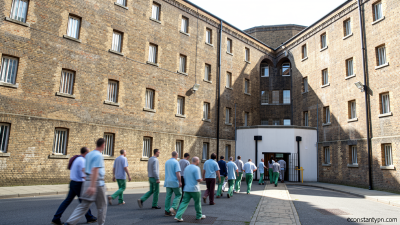
Prisoners freed early are returning at rapid rate
Constantvpn.com – Prisoners freed early are returning to cells at a pace that has alarmed the people running England and Wales’ custodial estate. Facilities across both jurisdictions now operate above 97% of design capacity, and the squeeze is not driven by a surge in new sentences. It is driven by inmates who exited under the government’s 2024 conditional-release scheme and walked back through the gate within weeks — typically after breaching licence conditions or landing fresh charges. Governors describe the pattern as a “churn,” and they say it is accelerating.
The numbers underline the urgency. Across the twelve months to March 2026, courts processed 51,419 licence recalls, compared with 40,259 in the preceding year — a 28% increase. Even after a modest dip in the final quarter, recall volumes sit far above anything recorded in recent decades. With tens of thousands of cases still queued in criminal courts, the system has virtually no slack to absorb the returning population.
Governor testimony: the revolving door in practice
Three serving governors in England, speaking anonymously because prison staff are prohibited from public comment, described institutions operating beyond their structural limits. A Midlands-based governor used the phrase “revolving door” to capture the daily sight of recently released men and women re-entering the gate.
“The churn is what stresses me out,” the governor said.
A second governor, overseeing a northern facility, framed the problem as systemic rather than operational. Their argument: the government’s current response treats symptoms while ignoring root causes.
“It’s all short-term solutions and we need space now,” they told the BBC. “Providing additional cells in existing prisons will mean more prison staff needed to monitor that — it’s not easy.”
That same governor added that chronic understaffing means inmates are not housed in what they called “a safe and decent environment,” a condition worsened by the relentless intake of returning prisoners.
A third northern governor warned of a tipping point ahead.
“You release someone to serve the rest of their sentence in the community and you think ‘now I have some extra room’, but then they’re back again and you just go round in circles. It’s a big problem in the men’s prisons and you worry that this is what will happen again when all these new people are let out.”
They went further, cautioning that absent structural intervention, “the criminal justice system will grind to a halt.”
Burnham’s October pivot and the Harper factor
Political pressure behind the governors’ warnings crystallised after public outrage erupted over the fact that the killers of Police Constable Andrew Harper had been eligible under the original early-release framework. Prime Minister Andy Burnham responded on Sunday by confirming that anyone convicted of unlawful killing will be excluded from the revised scheme taking effect in October.
Burnham acknowledged the trade-off: carving out that cohort means “hundreds” more people will remain behind bars at a moment when England and Wales prisons already hold almost 87,000 inmates against just over 2,000 vacant spaces. More than 70,000 people had been released under the 2024 scheme by March of this year, yet the net effect on capacity has been minimal because of the recall pipeline.
The government has outlined supplementary measures — deporting foreign-national inmates and releasing some serving indefinite sentences — but officials concede these will not free meaningful space before the first October cohort exits.
Overcrowding’s secondary costs: gang friction and cell-sharing
Beyond the arithmetic of beds and licences, governors describe operational consequences that compound the crisis. One northern governor explained that the shortage of space forces facilities to house inmates from widely separated regions in the same building. Manchester and Liverpool residents, or rivals from different London boroughs, end up sharing corridors and workshops.
“When you’ve got inmates from Manchester and Liverpool for example, there is a worry there could be gang tension. Or having people from different parts of London could mean an escalation in threat levels because of rival gangs. This has always happened, but it’s happening more because so many prisons are full, and so people are sent to prisons far away.”
The physical squeeze has also produced a practice that raises what the governor described as “serious health and safety concerns”: single-occupancy cells, designed for one person with a small workspace, are now being allocated to two inmates.
Frequently asked questions
How many prisoners were recalled in the year to March 2026? 51,419 licence recalls were recorded, up from 40,259 the previous year — a 28% increase.
What change did Prime Minister Burnham announce for October? Anyone convicted of unlawful killing will be excluded from the revised early-release scheme taking effect that month, following public outcry over the Andrew Harper case.
How full are England and Wales prisons right now? Facilities operate above 97% of design capacity, holding almost 87,000 inmates against just over 2,000 vacant spaces.
What is the “churn” governors refer to? The repeated cycle of inmates being conditionally released and then recalled within weeks, often after breaching licence conditions or committing new offences, which governors say is straining already-overcrowded facilities.