
Deadly Drone Strike on Kyiv-Adjacent Weapons Depot Kills 37, Sparks Outrage Over Storage Practices
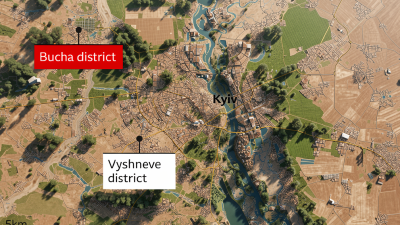
Constantvpn.com – A Russian drone attack that struck a military ammunition depot on the western fringe of Kyiv left at least 37 people dead and forced nearly 400 residents from their homes late Friday night. The blast, which sent shells, mines, and stored drones erupting in a chain of secondary explosions, tore through the Bucha district and left roughly 130 houses in the nearby village of Myla with shattered walls, cracked foundations, and compromised structural integrity. A care home serving elderly and disabled residents among the damaged properties added to the scale of the humanitarian toll.
The incident marks the second time in recent months that a munitions storage facility in the greater Kyiv area has been hit by Russian aerial weaponry, reigniting public fury over what many Ukrainians see as a preventable failure of basic safety planning. Regional administrator Tymur Tkachenko confirmed that 42 people were wounded in Friday’s detonation, including four children, and that rescue crews remained active at the site into Saturday.
Zelensky: The Depot “Definitely Shouldn’t Have Been There”
President Volodymyr Zelensky condemned the placement of the depot in unusually blunt terms, stating that the storage site “definitely shouldn’t have been there” and launching an investigation into what he called “terrible negligence on the part of those who stored explosive right next to people.” He went further, declaring the decision to keep ordnance in the village “absolutely unacceptable” and announcing that criminal proceedings had been opened on charges of official negligence.
“There are regulations in place — ammunition cannot be stored near homes or other residential areas,” Zelensky said, adding that “appropriate conclusions will certainly be drawn.”
The office of Ukraine’s prosecutor general confirmed it was examining the “legality of the placement and storage of explosive objects and materials” in proximity to residential structures in Myla, and said the decisions made by officials responsible for siting the depot would also come under scrutiny.
Residents Describe a Village Reduced to Rubble
Liubov Pavlenko, 45, lives approximately 200 metres from the ammunition warehouse. Walking through her home on Saturday, she described a structure rendered uninhabitable by the shockwave.
“Everything is completely damaged. There are cracks all around the entire perimeter, and cracks around the windows. Basically, the structural integrity has been compromised,” she said. “I’m still kind of numb. I don’t know… once I come around a little tomorrow, I’ll probably have an even bigger breakdown.”
Neighbour Borys Daniyluk, 61, voiced the frustration shared by many in the community, questioning why ordnance had been placed in a location that previously held food supplies.
“The authorities, the Ministry of Defence — why was this allowed at the depots, in a place where there used to be food? Why were ammunition and weapons stored there, next to a populated village? There are no words, just emotions,” he said.
A Pattern Repeated: The Vyshneve Precedent
The Myla strike echoes a July incident in the town of Vyshneve, where a secondary detonation at an ammunition warehouse killed nine people, wounded dozens more, and damaged over 280 homes. An investigation into that earlier explosion uncovered serious regulatory violations by a state-owned enterprise that had failed to observe distance requirements for storing explosives near inhabited areas. Zelensky indicated that the Myla depot had been operated by Ukraine’s armed forces, raising questions about whether institutional lessons from Vyshneve were ever implemented.
Prime Minister Sergiy Koretsky took to Telegram to express regret that a “lesson” had not been absorbed after the Vyshneve disaster.
“In the fifth year of the full-scale invasion, making the same mistakes over and over is criminal negligence,” Koretsky wrote. “Everyone responsible, without exception, must face severe punishment so that such situations never happen again.”
Broader Overnight Toll Across Ukraine
The Myla explosion was not the only casualty event of the weekend. Tkachenko reported that a 14-year-old was killed in a separate strike in the Boryspil district, while Kyiv Mayor Vitaliy Klitschko confirmed the death of a two-year-old after a Russian drone crashed in the Obolonskyi district. Five additional people, including an 18-year-old girl, were injured in fresh strikes on the capital on Saturday morning. Local officials placed the total death toll across the country over the preceding 24 hours at five.
Zelensky also reported overnight strikes in Odesa, Dnipropetrovsk, Sumy, and Zaporizhzhia. The Ukrainian military announced it had shot down 233 Russian drones during the latest wave of aerial operations.
Escalating Aerial Campaign
The strike fits into a broader pattern of intensifying air operations by both sides in recent months. Kyiv has increasingly directed its own long-range strikes at Russian economic infrastructure, while Moscow continues to press drone and missile barrages aimed at Ukrainian military logistics, energy assets, and, as this incident shows, storage sites that sit uncomfortably close to civilian populations. The recurrence of depot strikes within weeks of one another has sharpened domestic debate over whether Ukraine’s own force-protection and site-selection protocols are keeping pace with the tempo of the war.
Related Reading
Frequently Asked Questions
What is At least 37 dead and hundreds?
At least 37 dead and hundreds is the main topic of this guide. The article explains the context, practical details, and next steps readers should understand.
Why does At least 37 dead and hundreds matter?
At least 37 dead and hundreds matters because readers are looking for a useful answer, not just a short summary. Good content should match search intent and help them decide what to do next.