
The Dog Stars: Ridley Scott’s Post-Apocalyptic Mirror and the Actors Who Saw Themselves in It
Constantvpn.com – Sir Ridley Scott’s latest feature, The Dog Stars, drops audiences into a Colorado landscape where a lethal influenza has wiped out nearly every human being, leaving behind scorched terrain, abandoned highways, and the occasional stubborn patch of green pushing through the rubble. Adapted from Peter Heller’s 2012 novel, the film places its survivors in the 2030s and asks a deceptively simple question: what do you do when the infrastructure of civilization vanishes overnight? The answer, for the characters, is to keep flying, keep searching, keep hoping — even when hope feels like a luxury no one can afford.
A Pilot, a Dog, and the Weight of Make-Believe
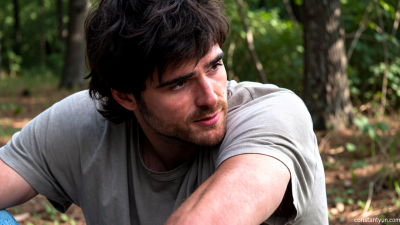
Jacob Elordi, now 29 and fresh off his first Academy Award nomination for Frankenstein, takes on the lead role of Hig, a former mechanic who has reinvented himself as a civilian pilot. Hig spends his days circling the Colorado sky with his German shepherd companion Jasper, scavenging for food, medicine, and any sign that another human being might still be breathing. The dog, played by a trained shepherd named Jasper, becomes the emotional anchor of the film — a loyal presence in a world where most other presences have been erased.
Speaking about the production, Elordi described the experience of performing against a backdrop that felt uncomfortably close to the present moment.
“There were a few moments I remember looking around [on set] and thinking it’s strange to be doing this make-believe, when the reality is just behind us and just in front of us.”
That tension between fiction and lived experience runs through every interview the cast has given. The aerial sequences of empty cities, the constant scramble for basic supplies, the silence where traffic used to roar — all of it lands with a force that would have been harder to achieve a decade ago, when pandemic was still a word reserved for textbooks.
Privilege, Anarchy, and the Question No One Wants to Answer
Elordi says the film is ultimately about “the human condition,” with characters trapped in apocalypse yet “still looking for something else and hoping for something else.” He draws a direct line between Hig’s restless dissatisfaction and the quiet unease many people feel in ordinary, comfortable lives.
“Everything is sweet for us — we’re able to walk around on the street, go to the shops, go to the park, have dinner with each other and we still go to bed and think ‘What else is there?’, ‘What am I missing?’, ‘What’s wrong?’ and nothing is.”
That observation lands harder when voiced by an actor who has spent his career in the entertainment industry’s most privileged corridors. It reframes the post-apocalyptic premise not as spectacle but as a stripped-down version of a feeling most people already carry: the nagging sense that abundance has not translated into contentment.
Pearce, Qualley, Brolin — and the Personal Cost of Climate
The supporting cast is heavyweight. Guy Pearce, known for Mare of Easttown and Memento, plays Pops, a former Navy SEAL and father figure who crosses Hig’s path after an emergency landing near his homestead. Margaret Qualley, a Golden Globe nominee, appears as Cima, Pops’s daughter. Josh Brolin rounds out the ensemble. Together they populate a world where the rules of commerce, governance, and social contract have dissolved into something closer to tribal survival.
Pearce, who collaborated with Scott on Prometheus back in 2012, speaks plainly about what the film’s environmental imagery means to him personally. He grew up in Victoria, Australia, a state battered by bushfires earlier this year.
“I’ve been in Australia when there’s been serious bushfires. All round the world now there’s just more and more effects of climate change so it’s pretty terrifying that a lot of those things are not far away.”
He adds that the film’s depiction of “this world we take for granted” feels “pertinent,” noting that the ability to walk into a supermarket, buy groceries, and come home to family members is a reality that “a lot of people even to this day don’t live like that.” For Pearce, the privilege is not abstract; it is the difference between his Tuesday evening and the Tuesday evening of billions.
Regrowth: The Green Thread Through the Ash
Elordi, a Brisbane native who has watched Australian landscapes scarred by successive natural disasters, points to a counter-current in the film that he finds quietly vital. Beyond the scorched earth and the skeletal cities, Scott’s cinematography also captures lush expanses of greenery reclaiming the wreckage.
“Something interesting and not to be missed is the idea of regrowth — that in this abyss, four or five years after the worst day ever for human beings, the trees are full, the grass is thick and the flowers are growing out of the decay.”
He frames this as “a note of hope” and an “idea of redemption,” drawing a parallel to real wildfire ecology: when an entire coastline burns, the soil eventually cools, seeds take hold, and the landscape rebuilds itself on a timescale that outlasts any single human lifetime. The implication for the film’s audience is that destruction, however total it appears, is not the final word. The earth does not require human permission to regenerate.
Reception: Mixed Signals from the Critics
Early reviews have been divided. Benjamin Lee of The Guardian awarded three stars, calling the picture “limp and lethargic” and questioning what its creators were truly aiming for. David Rooney at The Hollywood Reporter struck a warmer note, describing the film as “muted but never dull” and an “appealingly mellow watch.” Empire settled on two stars. The split suggests a work that rewards patience and thematic engagement while risking a certain tonal flatness in its middle stretches — a common challenge for Scott’s late-careapocalyptic projects, which tend to privilege atmosphere over momentum.
What unites the reviews, however, is the acknowledgment that the film’s premise has aged into uncomfortable relevance. A story about a flu that empties cities and a landscape that slowly heals itself was, in 2012, pure speculative fiction. By the time Scott’s adaptation reaches screens, it reads as a slightly delayed news report — one that asks viewers to examine the parts of their own lives they have stopped noticing, before the next disruption makes that examination impossible.
Related Reading
Frequently Asked Questions
What is Jacob Elordi on why The Dog Stars?
Jacob Elordi on why The Dog Stars is the main topic of this guide. The article explains the context, practical details, and next steps readers should understand.
Why does Jacob Elordi on why The Dog Stars matter?
Jacob Elordi on why The Dog Stars matters because readers are looking for a useful answer, not just a short summary. Good content should match search intent and help them decide what to do next.