
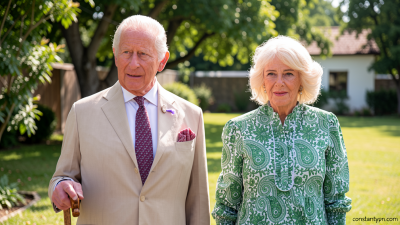
Caribbean at the Centre of Royal Itinerary as King and Queen Prepare Eight-Day Regional Tour
Constantvpn.com – Buckingham Palace confirmed on Wednesday that King Charles III and Queen Camilla will undertake a multi-nation Caribbean itinerary later this autumn, an eight-day engagement spanning three countries and anchored by the Commonwealth Heads of Government Meeting in Antigua and Barbuda. The schedule runs from 27 October through 4 November, and the palace framed the purpose of the trip as an opportunity to
“celebrate the communities, cultures and nature within the Commonwealth family.”
The announcement lands at a moment when the Caribbean’s relationship with Britain is being actively renegotiated. Several former colonies in the region have already shed the British monarch as their head of state, and the political symbolism of a royal visit to the area carries weight well beyond protocol. For the islands still within the Commonwealth, the trip also arrives amid ongoing debates about economic dependency, climate vulnerability, and the practical benefits of remaining tied to a London-based institution.
The Commonwealth Meeting as Anchor
The centrepiece of the itinerary is the Commonwealth Heads of Government Meeting, hosted by Antigua and Barbuda. These gatherings, held roughly every two years, bring together the leaders of all 56 member states to discuss shared priorities ranging from trade and development to climate adaptation. For Caribbean nations, the meetings have increasingly become a platform to press for greater climate finance, debt relief, and recognition of their disproportionate exposure to tropical storms despite their minimal carbon output. The King’s presence at the summit signals continued British engagement with that agenda, even as the monarchy’s constitutional role in the region contracts.
Beyond the summit, the King will make separate visits to the Bahamas and Guyana, extending the trip across the wider Caribbean basin. Guyana, a mainland nation with a growing oil economy, occupies a distinct geopolitical position from the smaller island states, and its inclusion broadens the tour’s scope beyond the typical island-focused royal itinerary.
A History of Caribbean Engagement Stretching Back Decades
The upcoming tour marks the King’s first Caribbean visit since 2021, when he travelled to Barbados as Prince of Wales to witness the island formally remove Queen Elizabeth II from its constitutional role and declare itself a republic. That ceremony, which made Barbados the world’s newest republic at the time, was a watershed moment for the Commonwealth’s Caribbean membership. During a speech at the event, the then-Prince of Wales acknowledged what he called the
“appalling atrocity of slavery”
that had shaped the Caribbean islands’ history. The remark was widely noted as a direct royal acknowledgment of the transatlantic slave trade’s role in building the region’s economies, and it set a tone for subsequent royal engagements in the area that sought to pair ceremonial presence with explicit recognition of historical harm.
Earlier Visits and Their Context
The royal connection to the Caribbean predates the current reign by several decades. Charles visited the Bahamas in 1973, made an official trip to Guyana in 2000, and returned to Antigua and Barbuda in 2017 in the aftermath of Hurricanes Irma and Maria, which devastated infrastructure across the eastern Caribbean in September of that year. The 2017 visit was explicitly humanitarian in character, focused on recovery and resilience following the twin storms.
Earlier this year, in May, the King crossed the Atlantic to visit Bermuda, where he serves as head of state in his capacity as monarch. That trip constituted his first royal visit as sovereign to a British overseas territory and followed directly on from a state visit to the United States. The sequence — Washington, then Bermuda, and now the wider Caribbean — underscores how the Atlantic basin has become a recurring axis of the King’s foreign engagements.
Why the Timing Matters
The Caribbean sits at the intersection of several pressures that make the autumn tour politically consequential. Climate change is intensifying hurricane seasons, and the region’s small island states face existential questions about sea-level rise, freshwater scarcity, and the cost of rebuilding after each storm. Economically, many of the islands depend heavily on tourism, remittances, and foreign aid, making them acutely sensitive to shifts in global trade policy and interest rates. The Commonwealth framework, for what it offers, is increasingly scrutinised by younger generations who ask what tangible benefits remain after independence-era ties have faded.
For the King, the trip also represents a continuation of a pattern established during his years as Prince of Wales: using royal visits to the Caribbean not merely as ceremonial appearances but as occasions to address historical injustice, climate vulnerability, and the evolving constitutional choices of former colonies. Whether the Commonwealth’s relevance in the region is strengthening or diminishing will be shaped, in part, by how these engagements are received by the publics they are meant to honour.
Related Reading
Frequently Asked Questions
What is King and Queen to visit the Caribbean?
King and Queen to visit the Caribbean is the main topic of this guide. The article explains the context, practical details, and next steps readers should understand.
Why does King and Queen to visit the Caribbean matter?
King and Queen to visit the Caribbean matters because readers are looking for a useful answer, not just a short summary. Good content should match search intent and help them decide what to do next.