
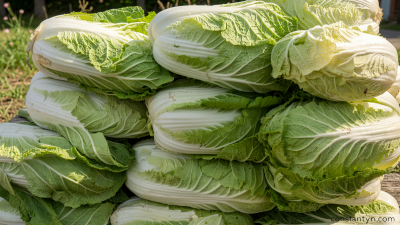
Formaldehyde Soak Exposed in China’s Cabbage Supply Chain
Constantvpn.com – Regulators in northeastern China have opened a formal probe after video footage surfaced showing workers submerging heads of cabbage in a formaldehyde solution before loading the produce onto transport trucks. The investigation, confirmed by authorities in Hebei province, follows the circulation of the clip by an environmental blogger who first shared it online the previous week. Officials stated they had verified the authenticity of the recording before launching their inquiry.
The chemical at the centre of the controversy is formaldehyde — a colourless, pungent compound long used in industrial settings as a preservative and disinfectant. Its application to food intended for human consumption is strictly forbidden under Chinese regulations. The substance has been classified as a carcinogen, and while the American Cancer Society notes that workplace exposure to relatively high concentrations has been linked to certain cancers in humans, the health effects of small, intermittent dietary exposures remain less well established. That distinction, however, does little to soften public alarm when the chemical is found in a vegetable meant to sit on a dinner plate.
Scale of China’s Cabbage Industry
The stakes of the incident are magnified by the sheer volume of produce involved. China cultivates well over 30 million tonnes of cabbage annually, accounting for nearly half of the global annual total. The country is, by a wide margin, the world’s largest producer of the vegetable. A substantial share of that output flows across borders: Vietnam, South Korea, and Russia rank among the principal export destinations. Any contamination event touching the supply chain therefore carries implications not only for domestic consumers but also for trade partners that rely on Chinese produce imports.
Official Response and Market Checks
State media confirmed that police have taken legal action against the individuals captured on camera. Beyond the immediate prosecutions, authorities have moved to conduct spot inspections at markets throughout the country in an effort to contain public anxiety and rebuild consumer confidence. Investigators are also tasked with determining how widespread the dipping practice may have been and with tracing affected batches of vegetables back to their points of origin.
Local authorities in Kangbao county, where the footage was filmed, issued a written statement on Saturday addressing the public directly:
“Any illegal or non-compliant practices discovered will be dealt with strictly in accordance with the law to ensure the safety of the vegetable supply.”
In Beijing, Xinfadi market — one of the capital’s principal wholesale hubs for fresh produce — released its own statement asserting that it had traced the provenance of its cabbage deliveries and confirmed that none of the tainted vegetables had entered its trading floors. The market’s intervention was aimed at pre-empting a secondary wave of panic among retailers and shoppers who source daily stock from the facility.
Editorial Backlash and Moral Framing
The episode has drawn intense media attention across Chinese outlets. An editorial in the People’s Daily took aim at the commercial actors involved, framing the lapse not merely as a regulatory failure but as a moral one:
“The wholesalers focused solely on their immediate economic interests while completely disregarding the lives and health of consumers. [They] crossed a legal red line and breached the moral bottom line.”
The editorial’s language echoes a recurring pattern in Chinese food-safety discourse, where high-profile contamination events are routinely cast as betrayals of social trust rather than isolated technical errors. The phrasing signals that regulators expect the public to see the response as punitive and comprehensive, not merely procedural.
Why Formaldehyde in Produce Matters
Formaldehyde functions as an antimicrobial and cross-linking agent. In industrial contexts it appears in resins, embalming fluids, and laboratory fixatives. Its use as a food preservative was common in earlier decades but has been phased out in most regulated markets because of its carcinogenicity profile and its tendency to impart an unpleasant odour and taste at detectable concentrations. When applied to leafy vegetables, the chemical can penetrate the outer leaves and, in theory, migrate into the edible interior if the produce is stored for extended periods.
For consumers, the practical takeaway is straightforward: cabbage, like most leafy greens, is best washed thoroughly under running water before preparation. Yet the deeper concern raised by this incident is one of systemic oversight. A dipping operation large enough to load trucks implies a commercial operation, not a one-off kitchen experiment. The question now under investigation is whether such operations exist elsewhere in the supply chain, and whether existing inspection regimes caught them before they reached retail shelves.
As spot checks continue across provincial markets and investigators work to map the geographic spread of the practice, the episode is likely to feed into ongoing debates about the adequacy of China’s food-safety inspection infrastructure. With tens of millions of tonnes of cabbage moving through domestic and export channels every year, even a small fraction of contaminated product represents a substantial public-health exposure question — one that regulators now say they intend to answer before the next harvest cycle begins.
Related Reading
Frequently Asked Questions
What is China probes use of formaldehyde to keep?
China probes use of formaldehyde to keep is the main topic of this guide. The article explains the context, practical details, and next steps readers should understand.
Why does China probes use of formaldehyde to keep matter?
China probes use of formaldehyde to keep matters because readers are looking for a useful answer, not just a short summary. Good content should match search intent and help them decide what to do next.