
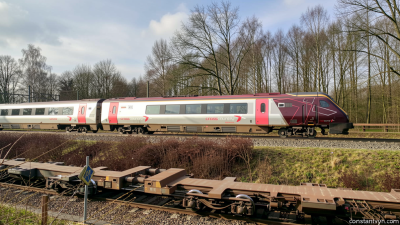
UK Rail Network Stumbles Back to Life After Birmingham Power Failure Grounds CrossCountry Fleet
Constantvpn.com – The near-total collapse of CrossCountry’s domestic timetable over a single weekend has left thousands of commuters and leisure travellers stranded across Britain, from the Scottish lowlands to the Cornish coast. The operator confirmed that a power failure at its central control facility in Birmingham knocked out virtually every scheduled departure on Sunday, forcing cancellations along corridors stretching from Glasgow to Penzance. By Monday morning, however, the company projected that its full timetable would be restored, though a small number of residual cancellations persisted owing to delayed departures and gaps in crew availability.
Passengers were urged to verify their itineraries before heading to stations, as the recovery unfolded unevenly across the network. Tickets already purchased for Sunday journeys were extended in validity through Wednesday, giving affected travellers a window of several days to rebook without additional cost.
Routes Hit Hardest
The disruption did not respect regional boundaries. The Birmingham-to-Manchester corridor — threading through Stoke-on-Trent, Coventry, and Wolverhampton — was among the most severely affected, as were the Leeds-to-York and Cheltenham-to-Cardiff lines. For a period, no viable rail alternative existed for passengers caught mid-journey, turning routine commutes into multi-hour odysseys or, in some cases, overnight detours.
Passengers Stranded Mid-Itinerary
Andy Burton, a Worcester resident returning home from a family weekend in Cromford to mark his sister’s birthday, found his journey severed at Derby. He had already changed trains once, only to discover the alternative via Leicester had also been wiped from the schedule.
“It was only once I had arrived at Derby that a member of staff told me my planned alternative route via Leicester had also been cancelled, because it was part of the CrossCountry disruption. I soon realised I was stranded, as they said there was no alternative train route back to Worcester. It’s not the best end to a great weekend away.”
Burton was left with no choice but to book a budget hotel for the night, hoping Monday’s partial recovery would allow him to complete the final leg home.
Reese Proctor, 22, faced a different kind of disruption: a 14:00 BST Premier League kick-off at Manchester’s Etihad Stadium against Bournemouth. His planned Reading-to-Manchester rail connection evaporated, so he drove more than 100 miles to a friend’s home in Leicester before continuing by car to the stadium. The improvised road trip added roughly two hours to what should have been a straightforward journey.
“Frustrating and unacceptable,” Proctor summarised his experience, describing himself as “fuming” after the ordeal.
Political and Union Response
Transport Secretary Heidi Alexander voiced concern over the scale of the failure while welcoming the gradual restoration of services. She framed the incident within a broader policy agenda, pointing to the government’s plan to establish Great British Railways and to bring CrossCountry under public ownership the following year.
“We are setting up Great British Railways and nationalising services, including CrossCountry next year, to end decades of fragmentation and vulnerability on our network. We are determined to give passengers the reliability they deserve.”
The RMT — the National Union of Rail, Maritime and Transport Workers — seized on the episode to demand a formal review of how railway operational control centres are protected against electrical failures. General secretary Eddie Dempsey argued that neither passengers nor rail employees should endure another week of chaos attributable to inadequate back-up power arrangements.
A Pattern of Underperformance
The Birmingham outage did not occur in isolation. CrossCountry had been ranked the worst-performing rail operator in Britain as recently as June, a designation that reflected chronic punctuality and reliability shortfalls across its franchise. The weekend’s total service collapse amplified existing anxieties among regular commuters who depend on the operator for intercity travel between the Midlands, the North, Wales, and Scotland.
Some limited services did resume on Sunday evening, including an hourly frequency between Birmingham New Street and both Leicester and Derby. Yet the patchwork nature of the recovery meant that many passengers remained without a workable rail option well into the night, underscoring how a single point of failure in signalling and timetable control can cascade across an entire national network within hours.
As Monday’s timetable returned to normal, the episode will likely feature in parliamentary scrutiny of rail resilience and in the ongoing debate over whether fragmented private franchise arrangements leave the system too exposed to precisely the kind of single-point-of-failure event that grounded an entire operator’s fleet for a weekend.
Related Reading
Frequently Asked Questions
What is CrossCountry train services resume after outage?
CrossCountry train services resume after outage is the main topic of this guide. The article explains the context, practical details, and next steps readers should understand.
Why does CrossCountry train services resume after outage matter?
CrossCountry train services resume after outage matters because readers are looking for a useful answer, not just a short summary. Good content should match search intent and help them decide what to do next.