
China’s Largest-Ever Automotive Recall Targets a Design Choice Once Celebrated as the Future of Electric Cars
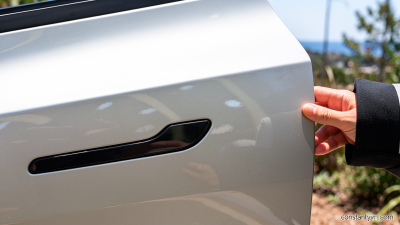
Constantvpn.com – More than four million vehicles across China are being pulled from the road in what regulators describe as the country’s biggest single-vehicle recall to date. At the heart of the action sits a design element that electric-vehicle makers once touted as a symbol of sophistication: the flush-mounted, retractable door handle. Nearly three million of the affected units are Teslas manufactured domestically, while the remainder belong to Chinese brands XPeng, Xiaomi, and Geely.
The trigger for the recall is straightforward yet alarming. In a crash severe enough to knock out the vehicle’s low-voltage electrical system, the powered handles fail to deploy. Occupants and first responders then face doors whose release points are nearly invisible against the surrounding trim, making rapid evacuation or rescue extraordinarily difficult.
How a Styling Choice Became a Safety Crisis
The flush-handle concept gained mainstream visibility through Tesla’s Model S sedan, which debuted the look in 2014. The handles sit flush with the door panel and spring outward only when the owner’s key fob or smartphone signals proximity. For years, the feature was marketed as a marker of premium, aerodynamic design. Chinese manufacturers, eager to match the aesthetic, adopted the approach across their own lineups within a few years.
The design’s popularity accelerated quickly. Tu Le, founder of the consultancy Sino Auto Insights, described the spread as a phenomenon that had “snowballed” once domestic brands began replicating what he called the “sleek” appearance of Tesla’s flagship sedan. What started as one company’s styling decision became an industry-wide norm across the Chinese EV market.
The Crashes That Shifted the Conversation
Two fatal accidents involving Xiaomi electric vehicles in China moved the issue from design debate to urgent safety inquiry. In both incidents, investigators suspected that a power failure prevented the door handles from extending, trapping occupants inside burning or damaged vehicles. The deaths gave regulators and consumers a concrete, visceral reason to question whether a purely electronic release mechanism could ever be considered adequate for an emergency exit.
Tesla’s Response: Labels, Software, and a Partial Concession
In a statement issued on Friday, Tesla confirmed it would recall portions of its Model 3, Model Y, Model S, and Model X fleets produced in China. The company acknowledged that the handles are
“difficult to identify and operate because their colour is similar to the interior trim.”
Tesla explained that this visual ambiguity could impede both occupants and rescue personnel from opening doors quickly during a “severe collision causing the vehicle’s low-voltage system to fail.” As remediation, the company said it will affix high-visibility warning labels near each handle and push an over-the-air software update that automatically lowers all windows following a detected collision, giving occupants an alternate exit path.
Whether Tesla or the other affected manufacturers intend to extend a comparable recall to markets outside China remains unclear. The companies have not publicly confirmed any global follow-up action.
Beijing Moves to Ban the Feature Entirely
The regulatory response in China has gone well beyond a recall. In February, authorities announced a outright prohibition on hidden door handles for new vehicles sold in the country. Under rules scheduled to take effect on 1 January 2027, every car entering the Chinese market must incorporate a mechanical release mechanism accessible from both the interior and exterior of each door. The requirement effectively ends the era of purely electronic, flush-mounted handles for new registrations in the world’s largest auto market.
The ban signals that Chinese regulators view the problem as structural rather than cosmetic. A software patch or a sticker on the door panel does not restore a mechanical means of opening a door when the electrical system is dead.
US Regulators Also Watching
The issue is not confined to Chinese roads. Tesla’s flush handles have drawn scrutiny from the US National Highway Traffic Safety Administration following multiple reports that the mechanisms stopped functioning unexpectedly, leaving children locked inside parked vehicles. In July, NHTSA indicated it was considering the creation of a new formal safety standard that would apply to all automakers, not just Tesla, governing how doors must be operable in post-collision conditions. The agency has not yet finalized rulemaking details.
Is a Sticker and a Software Patch Enough?
Industry observers are skeptical that Tesla’s stated remediation addresses the root problem. Tu Le characterized the combination of warning labels and an automatic window-lowering update as closer to a “band-aid” than a durable engineering solution. His point is that neither measure restores a physical, always-available means of opening a door when the vehicle’s electronics have failed. Until a mechanical fallback exists, the fundamental vulnerability remains.
The broader implication for the global EV industry is significant. Flush handles have become so ubiquitous across premium and mid-market electric vehicles that a regulatory ban in China, combined with potential US rulemaking, could force a redesign cycle spanning millions of units worldwide. Manufacturers that built their brand identity around the seamless, handle-free door line now face the prospect of reintroducing visible, mechanical hardware—a concession that many consumers and designers will find aesthetically jarring but functionally indispensable.
For now, the four-million-vehicle recall stands as a stark reminder that a design choice once celebrated as the hallmark of electric-vehicle sophistication can become, within a few years, the defining safety failure of the era.
Related Reading
Frequently Asked Questions
What is Nearly three million Teslas recalled in China?
Nearly three million Teslas recalled in China is the main topic of this guide. The article explains the context, practical details, and next steps readers should understand.
Why does Nearly three million Teslas recalled in China matter?
Nearly three million Teslas recalled in China matters because readers are looking for a useful answer, not just a short summary. Good content should match search intent and help them decide what to do next.