
Five Days in Switzerland Yield a Fragile Path Toward Ending Congo’s Endless War
Constantvpn.com – After decades of intermittent violence in eastern Congo’s mineral-rich highlands, the government of the Democratic Republic of Congo and the Rwanda-aligned M23 rebel movement have formally committed to a structured schedule of peace negotiations. The announcement, made jointly at the close of a five-day diplomatic session hosted in Switzerland, marks the latest attempt to translate a paper agreement into something that actually stops the guns.
The two sides pledged to “pursue negotiations towards comprehensive peace and conflict resolution” and to create a dedicated mechanism for overseeing ceasefire compliance. The framework they are now operationalizing was brokered by the United States and signed in 2025, yet fighting in the eastern provinces continued almost immediately afterward, underscoring how thin the line between diplomatic language and battlefield reality can be.
What the Roadmap Actually Contains
The Swiss talks brought together representatives of M23, the DR Congo state, Qatar, the United States, the Republic of Togo, the African Union Commission, and the Swiss host government. Their output is a sequenced timetable of negotiation steps paired with what the joint statement calls a commitment to “flexibility and creativity” in implementation.
Central to the arrangement is a monitoring architecture. The parties agreed to establish a body charged with “reviewing progress and addressing challenges in implementation of obligations and commitments under the Doha Framework Agreement”—the name given to the 2025 deal signed in Qatar. A secretariat for this mechanism has already been stood up, and the first on-the-ground verification mission was scheduled to depart for Minembwe, a contested locality in South Kivu province, on Monday.
Minembwe sits in a corridor of villages and farmland that has changed hands repeatedly since hostilities intensified. Sending observers there signals an intent to test whether ceasefire language translates into quiet roads and open markets, or whether it remains another document filed away while shells continue to fall.
Points of Friction That Remain
Despite the shared language of the joint statement, substantive disagreements persist. The most contentious include:
Sanctions imposed on M23 leaders and their financiers; the conditions and timetable for releasing political and military detainees held by each side; and the sequencing of domestic political reforms that Kinshasa has been asked to undertake. None of these issues was resolved in Switzerland, and each carries the potential to derail the timetable if either side walks away from the table.
The Regional Knot: Rwanda, the FDLR, and a Decade-Old Accusation Cycle
The eastern Congo conflict cannot be separated from the rivalry between Kinshasa and Kigali. Rwanda maintains that the Congolese state has failed to dismantle the Democratic Forces for the Liberation of Rwanda (FDLR), a veteran armed group operating in the Virunga highlands that Kigali treats as an existential security threat. DR Congo, in turn, rejects any charge of harboring the FDLR and instead accuses Rwanda of supplying M23 with troops, weapons, and logistical support.
Rwanda has consistently denied backing M23, characterizing its military footprint in the region as purely defensive—a shield against other armed groups rather than an instrument of Congolese politics. Observers note that the two narratives have been running in parallel since at least the early 2000s, each side citing incidents to confirm its own version while dismissing the other’s.
Human and Economic Stakes
The conflict’s human toll is staggering. Thousands of civilians and combatants have been killed over the decades of fighting, and hundreds of thousands have been displaced from their homes, many more than once. In January 2025 the crisis escalated sharply when M23 forces captured portions of eastern DR Congo, including the city of Goma and two airports, pushing the humanitarian situation to a new severity level.
Beneath the suffering lies an economic dimension that gives the war its stubborn persistence. Eastern DR Congo holds vast deposits of coltan, tin, tungsten, and other minerals that feed the global electronics supply chain. Control over extraction points and transport corridors translates directly into revenue, which in turn funds further fighting. Any durable peace must therefore address not only who holds which territory but how mineral wealth is governed, taxed, and shared.
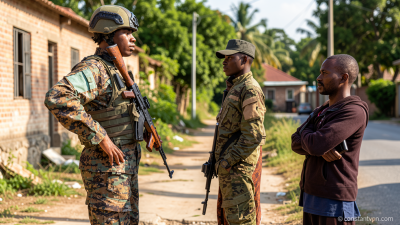
The image of M23 fighters moving through Goma in March, days after an air strike on the territory, captured the paradox of the current moment: a ceasefire exists on paper, a verification mission is being prepared, and yet the guns have not fallen silent. Whether the Swiss roadmap will outlast the next round of accusations over violations in North and South Kivu remains the central question for the region and for the millions of Congolese civilians whose lives depend on the answer.
Related Reading
Frequently Asked Questions
What is DR Congo and M23 rebels agree?
DR Congo and M23 rebels agree is the main topic of this guide. The article explains the context, practical details, and next steps readers should understand.
Why does DR Congo and M23 rebels agree matter?
DR Congo and M23 rebels agree matters because readers are looking for a useful answer, not just a short summary. Good content should match search intent and help them decide what to do next.