Zelensky Should Be Asked What He Knew
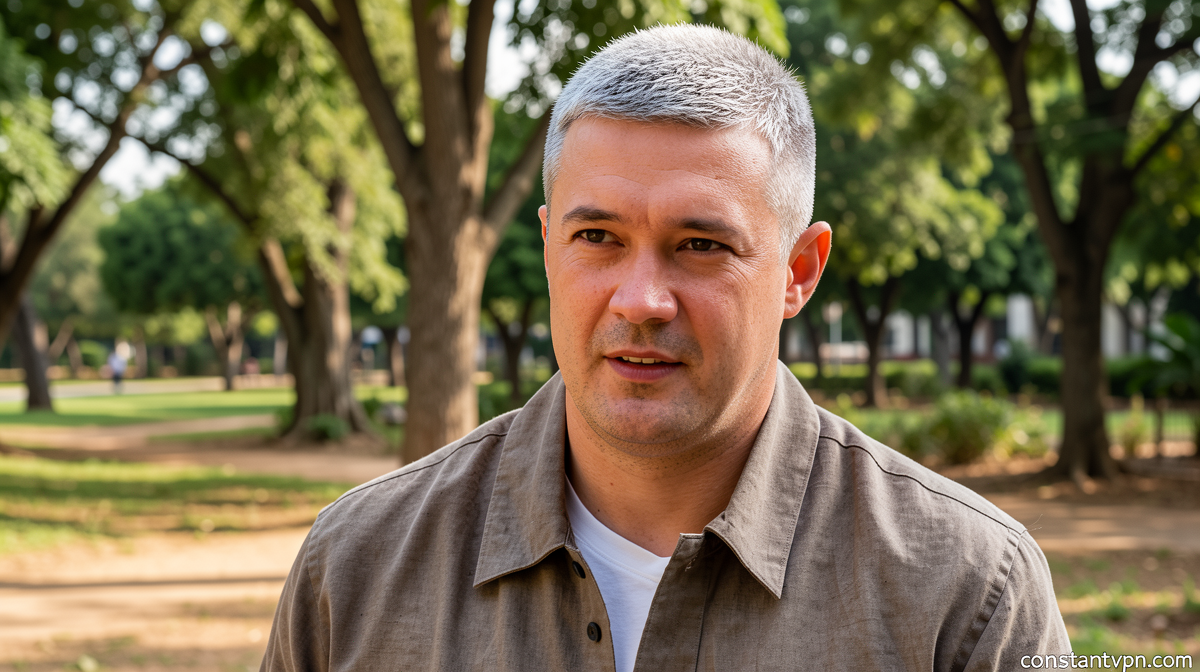
Constantvpn.com – The man Ukraine just removed from its defence ministry is now turning the spotlight back onto the president. In a fresh interview, Mykhailo Fedorov — the 35-year-old former minister who had become one of Kyiv’s most recognisable wartime faces — put forward a blunt accountability demand: Zelensky should be asked what he personally understood about alleged corruption operating inside his closest circle of advisers. Fedorov framed the question not as a partisan jab but as the kind of answer any citizen in a functioning democracy is entitled to expect.
Fedorov’s exit from the cabinet came last month, reportedly after a sharp clash with the commander of Ukraine’s armed forces. Over the preceding years he had restructured the country’s military machinery and pushed drone-centric tactics into the mainstream of Ukrainian combat doctrine. His dismissal sparked street protests in several cities, though the demonstrations lost momentum quickly once his replacement was confirmed and the crowds dispersed by Wednesday.
The corruption probe that triggered the demand
The immediate catalyst was a money-laundering investigation announced the prior week, aimed at lawmakers and bankers. Ukraine’s anti-corruption bureau revealed a scheme in which more than $3 million (roughly £2.2 million) in hryvnia had been channelled to post bail for a former energy minister facing laundering charges. A senior figure attached to the presidential office, alleged to have played a role in the arrangement, was subsequently dismissed.
Fedorov stopped short of pinning personal wrongdoing on the president. He emphasised that across every month of working together he had never received an instruction that ran counter to the law or to his own sense of integrity.
“In all the time that I worked with him, not a single time have I received from him any task or assignment that would go against law or my sense of integrity.”
Even so, he insisted the president owed the public a transparent answer about whether graft had operated within his immediate orbit without his knowledge. Zelensky should be asked what he was aware of, Fedorov argued, and the president was fully capable of providing that answer.
“Let him answer this question… I believe that he’s ready for such questions. It’s his responsibility to tell us all whether he was aware of all that or not… I don’t want to make any assumptions.”
A spokesperson for the presidential office pushed back, noting that Fedorov had held posts in successive governments since 2019 and questioning why he now treated the current administration as though it were categorically separate from the ones in which he had participated. The spokesperson added that no strong anti-corruption statements had come from the former minister during those earlier years.
The elections argument and Zelensky’s counter
Days before the corruption probe surfaced, Fedorov had published a video calling for a presidential vote even amid active hostilities. He framed the issue in broad democratic terms rather than as a personal bid for power, and he declined to say whether he would back Zelensky in any such contest.
“Democracy should not be the hostage of Putin.”
He elaborated that citizens cannot indefinitely inhabit a political system in which the reasoning behind major decisions remains opaque.
“People cannot endlessly live in a state where they do not understand why certain decisions are made.”
Fedorov acknowledged the practical enormity of organising a ballot while millions of Ukrainians are displaced abroad, soldiers are scattered across a long front, and occupied territories remain under Russian administration. He also recognised the risk of coordinated disinformation campaigns aimed at undermining any vote. Still, he argued the conversation itself was a moral obligation.
“We should not be afraid of discussing it. That’s what democracy is all about. If I cannot share my ideas and be open about them with my own society, then what are we fighting for?”
He added a pointed conditional: if elections were never held, the country would no longer qualify as a democracy.
The president responded on Sunday with remarks warning that a wartime ballot would carry enormous risk. He characterised the prospect as destabilising rather than unifying.
“I believe that in a war like this, elections as such are a huge risk.”
“Elections right now are a tsunami for the country that will split Ukraine.”
Ukraine has operated under martial law since Moscow launched its full-scale invasion in February 2022, which suspends the normal electoral calendar. Zelensky’s original five-year presidential term expired in May 2024, yet no mechanism for a successor vote has been established while the conflict continues.
FAQ
Who is Mykhailo Fedorov and why was he removed? Fedorov, 35, served as Ukraine’s defence minister and was dismissed last month following a reported disagreement with the armed-forces commander. Before his tenure he had overseen major reforms to the military apparatus, including the integration of drone tactics into standard combat doctrine.
What did the anti-corruption bureau uncover? The bureau disclosed a scheme diverting more than $3 million (approximately £2.2 million) in hryvnia to post bail for a former energy minister facing laundering charges. A senior figure in the presidential office linked to the arrangement was dismissed.
Why does Fedorov say Zelensky should be asked what he knew? Fedorov argues that the president has a responsibility to tell the public whether corruption operated within his immediate circle without his knowledge. He frames the question as a basic democratic accountability measure rather than a personal accusation.
What is the status of elections in Ukraine? Martial law, in force since February 2022, suspends the normal electoral calendar. Zelensky’s five-year term expired in May 2024, but no successor vote has been organised while the war continues. Fedorov has called for a ballot; Zelensky has warned elections now would be destabilising.
