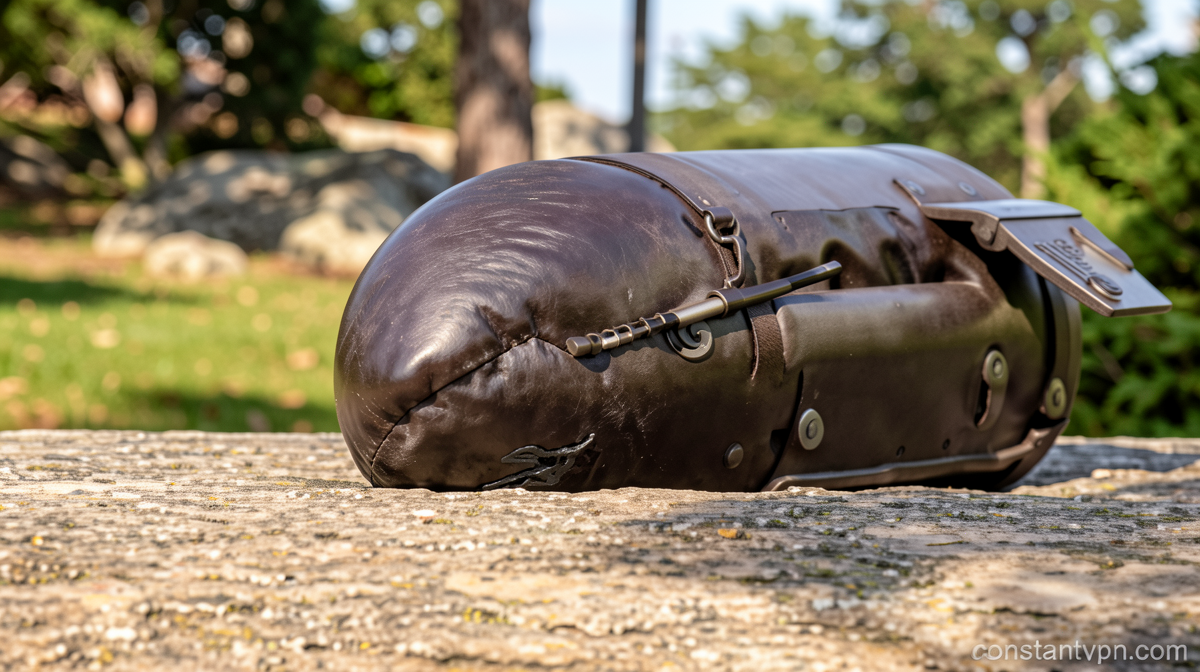
A 52-Metre Rocket Drifts Into View Off Christmas Island’s Shoreline
Constantvpn.com – Residents of the remote Australian external territory of Christmas Island found themselves staring at something no one in their small coastal community had ever seen before: a colossal metallic structure, roughly the length of five parked cars end to end, being towed along the water just beyond the island’s shallow reef. The object was a SpaceX rocket, having completed a test flight launched from Texas on 24 July and subsequently splashed down in the Indian Ocean. What followed was a scene of bewildered curiosity, impromptu boat trips, and a small island population collectively trying to wrap their heads around the fact that a piece of orbital hardware had drifted into their backyard.
The Discovery
David Watchorn, who chairs the Christmas Island Tourism Association, was driving to work along the island’s limited road network when something large and unfamiliar caught his eye on the water. His first assumption was mundane — a pair of cargo vessels, perhaps, working their way through the channel. Only after a second look did the shape resolve into something far stranger.
“A rocket, a space rocket,” he recalled thinking, watching the structure being towed toward shore.
Watchorn’s initial misidentification is understandable. Christmas Island sits roughly 1,500 kilometres north of Perth, Western Australia, in the heart of the Indian Ocean. Its population hovers around two thousand people. Daily life revolves around fishing, tourism, the annual migration of red crabs through the island’s rainforest, and the rhythms of a small, tight-knit community. A 52-metre rocket is not something that features in the local mental landscape, and the sight of one being winched along the coastline would have been alien to nearly every resident.
A Community Reacts
Word spread quickly, as it does on an island where everyone knows everyone. Within hours, the rocket had become the dominant topic of conversation. Some workers slipped out of their shifts early, slipping away from their usual routines to catch even a brief glimpse of the debris from the shore. Others went further, firing up their boats and heading out past the reef to examine the structure at closer range. For a community accustomed to the quiet of open ocean and the occasional passing freighter, the spectacle was genuinely unprecedented.
The scale of the object made the reaction all the more striking. At 52 metres in length, the rocket dwarfs most structures on the island. It is longer than the island’s main jetty, taller than the surrounding casuarina trees, and represents a level of engineering complexity that most residents would encounter only through television or the internet. Seeing it physically present, scarred and battered from re-entry, gave the experience a tangible weight that photographs could never convey.
What the Rocket Had Been Through
Watchorn spent time simply looking at the structure, turning his attention to the scorch marks, the warped panels, and the sheer industrial scale of the thing.
“It’s really incredible to think about what it’s been through,” he told the BBC. “The more and more you look at it, the more fascinating it’s becoming.”
That fascination is shared by aerospace engineers and laypeople alike. A rocket of this size must accelerate from a standstill to roughly 28,000 kilometres per hour in about eight minutes, survive temperatures exceeding 1,600 degrees Celsius during atmospheric re-entry, and then execute a controlled descent into open water. The fact that the structure remained largely intact — large enough to be towed, identified, and admired from a boat — speaks to the robustness of modern launch-vehicle design. SpaceX has made routine Indian Ocean splashdowns a standard part of its operational playbook, using the vast, sparsely trafficked waters south of Australia and east of Africa as a safe recovery zone for first-stage boosters and test articles.
Why the Indian Ocean, and Why Christmas Island
The Indian Ocean has long served as a default splashdown area for rockets launched from North America on eastward trajectories. After a vehicle completes its mission or test profile, the spent stage is guided to a predetermined coordinate in open water, where recovery teams or, in some cases, simply the currents, take over. Christmas Island’s position in the central Indian Ocean places it within a plausible drift corridor for debris released in that region. Ocean currents, prevailing winds, and the island’s shallow surrounding reef combine to make it a natural magnet for floating objects that might otherwise remain lost in deep water.
For the island’s tourism sector, the event carried an unexpected promotional dimension. Watchorn, in his capacity as tourism chair, recognised that the sight of a space rocket on the horizon was a story no travel brochure could manufacture. The organic curiosity it generated — locals abandoning their routines, boats heading out at odd hours, photographs shared across social media — gave the island a brief, unscripted moment of global visibility.
Aftermath and Disposition
Once the rocket was secured and towed to a suitable anchorage, the immediate spectacle gave way to practical questions: how would the structure be removed, stored, or disposed of? Would any components be retained for study or display? For a community of two thousand, the logistics of managing a 52-metre piece of aerospace hardware are non-trivial, and the episode underscored how the expanding cadence of commercial spaceflight is beginning to intersect with places that were never designed to accommodate it.
What remains, for now, is the memory of an ordinary commute interrupted by the extraordinary — a man driving to work, glancing at the water, and finding that the ocean had delivered, uninvited, a fragment of the space age to his doorstep.
Related Reading
Frequently Asked Questions
What is Incredible?
Incredible is the main topic of this guide. The article explains the context, practical details, and next steps readers should understand.
Why does Incredible matter?
Incredible matters because readers are looking for a useful answer, not just a short summary. Good content should match search intent and help them decide what to do next.
