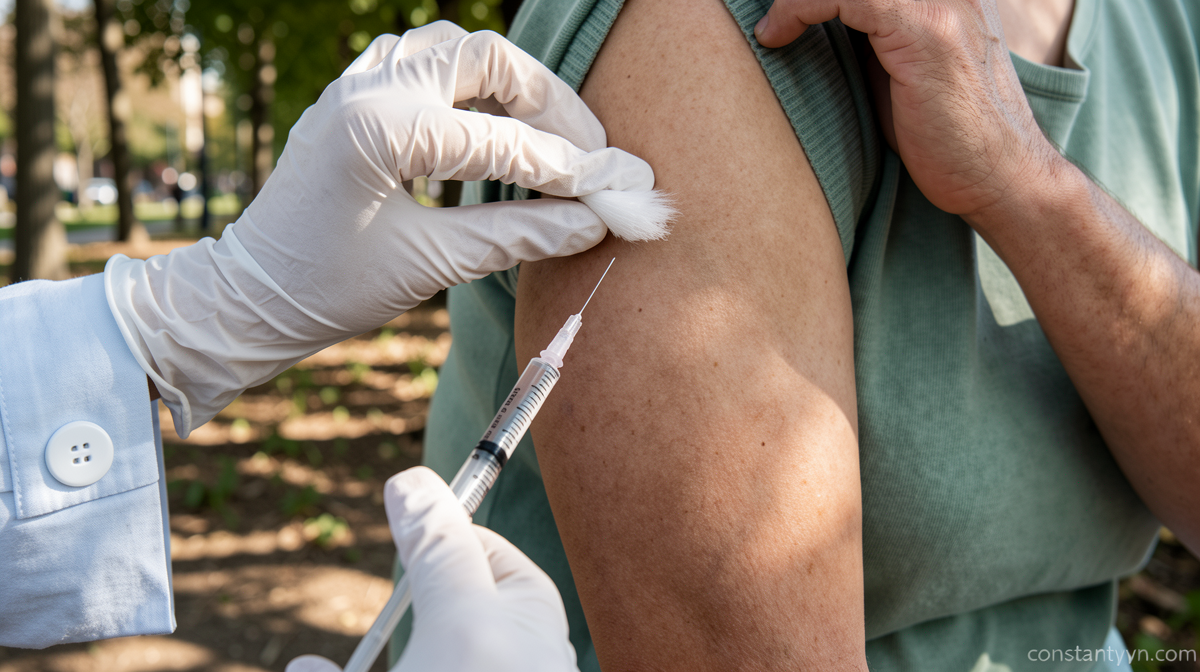
Personalised mRNA jab paired with immunotherapy keeps melanoma at bay in landmark trial
Constantvpn.com – For the first time in a large-scale clinical study, a tailored cancer vaccine delivered alongside an existing immunotherapy agent has demonstrably delayed the return of melanoma in patients who had already undergone surgery. The finding, announced jointly by pharmaceutical giant Merck and biotechnology firm Moderna, marks what many oncologists are calling a turning point in how the immune system can be weaponised against tumours. The vaccine, branded Intismeran, was administered to more than 1,000 individuals carrying high-risk stage two, three, or four melanoma — a spectrum that ranges from bulky localised growths to cancers already metastasising into distant organs.
How the personalised vaccine is built
Unlike conventional vaccines that target a single pathogen, Intismeran is engineered to recognise the unique genetic mutations present in each individual patient’s tumour. The process begins in the operating theatre: surgeons excise a small fragment of the melanoma, and laboratory scientists then sequence its DNA to identify the specific mutations driving that particular cancer. Using mRNA technology — the same platform that powered several of the SARS-CoV-2 vaccines rolled out during the pandemic — the companies translate those mutation signatures into a bespoke injection. Once administered, the mRNA instructs the patient’s own immune cells to identify and destroy any residual tumour cells matching that genetic fingerprint.
The vaccine was not given in isolation. Every participant in the trial also received Keytruda, a checkpoint-inhibitor immunotherapy already approved for several cancer indications. The comparison arm received Keytruda alone. Merck and Moderna reported that the combination strategy produced a statistically significant extension in the duration patients remained free of detectable disease, alongside a measurable reduction in the likelihood of the cancer seeding other organs.
What the trial data actually shows — and what it does not yet
The announcement came from the two companies themselves and presented interim findings from the phase three study. Full datasets have not been published, and the results have not undergone peer review, the process by which independent specialists scrutinise methodology, statistical rigour, and interpretive claims before a study enters the scientific record. Experts universally acknowledged the encouraging signal while cautioning that the durability of the benefit remains unknown. How long the cancer-free interval lasts, whether it widens over time, and how it compares across tumour stages are questions that only complete follow-up data can answer.
Even assuming the full dataset confirms the interim signal, the treatment still faces a lengthy regulatory gauntlet. National medicines agencies would need to review safety and efficacy dossiers before granting marketing authorisation. In the United Kingdom, a separate pathway through NHS commissioning and pricing negotiations would then determine whether Intismeran becomes available on the public health system and at what cost to the taxpayer.
Expert reaction: cautious optimism
Dr Talisia Quallo, who leads prevention and early detection at Cancer Research UK, described the interim data as showing genuine promise while stressing that the figures still require full independent review.
“It’s vital that research like this continues to be funded so that more people with cancer can have personalised treatment options to them live longer, better lives.”
Dr Lennard Lee, a consultant medical oncologist and associate professor at the University of Oxford, framed the result in broader terms:
“This is certainly good news for patients with melanoma, but the study has much wider implications. It provides proof of principle that personalised cancer vaccines work.”
Stephane Bancel, chief executive of Moderna, characterised the findings as a “pivotal moment” in cancer research. On the markets, shares of both Moderna and Merck jumped following the announcement, reflecting investor appetite for a platform that could be extended well beyond melanoma.
Why this matters beyond melanoma
Melanoma accounts for roughly a fifth of skin-cancer deaths in the United Kingdom, and the five-year survival rate drops sharply once the disease reaches stage four. A treatment that can shrink the window of vulnerability after surgical removal addresses one of the most pressing gaps in current oncology: the period between definitive surgery and the point at which microscopic residual cells, if left unchecked, repopulate and metastasise.
The mRNA platform’s flexibility is what makes the approach scalable. Merck and Moderna have confirmed that analogous personalised vaccines are already in development for lung, bladder, and kidney cancers — tumour types where the same principle of targeting patient-specific mutations applies. If the melanoma data matures favourably, the regulatory and manufacturing infrastructure built for Intismeran could accelerate timelines for those additional indications.
The broader implication is a shift in therapeutic philosophy. Rather than treating every patient with a given cancer type identically, the model envisions a bespoke immunological intervention calibrated to the molecular identity of each individual tumour. Whether that vision translates into routine clinical practice within the next decade depends on the full trial readout, peer review, regulatory clearance, and ultimately on health systems deciding the economics work. What the interim data has done, however, is move the conversation from theoretical possibility to empirical demonstration — and that distinction, in oncology, is rarely overstated.
Related Reading
Frequently Asked Questions
What is Vaccine breakthrough stops cancer returning in trial?
Vaccine breakthrough stops cancer returning in trial is the main topic of this guide. The article explains the context, practical details, and next steps readers should understand.
Why does Vaccine breakthrough stops cancer returning in trial matter?
Vaccine breakthrough stops cancer returning in trial matters because readers are looking for a useful answer, not just a short summary. Good content should match search intent and help them decide what to do next.
