
Thousands of Gazans Remain Unaccounted For as Families Endure a Second Kind of Grief
Constantvpn.com – In the shattered neighborhoods of Gaza City, a particular silence haunts households far more than the explosions themselves. It is the silence of a phone that never rings, of a name that appears on no hospital list, of a son or daughter whose last known location is a corner shop, a schoolyard, or a street corner now buried beneath concrete and steel. More than three years into the war between Israel and Hamas, that silence has become the defining experience of tens of thousands of Palestinian families who cannot confirm whether their loved ones are alive, dead, or held somewhere beyond their reach.
A Mother’s Unresolved Waiting
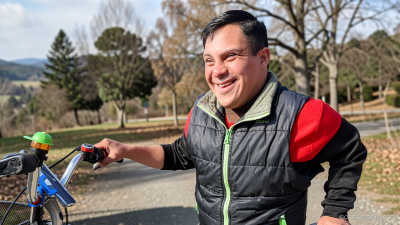
Majdiya al Madhoun sits in what remains of her home in Gaza City, a structure half-collapsed by repeated strikes, and scrolls through videos on her phone. On screen, her son Ahmed — a 21-year-old with Down’s syndrome — presses a kitten to his chest, sticks out his tongue, and lets out a high-pitched squeal of delight. In another clip, he belly-flops into a swimming pool and surfaces with a grin stretching across his face.
“Everyone was his friend,” Majdiya recalls. “He was loved wherever he went, and he always had a smile on his face.”
Ahmed vanished in May 2025 on what his mother describes as an ordinary errand: a trip to the neighborhood grocery store. Israeli airstrikes were falling on the surrounding blocks that day. Since then, no body has been recovered, no detention notice received, no explanation offered. Majdiya has spent more than a year in a state of suspended grief.
“My God, I am not at peace,” she says. “I have not lost hope but whether they find him alive or dead, buried under the rubble, only then will I be at peace.”
The Numbers Behind the Rubble
The scale of loss in Gaza defies simple accounting. The territory’s Hamas-run health ministry, whose tallies the United Nations has judged credible, records more than 73,000 Palestinians killed since Israel opened its military campaign. Roughly 1,200 additional deaths have been logged since a ceasefire took effect last October. In January, Israeli media carried a statement from a senior security official confirming that the military regards those ministry figures as accurate.
Yet the official count carries a critical blind spot: it excludes bodies still entombed under collapsed buildings. The International Committee of the Red Cross has logged over 5,000 individual requests from families seeking to trace missing relatives who may lie beneath the wreckage. Gaza’s Civil Defence agency puts the total number of unaccounted-for people above 8,000.
Recovery work proceeds at a glacial pace. The sheer volume of debris, combined with a severe shortage of heavy machinery such as bulldozers, makes excavation slow and dangerous. Even when remains are located, identification becomes a formidable obstacle. Decomposition over months or years, coupled with Israeli restrictions limiting what medical and forensic supplies can enter the territory, means DNA testing is rarely available. Families are left to match fragments of clothing or dental records against memory.
The human cost of that delay was visible earlier this month, when a mass funeral in Gaza City laid to rest more than a hundred people killed in a single Israeli strike back in 2023. Their remains had only recently been exhumed and identified, closing a chapter of uncertainty that stretched across two years.
Detention Without Due Process
For some families, the fear is not that their relative lies under rubble but that he sits in an Israeli detention facility, blindfolded and uncharged. Over the course of the conflict, Israeli forces have detained approximately 7,000 Palestinians from Gaza. The Israel-based Public Committee Against Torture reports that more than 5,000 of those detainees were eventually released without ever facing formal charges.
As of this month, the Israeli human rights organization HaMoked counts around 1,300 Gazan detainees still held in Israeli prisons without charge or trial. That figure, the group notes, excludes those held directly by the military rather than the civilian prison system. Families report that they are routinely left uninformed about arrests or the locations of their relatives, compelling many to enlist non-governmental organizations and private lawyers simply to establish whether a loved one is alive and where he is being kept.
Israeli authorities have attributed the prolonged detentions to wartime security imperatives and have dismissed allegations that the practice is arbitrary. Questions posed to the Israel Defence Forces and the Israel Prison Service regarding the failure to notify families have not, as of this writing, produced a public response.
A Photo That Changes Everything
In the Sabra district of Gaza City, Aida al Drimli keeps a framed photograph of her son Mahmoud — a young man with a soft face, draped in a Palestinian keffiyeh. Mahmoud disappeared in 2024. His father made repeated trips to field hospitals, scanning rows of bodies for a familiar face. Aida, she says, could not bring herself to look.
“He was a calm well-mannered young man,” Aida recalls. “He loved everyone and everyone loved him.”
This summer, a photograph surfaced on social media: two Israeli soldiers posing beside a Palestinian detainee who is blindfolded and bound. Aida studied the image frame by frame.
“From his features, from his forehead, his mouth, his nose, the way he sits,”
she says, certain beyond doubt that the bound young man in the photograph is her son. For families like hers, the war’s aftermath is not a single event but an endless series of small, agonizing uncertainties — a name on a list that never updates, a photograph that may or may not confirm survival, a silence that no ceasefire has yet broken.
Related Reading
Frequently Asked Questions
What is Families agonising search for answers as thousands?
Families agonising search for answers as thousands is the main topic of this guide. The article explains the context, practical details, and next steps readers should understand.
Why does Families agonising search for answers as thousands matter?
Families agonising search for answers as thousands matters because readers are looking for a useful answer, not just a short summary. Good content should match search intent and help them decide what to do next.