
Behind Locked Doors: The Warehouse Where Germany’s Small-Boat Smuggling War Was Won
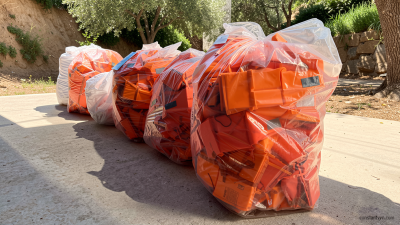
Constantvpn.com – In a nondisclosed police storage facility in western Germany, thousands of bright-orange life jackets sit bundled in plastic wrap, stacked beside rows of deflated rubber dinghies folded into cardboard boxes. The scene reads less like a crime scene and more like a frozen snapshot of an entire smuggling operation caught mid-breath. German authorities seized the stash during a coordinated raid in the North Rhine-Westphalia region, an operation that brought together investigators from France, Germany, and the United Kingdom. What makes this particular warehouse significant is not merely its contents but the legal instrument that made the seizure possible: a newly enacted German statute that, for the first time, criminalises the act of facilitating migrant smuggling toward Britain.
The Scale of the Seizure
The haul totals more than 9,000 life jackets, dozens of inflatable dinghies measuring roughly nine metres (29 feet) in length, boat engines, and 360 water pumps. The UK’s National Crime Agency, which first disclosed the raids in June, calculated that the equipment collectively could have ferried over 2,000 people across the English Channel in a single deployment cycle — roughly 65 passengers per dinghy. That figure sits below the capacity of the so-called “mega dinghies” spotted on Channel beaches later in the summer, yet it aligns with recent averages and the broader upward trend in passenger counts per crossing.
The life jackets themselves raise questions about quality. Their orange shells contain little more than thin poly-foam padding, a filling wholly unsuited to the cold, unpredictable waters of the Channel. Tags bearing Chinese characters are visible on many units, consistent with the well-documented supply chain in which most small-boat equipment is manufactured in China, shipped through Turkey, and then moved into the European Union.
A Legal Gap Closed
For years, German anti-smuggling statutes applied only to destinations within the European Union’s area of free movement. After Brexit removed Britain from that zone, a legal blind spot opened: organising crossings from German soil to a non-EU destination fell outside the scope of existing provisions. Raids had occurred before, but they typically relied on French or Belgian warrants rather than domestic German authority.
In 2024, Berlin moved to close that gap. As part of a bilateral framework agreed between Germany and the United Kingdom, Interior Ministry officials announced tightened legislation designed to make prosecution of small-boat facilitators straightforward. The ministry confirmed that the North Rhine-Westphalia operation represented the first enforcement action taken under the amended statute, though it did not specify whether the law had since been invoked again. Local prosecutors caution that the provision remains largely untested in court.
“The legal situation is essentially as it was before Brexit,” notes Bernhard Schmeilzl, a lawyer specialising in UK-German cross-border law. “However, I believe it will make a difference, even if stretched German law enforcement agencies may be more limited in what they can do.”
The Supply Chain: From Chinese Factories to Channel Beaches
Western Germany has become a logistical staging ground for gangs organising crossings out of northern France. The geography suits the operation: the region sits close enough to the heavily patrolled French coastline to allow rapid overnight transport of boats, yet far enough inland to keep equipment out of immediate sight. Investigators believe Kurdish criminal networks exercise a particularly controlling grip over the small-boat trade in this part of the country. One German official observed that gangs operate from German territory in part because many of their members already reside there.
The route by which equipment reaches those warehouses is itself a story. Much of the rubber, foam, and hardware is produced in Chinese factories, then routed through Turkish ports or overland corridors. A well-known entry point into the EU is the Bulgarian land border. Customs officials recently uncovered 20 undeclared inflatable dinghies concealed between mattress pads in a truck crossing from Turkey into Bulgaria; the driver had been bound for Germany.
Adaptation, Not Abandonment
Researchers at Oxford’s Migration Observatory suggest that the emergence of larger, higher-capacity dinghies this summer is a direct response to intensified enforcement. When supply lines are disrupted, smugglers tend to adapt their methods rather than abandon the enterprise altogether. There is, in the observatory’s assessment, an “additional incentive for smugglers to fit as many people as possible into available boats” when the window of opportunity narrows.
The warehouse in question has been maintained much as investigators found it — dinghies still deflated, jackets still wrapped, pumps still boxed. It stands as a physical archive of an operation that, under the old legal framework, might have continued undisturbed for months. Under the new statute, the next shipment of rubber and foam heading westward from a Turkish border crossing now carries with it the quiet threat of a German warrant.
Related Reading
Frequently Asked Questions
What is Inside secret police warehouse as Germany?
Inside secret police warehouse as Germany is the main topic of this guide. The article explains the context, practical details, and next steps readers should understand.
Why does Inside secret police warehouse as Germany matter?
Inside secret police warehouse as Germany matters because readers are looking for a useful answer, not just a short summary. Good content should match search intent and help them decide what to do next.