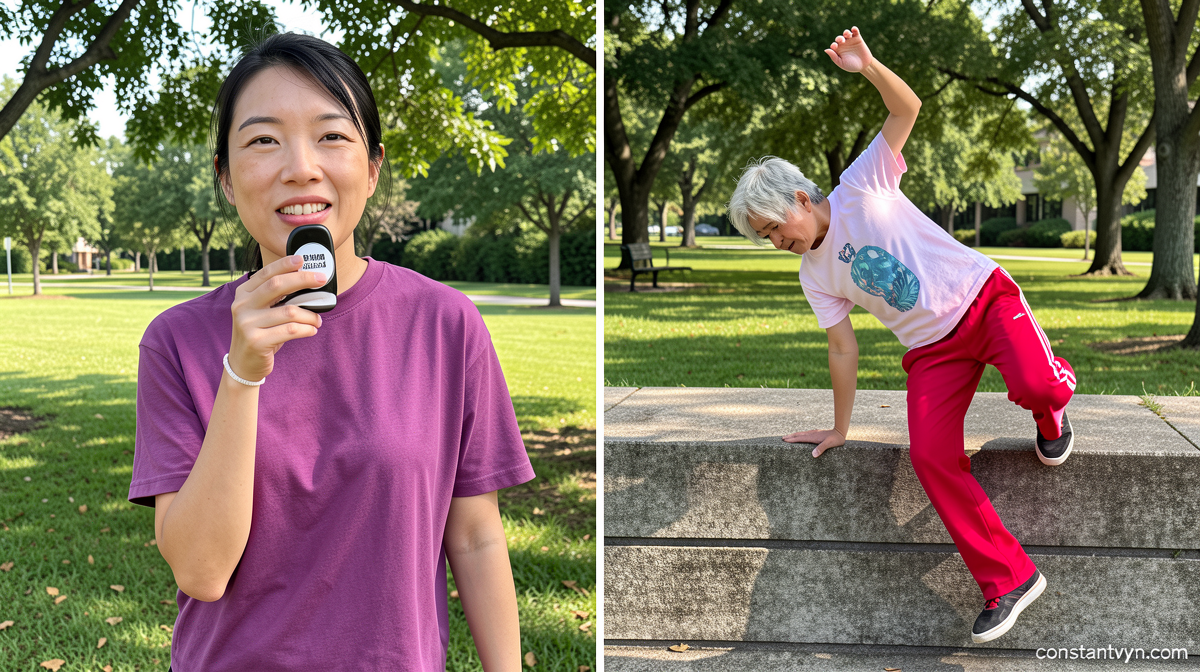
Senior Citizens Discover New Way to Stay Active Through Parkour in Singapore
A Growing Movement Among the Elderly
Constantvpn.com – Singapore stands at the forefront of demographic transformation in Asia, with one of the most rapidly aging populations globally. Rather than accepting declining mobility as inevitable, a dedicated group of older residents has found an unconventional solution to maintaining physical fitness. They have turned to parkour—a dynamic movement discipline—within their local playgrounds, transforming these familiar spaces into venues for athletic development and social connection.
The approach represents more than mere exercise. It embodies a philosophical shift in how Singapore’s elderly population engages with their bodies and their communities. Where traditional activities might focus on gentle stretching or walking, this parkour group challenges itself with movements that require balance, coordination, and courage.
Building Confidence Through Movement
Coach Tan Shie Boon has been instrumental in guiding this senior parkour program, observing firsthand how the practice transforms participants. The benefits extend far beyond physical conditioning. Participants develop a renewed sense of self-assurance that permeates other areas of their lives.
Coach Tan Shie Boon says the sport improves their confidence, while they say it has the added benefit of bringing together community.
This dual benefit—individual empowerment combined with collective bonding—addresses two critical challenges facing aging populations worldwide. Social isolation often accompanies physical decline, creating a cycle that can accelerate health deterioration. By meeting regularly for parkour sessions, these seniors combat loneliness while simultaneously strengthening their bodies.
What Is Parkour and Why It Works for Seniors
Parkour, originally developed in France, emphasizes efficient movement through obstacles using running, jumping, and climbing. While often associated with youth and agility, the discipline’s core principles—fluidity, adaptability, and overcoming obstacles—translate remarkably well to older practitioners.
For seniors, the practice offers particular advantages. Balance improvement reduces fall risk, a leading cause of injury among elderly populations. Strength development in legs and core supports daily activities. Mental engagement through learning new movement patterns helps maintain cognitive function. Perhaps most importantly, the progressive nature of parkour allows participants to build skills at their own pace, celebrating small victories that accumulate into significant capability.
Community Building in Action
The playground setting proves particularly significant. These outdoor spaces, traditionally viewed as children’s domains, become intergenerational meeting points. Seniors who might otherwise remain homebound emerge into public spaces, visible and engaged. The shared experience of learning parkour creates bonds that extend beyond the training sessions themselves.
Participants report that the community aspect provides emotional support alongside physical benefits. Regular attendance creates routine, accountability, and friendship. The group becomes a social network that helps members navigate the challenges of aging together rather than in isolation.
Broader Implications for Singapore
Singapore’s approach to aging reflects its broader philosophy of proactive planning. With projections indicating that nearly one-third of the population will be over sixty-five within two decades, innovative solutions like senior parkour offer scalable models for healthy aging. The government’s emphasis on aging in place—enabling residents to remain in their communities rather than moving to specialized facilities—finds natural expression in activities that take place within neighborhood spaces.
The parkour program also demonstrates how creative thinking can address health challenges. Rather than relying solely on medical interventions, Singapore’s seniors are taking ownership of their wellbeing through accessible, enjoyable physical activity. This empowerment model has implications for healthcare costs, quality of life, and social cohesion.
Learning Through Observation
Journalist Kelly NG from the BBC recently participated in one of these training sessions, experiencing the movements firsthand. Her involvement highlights growing international interest in how unconventional approaches to fitness can serve diverse age groups. Observing seniors execute parkour techniques with precision and joy challenges assumptions about what older adults can achieve physically.
The sessions Kelly observed likely included warm-up exercises, technique practice, and perhaps some obstacle navigation. Participants would have worked on fundamental movements—rolling, jumping, balancing—adapting each to their individual capabilities. The emphasis remains on personal progress rather than competitive performance.
A Model for the Future
As Singapore continues to age, programs like this senior parkour initiative offer valuable insights. They demonstrate that maintaining vitality in later life does not require expensive equipment or specialized facilities. What matters most is willingness to try something new, commitment to regular practice, and the social connections that sustain motivation.
The playground becomes more than a physical space—it transforms into a symbol of possibility. Seniors who once watched children play now join them in movement, proving that age need not define limitation. Through parkour, they are not merely avoiding injury; they are actively building resilience, confidence, and community in ways that enrich their lives and offer inspiration to others facing similar challenges.
Related Reading
Frequently Asked Questions
What is How is parkour helping these seniors?
How is parkour helping these seniors is the main topic of this guide. The article explains the context, practical details, and next steps readers should understand.
Why does How is parkour helping these seniors matter?
How is parkour helping these seniors matters because readers are looking for a useful answer, not just a short summary. Good content should match search intent and help them decide what to do next.
