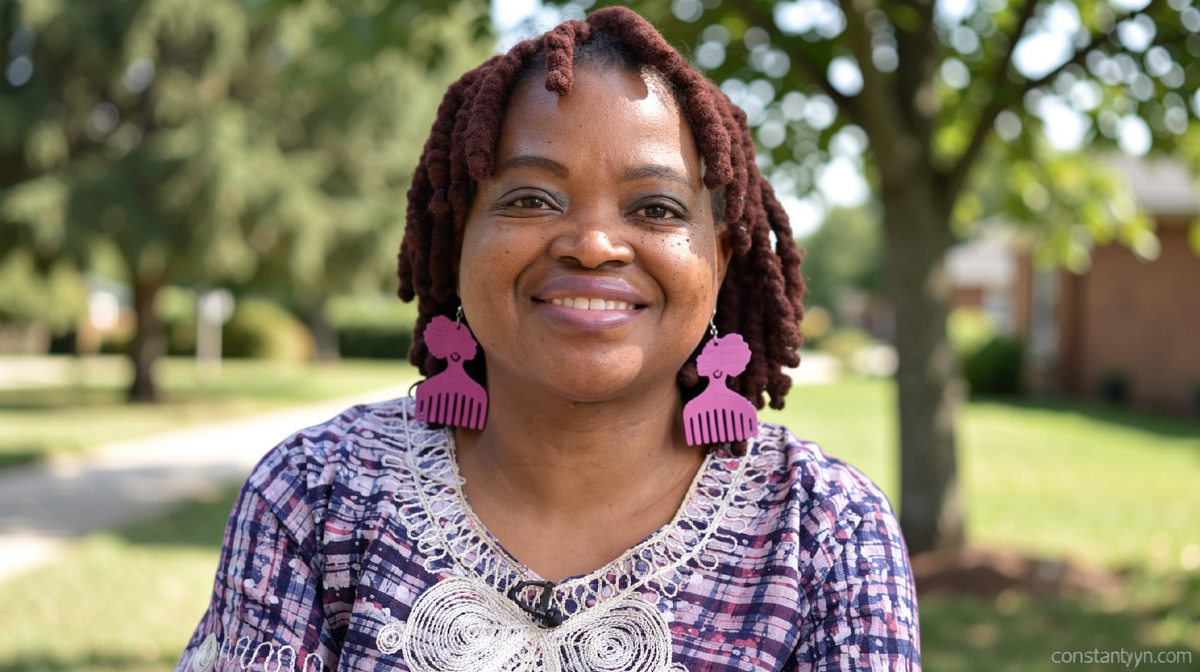
From Rejection to Global Phenomenon: How One Zimbabwean Author Captured the World’s Attention
Constantvpn.com – Sue Nyathi has been labeled an overnight success, yet the author insists the recognition came only after years of dedicated effort. Her debut novel, “The Polygamist,” initially faced dismissal from publishers who believed audiences had no interest in stories about a married Zimbabwean man and the women he attracts. Rather than accept this verdict, Nyathi took matters into her own hands, securing her own editor, typesetter, and artist to bring her vision to life. In 2012, she self-published five hundred copies of her work, a decision that would ultimately prove prophetic.
The book shattered expectations, becoming a commercial triumph that has now found new life on Netflix. The streaming adaptation ranks among the platform’s most-watched series across more than sixty nations, securing the second position in the United States alone. Hollywood star Taraji P. Henson publicly shared her enthusiasm, describing how the show had her in a “chokehold” as she consumed all twenty-two episodes in a single sitting.
A Family Legacy of Polygamy
Nyathi emphasizes that her narrative extends beyond a simple exploration of polygamous relationships. The practice holds deep roots in her personal history. Her maternal lineage practiced polygamy for generations, with her grandfather maintaining five wives before his death in 1979 and her great-grandfather marrying eleven women. The matriarch of this family structure was her grandmother, the first wife her grandfather took, who governed a farm where all the wives resided together and frequently participated in selecting new brides.
This position of the first wife, known as Indlunkulu, carried significant authority. “There was no infighting, because everyone knew their place,” Nyathi recalls. When questioned about how she navigated such a complex arrangement, her grandmother offered a straightforward explanation: additional hands meant more capacity for both physical and emotional work. The system operated with transparency. “Everybody knows who’s who in the zoo,” she explains.
Polygamy enjoys legal recognition in both Zimbabwe and South Africa when practiced according to established customs. However, Nyathi observed a different phenomenon emerging during her time as a young professional in Harare in 2001. Men presenting themselves as monogamous were simultaneously maintaining multiple secret relationships and households.
The Modern Version: Deception Over Consent
This contemporary iteration forms the foundation of Nyathi’s novel, which she describes as “the modernised, or perverted, version” of the traditional practice. The distinction lies in the mechanism of operation: where customary polygamy relies on mutual understanding, the modern variant depends on concealment. “I’m not against polygamy,” Nyathi clarifies. “What I’m against is the lack of agency. It’s wrong for the goalposts to be shifted once you’re inside.”
The novel’s protagonist, Joyce, enters what she believes is a monogamous union with Jonasi, only to discover he has established homes with three additional women without her knowledge. No confession accompanies these revelations; instead, Joyce gradually comprehends that her conception of marriage has been fundamentally flawed as secrets multiply and the women’s lives intersect.
Power dynamics permeate every aspect of the narrative. Jonasi, a wealthy entrepreneur who built his fortune independently, wields considerable authority within a patriarchal framework. Despite Joyce’s contributions to his success, her financial independence remains tethered to him. Matipa, a subsequent wife who also works for Jonasi, faces similar constraints. These structural imbalances intensify when considering age differences and extend into intimate matters such as sexual health negotiations. “If you’re negotiating safe sex, you don’t have a say in a relationship with those kinds of dynamics,” Nyathi observes, noting how HIV concerns weave through the storyline.
From Page to Screen
The television adaptation introduces several modifications to the original text. The setting shifts to South Africa, the dialogue appears in Zulu with subtitles, and Jonasi maintains fewer wives than in the book. Most significantly, while the novel presents its story through the voices of Jonasi’s wives, the series adopts Jonasi’s perspective as narrator.
“I wanted to highlight women’s voices,” Nyathi explains, emphasizing her desire to allow each woman to articulate why she remained in a relationship with an unfaithful partner. This narrative choice resonates powerfully with audiences. Women regularly contact the author, expressing that they recognize themselves in Joyce and Jonasi’s other wives. Some reveal they are married to men resembling Jonasi and seek ways to exit their situations.
The series has generated tangible real-world responses. Amnesty South Africa distributed guidance addressing narcissistic abuse and practical steps women can take. “For some people, this is not just a series,” Nyathi reflects. “It’s their lived reality. It holds up a mirror to society.”
Not all reactions have been uniformly positive. Kenyan civil servant Geoffrey Mosiria advocated for the series to be prohibited in Kenya, arguing that it presented an unfavorable portrayal of relationships. The controversy underscores how fiction can provoke genuine debate about cultural values and personal experiences. Nyathi’s work demonstrates how storytelling can illuminate universal themes while remaining deeply rooted in specific cultural contexts, creating narratives that transcend geographical boundaries and speak to shared human experiences.
Related Reading
Frequently Asked Questions
What is The Polygamist s creator says women?
The Polygamist s creator says women is the main topic of this guide. The article explains the context, practical details, and next steps readers should understand.
Why does The Polygamist s creator says women matter?
The Polygamist s creator says women matters because readers are looking for a useful answer, not just a short summary. Good content should match search intent and help them decide what to do next.
