Space-Based Views Reveal Europe’s Heatwave Toll on Land and Water
Constantvpn.com – Satellite photographs have captured the extensive damage wrought by this summer’s relentless heat across western Europe. Following a series of intense heatwaves that began in May, the landscape bears visible scars—from receding glaciers and parched terrain to diminished river systems. These aerial perspectives offer compelling evidence of how extreme temperatures have reshaped the continent’s natural features.
Record-Breaking Warmth Confirmed
The European Union’s climate monitoring service, Copernicus, has verified that western Europe endured its warmest June through July period ever documented. According to the Met Office, persistent high-pressure systems created clear, sunny conditions that allowed temperatures to climb steadily. However, the underlying driver extends beyond temporary weather patterns. Decades of fossil fuel combustion have elevated baseline temperatures, transforming what might once have been occasional hot spells into frequent, severe events.
Rivers Shrink, Landmarks Emerge
The Danube, Europe’s second-longest waterway, has reached its lowest levels in three decades across multiple nations. This dramatic decline has uncovered remarkable discoveries resting on the riverbed. In Bulgaria, researchers found mammoth bones exposed by the receding waters. Meanwhile, a World War Two warship that had lain submerged for decades emerged in Serbian waters. The sunken vessel is clearly visible in satellite comparisons showing the river’s diminished state. Further complications arose as the Danube winds through Hungary and Romania. Nuclear facilities operating along the river were compelled to either reduce output or halt operations entirely. Without sufficient river water for cooling systems, these critical energy sources faced operational constraints. The Rhine experienced parallel challenges. Cargo ships found themselves grounded as water depths fell below navigable thresholds. Scheduled river cruises were subsequently cancelled, disrupting tourism and transportation networks alike.
Alpine Glaciers Under Siege
Even the snow-draped summits of the Alps have proven vulnerable to the intensifying heat. Current measurements indicate this season may rank among the most severe for Alpine glacier melt in recorded history, with over a month of the melting season still ahead. A mild winter left glaciers with below-average snow cover by late April. An unusually early heatwave in May then accelerated snow loss, exposing the ice beneath to direct solar radiation. This exposure created a feedback loop, making glaciers increasingly susceptible to accelerated melting during subsequent warm periods. Satellite analysis reveals that the Rhône Glacier in Switzerland has retreated at least 50 meters—approximately 160 feet—compared to the same period last year. Under normal climatic conditions, glaciers maintain relatively stable dimensions over extended timeframes.
Dr Lander van Tricht, glaciologist at the Swiss Federal Institute of Technology, noted that climate change has produced “much less snow in winter and much, much more melt in summer.” He warned that continuing current trajectories, “the future looks very dramatic for the Alps.”
Wildfires Transform the Landscape
Fire has rewritten portions of western Europe’s terrain this summer. France alone has witnessed over 90,000 hectares—equivalent to 900 square kilometers or 350 square miles—consumed by flames. The European Forest Fire Information System identifies this as the nation’s most devastating fire season on record. The Gironde region, home to Bordeaux, experienced the largest single blaze, destroying approximately 42,000 hectares of land. This area matches the total size of the Isle of Wight. Several factors converged to create ideal fire conditions. Extended dry periods left vegetation and soil in a highly combustible state.
Dr Douglas Kelley of the UK Centre for Ecology and Hydrology explained that extreme wildfires are becoming “more and more frequent” as climate change generates optimal conditions, with elevated temperatures accelerating the drying of vegetation and soils.
Vegetation Stress and Agricultural Implications
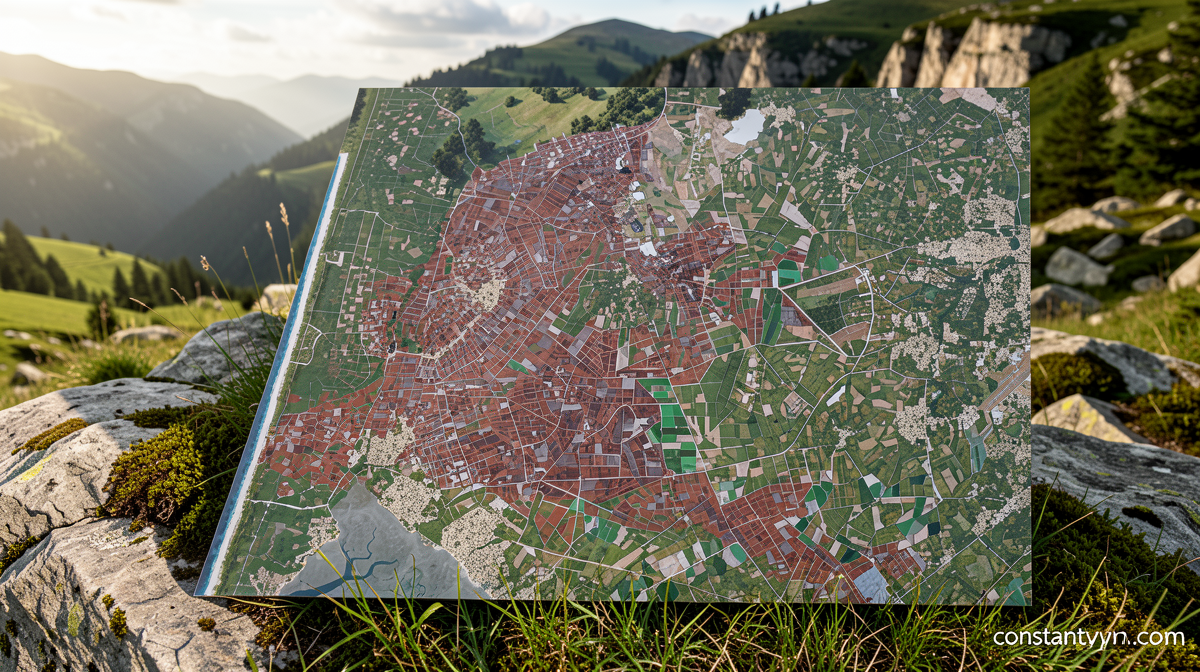
Broad satellite views of western France reveal a pronounced increase in land browning compared to previous years. Researchers employed the Normalised Difference Vegetation Index—commonly called NDVI—to quantify vegetation health using satellite measurements. This index produces lower values when vegetation becomes sparse or experiences stress. This summer’s NDVI readings fell below the five-year benchmark established between 2021 and 2025 across approximately 70 percent of France. Similar patterns appeared in nearly half of the United Kingdom and roughly 40 percent of western Germany.
Prof Andrew Challinor from the University of Leeds observed that the imagery was “consistent with widespread water stress,” noting that this “does not bode well” considering Europe’s extensive crop coverage and potential consequences for agriculture and food production.
In the most severely impacted regions, soil moisture levels dropped below those recorded on approximately 98 percent of comparable dates throughout the historical record. These conditions threaten not only current harvests but also long-term agricultural sustainability across the continent. The convergence of reduced river capacity, accelerated glacier melt, expanded wildfire zones, and stressed vegetation paints a comprehensive picture of a continent grappling with intensifying climate impacts. As summer progresses, these satellite observations serve as both documentation and warning of the transformations underway.
Related Reading
Frequently Asked Questions
What is Europe s scorched landscapes seen?
Europe s scorched landscapes seen is the main topic of this guide. The article explains the context, practical details, and next steps readers should understand.
Why does Europe s scorched landscapes seen matter?
Europe s scorched landscapes seen matters because readers are looking for a useful answer, not just a short summary. Good content should match search intent and help them decide what to do next.
