British Newspapers Capture Nation’s Triple Crisis on Record-Breaking Day
Constantvpn.com – Thursday’s weather extremes dominated British headlines as newspapers grappled with simultaneous emergencies across the country. The nation experienced what meteorologists confirmed as the warmest day of 2026, while wildfires consumed residential areas and a train collision near Lewes left commuters injured. This convergence of events created an unusual editorial challenge for British journalists, who had to balance breaking news with weather coverage.
The Times Leads with Comprehensive Coverage
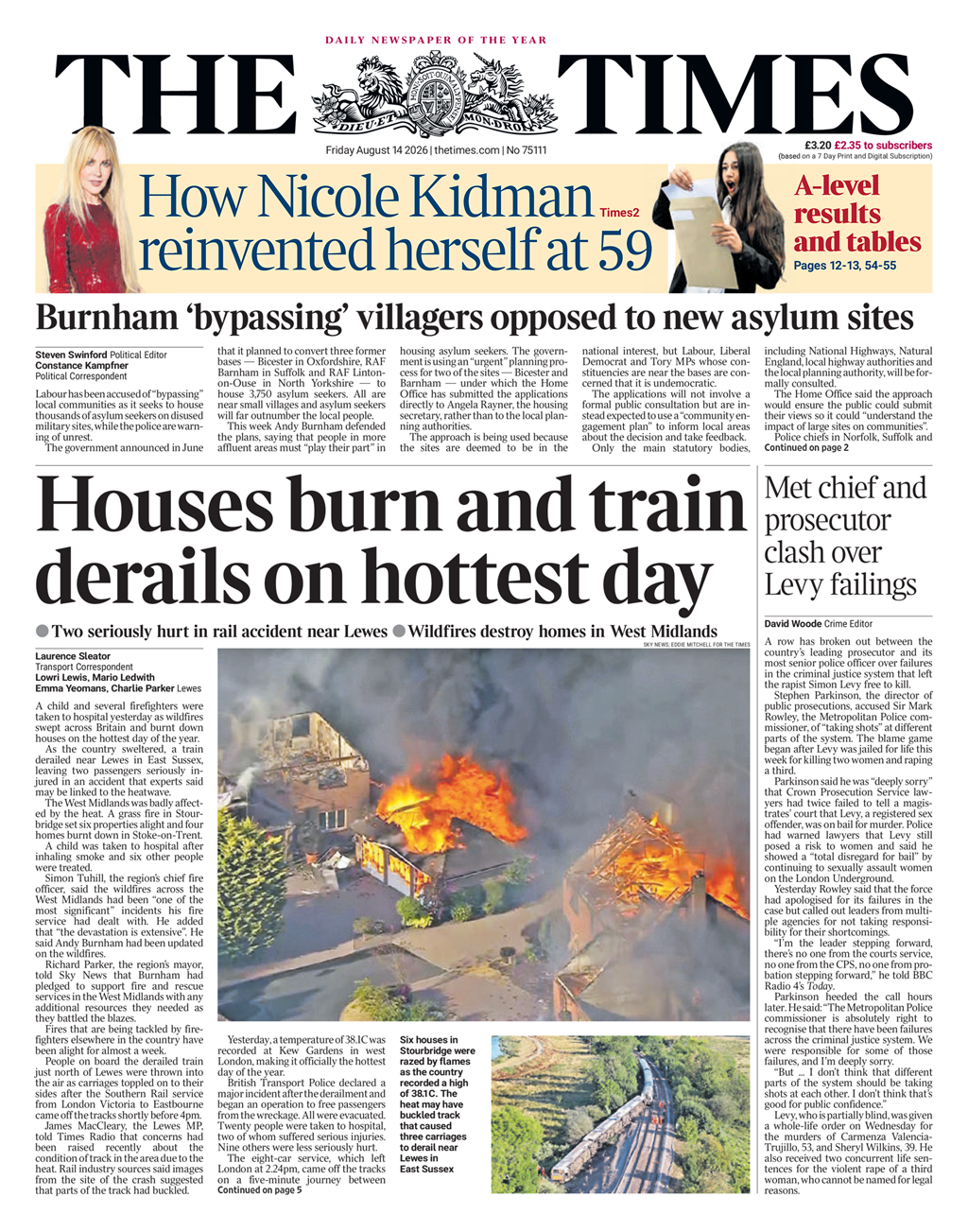
The Times front page presented a compelling visual narrative with a photograph showing homes engulfed in flames beneath the headline “Houses burn and train derails on hottest day.” This headline proved particularly effective in capturing three distinct stories that unfolded on the same day. The West Midlands experienced intense wildfires that threatened numerous properties, while the rail incident near Lewes resulted in serious injuries to two passengers. Meanwhile, the heatwave reached its peak, establishing a new temperature record for the year.
The newspaper’s approach reflected a desire to provide readers with a complete picture of the day’s challenges rather than focusing on a single story. This editorial decision acknowledged that British readers were dealing with multiple disruptions simultaneously, from transportation delays to potential property damage from the fires.
Tabloid Responses Vary Widely
The Daily Mail adopted a more dramatic approach with its single-word headline “Inferno” displayed across a photograph of the West Midlands conflagration. The paper opened its coverage with the statement: “Wildfires caused apocalyptic scenes last night as they engulfed homes.” This language emphasized the severity of the situation and helped readers understand the scale of the emergency.
The Daily Mirror similarly focused on the fire situation with the headline “Britain on fire” accompanying a photograph of burning houses. However, the paper also included an inset story about the train derailment, categorizing both events under what it termed “Heatwave devastation.” This framing suggested that the extreme temperatures were connected to both the fires and the rail accident.
The Daily Star took a different editorial path by prioritizing the train crash over the weather events. Its headline “Horror on the 2.24pm” drew attention to the specific timing of the incident. A large photograph showed emergency responders working near the overturned train, which had come to rest in shrubbery beside the railway line. The paper also included a smaller image of the burning homes with the caption “‘Apocalyptic’ wildfire,” acknowledging both major stories of the day.
Broader National Coverage
The Daily Telegraph front page featured a photograph of the derailed train with people standing on top of it, but the paper’s primary headline concerned international affairs. Claims emerged that “China ‘funding Palestine marches’” dominated the front page, with the paper reporting that a “US committee claims Beijing is supporting anti-Israel protests on Britain’s streets.” The coverage examined whether China had been backing Code Pink, described as “a far-left feminist protest group established in America.”
Metro distinguished itself by making the high temperatures the central focus of its front page. The paper highlighted the pressure on healthcare services, noting that the heatwave had driven increased attendance at A&E departments. According to the report, these facilities had experienced “their busiest time ever” the previous month, with “a record 2.5 million patients” requiring care. The article described nurses collapsing in the “stifling heat” and reported that “3,000 patients a day” were being treated in corridors due to overcrowding.
Specialized Perspectives
The Guardian provided both weather and sports coverage, featuring Team GB athlete Morgan Lake seeking relief from the heat under an umbrella during the European Athletics Championship in Birmingham. The photograph appeared above an article headlined on temperatures reaching 38.1C “as fifth heatwave peaks.” Beyond the weather story, the paper’s main front-page offering addressed concerns about financial instability in Britain’s higher education sector. New figures indicated that a decline in international student numbers could deprive universities of essential funding.
The i Paper concentrated on economic implications, highlighting water regulator Ofwat’s decision to permit five suppliers to raise bills by an additional £3.4bn collectively over the coming years. The headline created a contrast between the 24 million customers facing increased costs and the companies that continued to lose 1.2bn litres of water through leaks daily. This framing suggested that consumers were bearing the burden of infrastructure failures.
The Daily Express combined multiple stories under the headline “Did record 38.1C hear cause train to derail” alongside a photograph of burning homes beneath the sub-headline “Britain in meltdown.” This approach connected the weather extremes to both the rail accident and the wildfires, suggesting a nationwide crisis.
The Financial Times stood apart from its competitors by omitting prominent coverage of the hottest day’s aftermath. Instead, the paper led with investor optimism regarding AI company Anthropic’s potential “record $2tn IPO valuation.” A secondary story featured commentary from the jewellery maker Swarovski’s boss, who described the trend of “Women buying own lab-grown diamonds” as “very endearing.”
Implications for British Readers
The convergence of these events on a single day highlighted vulnerabilities in British infrastructure and public services. The heatwave’s impact extended beyond discomfort, affecting transportation networks, healthcare facilities, and even international relations coverage priorities. As the country continues to experience extreme weather patterns, these newspaper front pages documented a moment when multiple challenges required simultaneous attention from both the public and policymakers.
The varied editorial responses demonstrated how different publications chose to prioritize stories based on their readership expectations. While some papers emphasized the dramatic visual impact of the fires, others focused on the human element of the train accident or the economic consequences of infrastructure failures. This diversity in coverage provided British readers with multiple perspectives on a day that tested the nation’s resilience across several fronts.
Related Reading
Frequently Asked Questions
What is Houses burn and train derails on hottest?
Houses burn and train derails on hottest is the main topic of this guide. The article explains the context, practical details, and next steps readers should understand.
Why does Houses burn and train derails on hottest matter?
Houses burn and train derails on hottest matters because readers are looking for a useful answer, not just a short summary. Good content should match search intent and help them decide what to do next.
