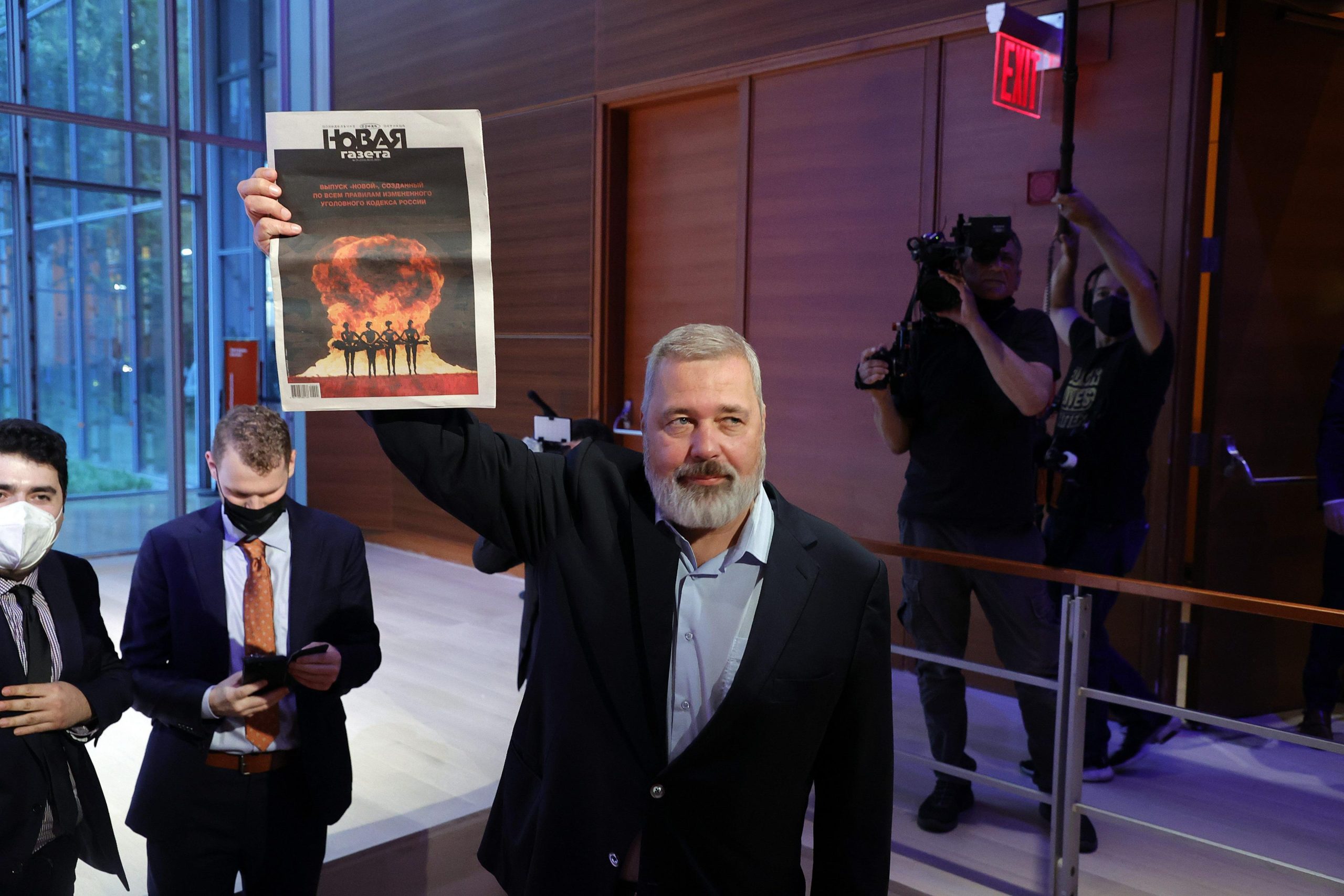
Muratov: Ukraine’s Fate Lies in Destruction, Not Conquest, as Putin’s War Drags On
Constantvpn.com – Dmitry Muratov, the Nobel Peace Prize laureate who helped build one of Russia’s most respected independent newspapers, has issued a stark assessment of the ongoing conflict. The veteran journalist argues that while Vladimir Putin’s forces may devastate Ukraine, true conquest remains impossible. Speaking from Moscow, Muratov paints a picture of a nation torn apart by nearly five years of relentless warfare.
A Newspaper’s Decline Mirrors Russia’s Democratic Erosion
Inside the Moscow headquarters of Novaya Gazeta, silence has replaced the usual bustle. The corridors feel hollow, reflecting the newspaper’s diminished state. “There is no newspaper anymore,” Muratov stated during a candid conversation with BBC correspondents. He co-founded the publication over three decades ago, transforming it into a beacon for investigative journalism that exposed corruption and human rights violations across Russia.
The newspaper’s troubles intensified following Russia’s full-scale invasion of Ukraine in 2022. Government decrees led to the nationalization of Novaya Gazeta’s printing facilities and the revocation of its official registration. While the publication maintains an online presence, authorities have effectively blocked domestic access to its website. Readers outside Russia or those utilizing virtual private networks remain the primary audience.
“Putin issued a decree and the newspaper’s printing presses were nationalised,” Muratov explained. “Its registration was revoked.”
Unprecedented Repression Under Current Regime
The crackdown on dissent has accelerated dramatically since the invasion began. Muratov noted that hundreds of opinion leaders have been branded as foreign agents, extremists, or terrorists. Conservative estimates place the number of political prisoners at over 1,500 since the conflict commenced—triple the figure recorded during the Soviet Union’s most repressive periods.
Historical comparisons underscore the severity of current repression. In his 1975 Nobel lecture, dissident Andrei Sakharov documented more than 120 political prisoners in the Soviet Union. By 1985, Amnesty International estimated the number had risen to approximately 600. Today’s figures dwarf both benchmarks.
Among those imprisoned are journalists Antonina Favorskaya, Konstantin Gabov, Sergey Karelin, and Artyom Kriger, who received five-and-a-half-year sentences on extremism charges. Their cases exemplify the broader pattern of silencing critical voices.
Nuclear Threats and Shifting Perceptions
Muratov’s analysis extends to the possibility of nuclear escalation. He dismissed political experts who claim to understand Putin’s motivations as charlatans, comparing their assessments to astrology. “Nobody knows what’s going on in Vladimir Putin’s head,” he asserted. “And I don’t know.”
However, data reveals growing discussion of nuclear options. Since January, references to potential nuclear weapon deployment have exceeded 500 instances. While fringe voices initially dominated these conversations, state television and official forums have increasingly legitimized the discourse. At the St Petersburg International Economic Forum, a government-sponsored event, speakers framed nuclear capability as advantageous rather than threatening.
“It seems to me that the situation with Ukraine now is this: you can destroy it, but you cannot conquer it. What do I mean by destroy? Continued escalation all the way to the use of a nuclear weapon.”
Security Claims Under Scrutiny
When announcing the invasion in February 2022, Putin promised to “ensure the security of Russia.” Muratov challenges this narrative with mounting evidence of vulnerability. Ukrainian drones have struck warehouses belonging to Wildberries, Russia’s largest online retailer. Simultaneously, the country faces fuel shortages and disruptions to mobile communications alongside its growing population of political prisoners.
“Tell me, has security increased?” Muratov asked rhetorically. “With Ukrainian drones now attacking warehouses of Wildberries; with the petrol crisis, the disruption to mobile internet, the political prisoners? Has security increased, or not?”
Victory or Defeat: A Question of Definition
Muratov rejects the notion that Russia can claim victory in Ukraine. He emphasized that the conflict’s human cost—over a million people displaced or harmed—precludes any meaningful triumph. “There will never be ‘victory’,” he declared. “Because what has been going on for nearly five years – no matter how it ends – can no longer be considered a victory.”
Despite declining approval ratings in domestic polls, Muratov maintains that Putin retains firm control over Russia’s political apparatus. The president’s ability to manage internal dissent while pursuing external objectives demonstrates resilience, even as the war transforms from a swift operation into Europe’s deadliest conflict since World War II.
Muratov’s own commitment to humanitarian causes remains undiminished. He auctioned his Nobel Peace Prize medal to support UNICEF’s efforts aiding Ukrainian refugees—a symbolic gesture reflecting his belief that compassion must transcend political boundaries.
As the conflict enters its fifth year, Muratov’s perspective offers both warning and clarity. Ukraine may face devastation, but conquest eludes Russia. The path forward remains uncertain, shaped by decisions made in Moscow and Kyiv alike, with nuclear possibilities hovering over an already scarred landscape.
Related Reading
Frequently Asked Questions
What is Putin can no longer claim victory?
Putin can no longer claim victory is the main topic of this guide. The article explains the context, practical details, and next steps readers should understand.
Why does Putin can no longer claim victory matter?
Putin can no longer claim victory matters because readers are looking for a useful answer, not just a short summary. Good content should match search intent and help them decide what to do next.
