
WWII German Soldiers’ Remains Emerge from Budapest’s Danube Amid Historic Drought
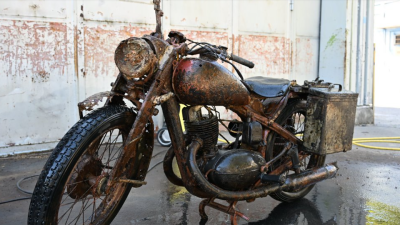
Constantvpn.com – Two German soldiers who fell during World War Two have been discovered in the Danube river near Budapest, their remains preserved for more than eight decades beneath the water’s surface. The extraordinary find comes as the region experiences record-low water levels following an intense drought that has affected much of Europe. Alongside the soldiers’ bones, rescuers recovered a largely intact motorcycle, identification tags, a wedding ring, and a Kuban shield—a distinctive combat badge worn by German forces.
A Discovery That Sparks Hope for Families
The remains were first spotted on August 2 when a passerby noticed part of a motorcycle emerging from rocks along the riverbank in central Budapest. What began as a curious sighting quickly turned into a significant archaeological and historical discovery. A bomb disposal unit was subsequently deployed after anti-tank mines were also uncovered in the area, leading to a temporary closure of the riverbank for safety reasons.
Arne Schrader of the German War Graves Commission expressed optimism about the discovery’s potential to help families reconnect with their lost relatives. “Now begins a puzzle, in which we will try to determine the identity of the two dead,” Schrader told German newspaper Bild. The commission, a German non-profit organization responsible for searching, recovering, and burying war dead on behalf of the German government, has launched an investigation to identify both soldiers.
The Motorcycle and Combat Badge
Among the most remarkable items recovered is a DKW NZ 350-1 motorcycle, believed to have been produced specifically for wartime use beginning in 1944. The vehicle’s preservation is attributed to the unique combination of harbor sludge and oil that settled on the riverbed over the decades. This protective layer has helped shield not only the motorcycle but also the identification tags and other artifacts from deterioration.
The Kuban shield discovered alongside the remains holds particular historical significance. This combat badge was awarded to German soldiers who participated in operations in the Kuban region of southern Russia during the war. Its presence suggests that at least one of the fallen soldiers took part in the fierce fighting that characterized the Eastern Front in the later years of the conflict.
Understanding the Identification System
The discovery of two identification tags has provided researchers with valuable clues about the soldiers’ identities. According to the German War Graves Commission, one tag belonged to a Wehrmacht soldier while the other belonged to a member of the Waffen-SS—a branch of the Nazi Party’s armed forces that was later declared a criminal organization at the Nuremberg Trials for its role in war crimes.
During the Second World War, German soldiers’ identification tags were designed to be split in two upon a soldier’s death. One half remained with the body for identification purposes, while the other was sent to German army authorities. These authorities maintained records of military casualties and would notify relatives of their loved ones’ deaths. The commission noted that the families of these two soldiers likely “waited in vain” for official notification of their deaths, as the remains were never recovered.
“The names of the original wearers can probably be found quickly, but that is only the first step. Too many pieces of the puzzle need to be gathered, and the outcome is uncertain.”
Bone Analysis and Future Identification
While the identification tags may provide initial clues, bone analysis will play a crucial role in confirming the soldiers’ identities. The commission will need to verify that the tags and Kuban shield actually belonged to the two soldiers whose remains were found. This verification process requires careful scientific examination to ensure accuracy.
The German War Graves Commission has made its database available to the public, allowing anyone searching for missing relatives to look up potential matches. The investigation is expected to take time, as researchers must gather and cross-reference multiple pieces of evidence before reaching definitive conclusions.
Broader Context and Significance
The discovery has generated considerable attention in World War Two-related social media groups, where people share information about the fate of their ancestors who fought in both World Wars. One Facebook group member expressed gratitude for the find: “As bad as the low water level is, I am glad that bereaved families can once again be informed about the whereabouts of their relatives, and that the fallen soldiers can be given a dignified burial. Rest in peace.”
The soldiers are scheduled to be buried at the German war cemetery in Budaörs, located just outside the Hungarian capital. Budapest was the site of intense fighting between the Soviet Red Army and the German Wehrmacht in the final stages of the Second World War, making the location of the discovery particularly meaningful.
This find is not isolated. Other remnants of World War Two have emerged from the Danube in recent months, including a broken-up hull near Prahovo in Serbia. The drought has also forced the shutdown of Hungary’s only nuclear plant and caused the Rhine river to fall to record low levels, highlighting the widespread impact of the weather conditions across Europe.
For families who have spent more than eighty years wondering about the fate of their loved ones, the emergence of these soldiers from the Danube offers a chance for closure and the opportunity to honor their memory with a proper burial.
Related Reading
Frequently Asked Questions
What is Danube river s low water levels?
Danube river s low water levels is the main topic of this guide. The article explains the context, practical details, and next steps readers should understand.
Why does Danube river s low water levels matter?
Danube river s low water levels matters because readers are looking for a useful answer, not just a short summary. Good content should match search intent and help them decide what to do next.