UN rights chief alarmed by rise in Iran executions since March
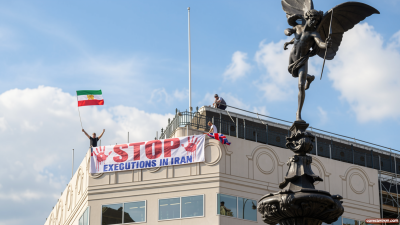
UN Watchdog Voices Concern Over Iran’s Escalating Wave of Capital Punishments
Constantvpn.com – The United Nations’ top human rights official has issued a stark warning regarding Iran’s intensifying use of the death penalty, noting that Tehran is employing executions as a tool to intimidate citizens and silence opposition voices. Volker Türk, the UN human rights chief, highlighted that the country has carried out at least fifty-six executions since mid-March on charges connected to national security. This surge includes twenty-seven individuals linked to the widespread demonstrations that erupted across Iran in January.
Beyond those already put to death, more than one hundred additional prisoners face potential execution on comparable charges. Türk also pointed out that capital punishment for drug offenses continues at a concerning pace, adding another layer to the growing crisis. Iran currently ranks as the second-largest executor of prisoners globally, trailing only China in total numbers. Amnesty International documented that Tehran executed at least two thousand one hundred fifty-nine people last year, marking the highest annual toll since records began in nineteen eighty-one. That figure encompassed forty-five individuals convicted on national security grounds.
Context Behind the Rising Death Toll
Human rights advocates suggest that Iranian officials may intensify their reliance on executions following two major events: the January protests and the subsequent conflict with the United States and Israel that began on February twenty-eighth. During the January demonstrations, thousands of protesters lost their lives while tens of thousands were taken into custody. The recent escalation has prompted renewed scrutiny of Iran’s judicial practices and its treatment of political opponents.
Türk urged Iranian authorities to halt all executions and move toward the abolition of the death penalty, saying that “such punishment has no place in our world”.
The UN chief also expressed deep concern over the persistent absence of fair trial guarantees and due process protections. Many confessions, he noted, appear to have been extracted through torture and other forms of mistreatment. Several executions have reportedly taken place in public spaces, serving as both punishment and deterrent. Some prisoners have been executed merely weeks after their initial arrest, leaving little time for proper legal preparation. In one notable case, twelve defendants received death sentences following a single three-hour closed-door proceeding.
Recent High-Profile Cases
Iran has historically justified its use of capital punishment, maintaining that it applies only to the most serious offenses. On Monday, the country’s judiciary announced the execution of two men found guilty of espionage for Israel. Omid Behzad and Pouria Safvat were accused of transmitting coordinates, photographs, and other sensitive data regarding military, law enforcement, and security installations to Mossad during the ongoing war and the twelve-day conflict that occurred in June two thousand twenty-five.
Earlier in the week, nineteen-year-old Arvin Kheirkhahan was put to death after being convicted of “enmity against God” for his alleged involvement in the January unrest. His execution was confirmed by a source close to his family. Meanwhile, in the city of Isfahan, Abolfazl Sepahi Badjani and Amirhossein Safari Hosseinabadi were executed publicly in a central square. These two men were part of a group of twelve individuals sentenced for multiple charges, including “enmity against God” and “corruption on Earth,” related to the killing of four law enforcement officers on January eighth. Two other members of that group, Erfan Esfandiari and Gol Mohammad Mohammadi, were executed on July nineteenth.
UN human rights experts criticized the proceedings for these twelve individuals, stating that they were sentenced in a single hearing within a closed courtroom without clear determination of each defendant’s individual responsibility. This approach, they argued, violated established international standards for fair trials. While the Iranian government has not yet responded to the latest UN concerns, its past defenses of the death penalty suggest it will continue to view such measures as necessary for maintaining order and security in the region.
Related Reading
Frequently Asked Questions
What is UN rights chief alarmed by rise?
UN rights chief alarmed by rise is the main topic of this guide. The article explains the context, practical details, and next steps readers should understand.
Why does UN rights chief alarmed by rise matter?
UN rights chief alarmed by rise matters because readers are looking for a useful answer, not just a short summary. Good content should match search intent and help them decide what to do next.
